Hotel Linen Care: How to Maximize the Lifespan of Your Bed Sheets and Towels
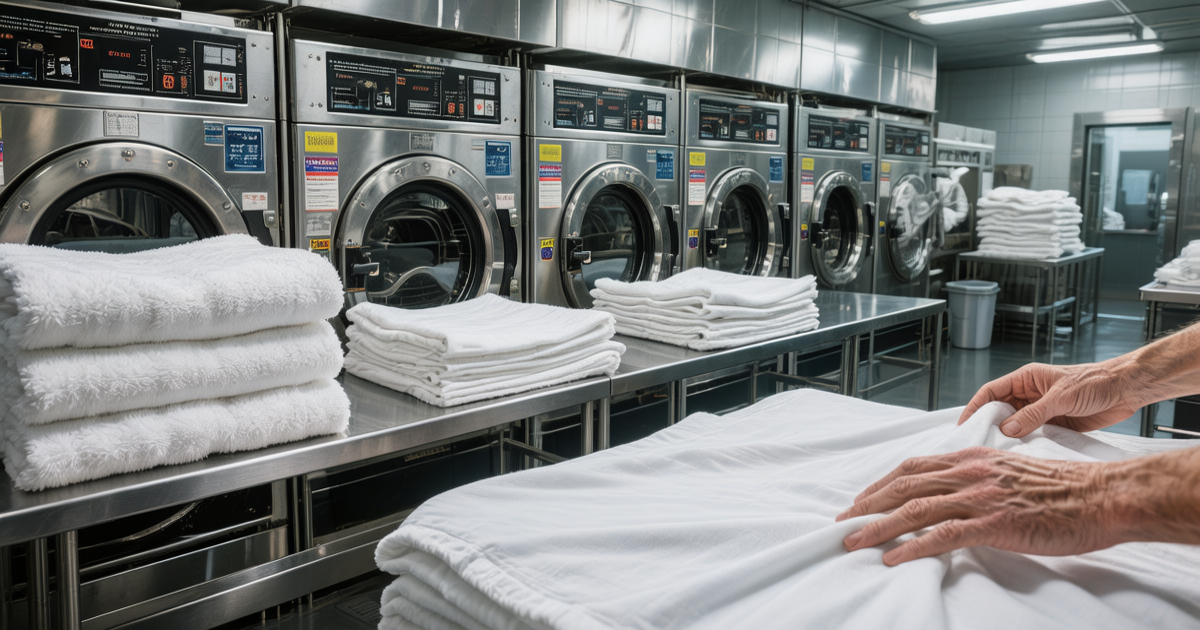
Proper linen care is the single most cost-effective investment a hotel can make. A well-maintained bed sheet set should deliver 150-200 wash cycles in a commercial laundry setting. Poor care cuts that lifespan in half — doubling your annual linen budget. Here's how to get the most out of every piece.
1. The Wash Cycle That Saves Money
Water temperature matters more than detergent volume. White cotton sheets wash best at 60°C (140°F) — hot enough to sanitize, not so hot that fibers degrade prematurely. Lower temperatures (40°C) extend fabric life further but require oxygen-based bleach for sanitation. Overheating (above 75°C) causes cotton fibers to weaken and shrink.
Key rule: never overload machines. Linens need room to agitate freely. A 50kg-capacity washer should hold no more than 40kg of sheets. Overloading creates friction damage and uneven cleaning.
2. Drying: The Hidden Fiber Killer
Over-drying is the primary cause of premature linen failure in hotels. When cotton sheets are dried past their natural moisture retention point (about 6-8% moisture), the fibers become brittle and tear. Commercial dryers should stop when linens are slightly damp — they will finish air-drying on the shelf. A moisture sensor system pays for itself in linen savings within six months.
Need these specs quoted for your property?
Tell us your hotel tier, quantities and timeline — get a free, no-obligation quote within 24 hours.
3. Bleach: Use Sparingly
Chlorine bleach attacks cotton fiber structure with every use. After 20-30 bleach cycles, sheet tensile strength drops 40-50%. Switch to oxygen-based (hydrogen peroxide) bleach for routine whitening. Reserve chlorine bleach only for stain emergencies on otherwise-doomed items.
4. Storage and Rotation
Implement a strict PAR (periodic automatic replacement) system. Rotate three sets per bed: one on the bed, one in laundry, one on the shelf. This spreads wear evenly. Store linens in a cool, dry, dark environment — UV light and humidity degrade cotton over time. Elevate shelves 15cm off the floor to prevent moisture wicking.
5. Know When to Retire
Retire sheets when: edges fray beyond 1cm, fabric feels thin when held to light, or stains remain after two treatments. Retire towels when: edges unravel, pile becomes flat and non-absorbent, or bleaching leaves a permanent yellowish cast. A retirement log helps forecast replacement orders and budget planning.
Shop Related Products
Free PDF: Complete Hotel Linen Buying Guide
Step-by-step procurement guide covering specs, MOQ, pricing, QC, and shipping — based on real Dieshiqiao experience.
Need help sourcing hotel linens?
Get a free quote within 24 hours. No commitment required.
Request a QuoteRelated Articles
Hotel Duvet & Pillow Filling Guide: Down, Microfiber & Alternative Fillings Compared
Compare down, microfiber, and alternative duvet and pillow fillings for hotels. Learn fill power ratings, weight by climate, hypoallergenic options, and sourcing tips.
Hotel Linen Budget Planning: A Cost Per Occupied Room (CPOR) Framework for 2026
Learn how to calculate linen cost per occupied room (CPOR), set budgets by property tier, plan replacement cycles, and optimize laundry spend — with a practical framework for 2026.
Hotel Bedding Climate Guide: Choosing Sheets, Duvets & Pillows by Region
Warm-climate hotels need percale and lightweight duvets. Cold-climate properties demand sateen and heavier fills. Match bedding specs to geography to boost guest satisfaction scores.