Hotel Bedding Climate Guide: Choosing Sheets, Duvets & Pillows by Region
Why Climate Determines Bedding Choices
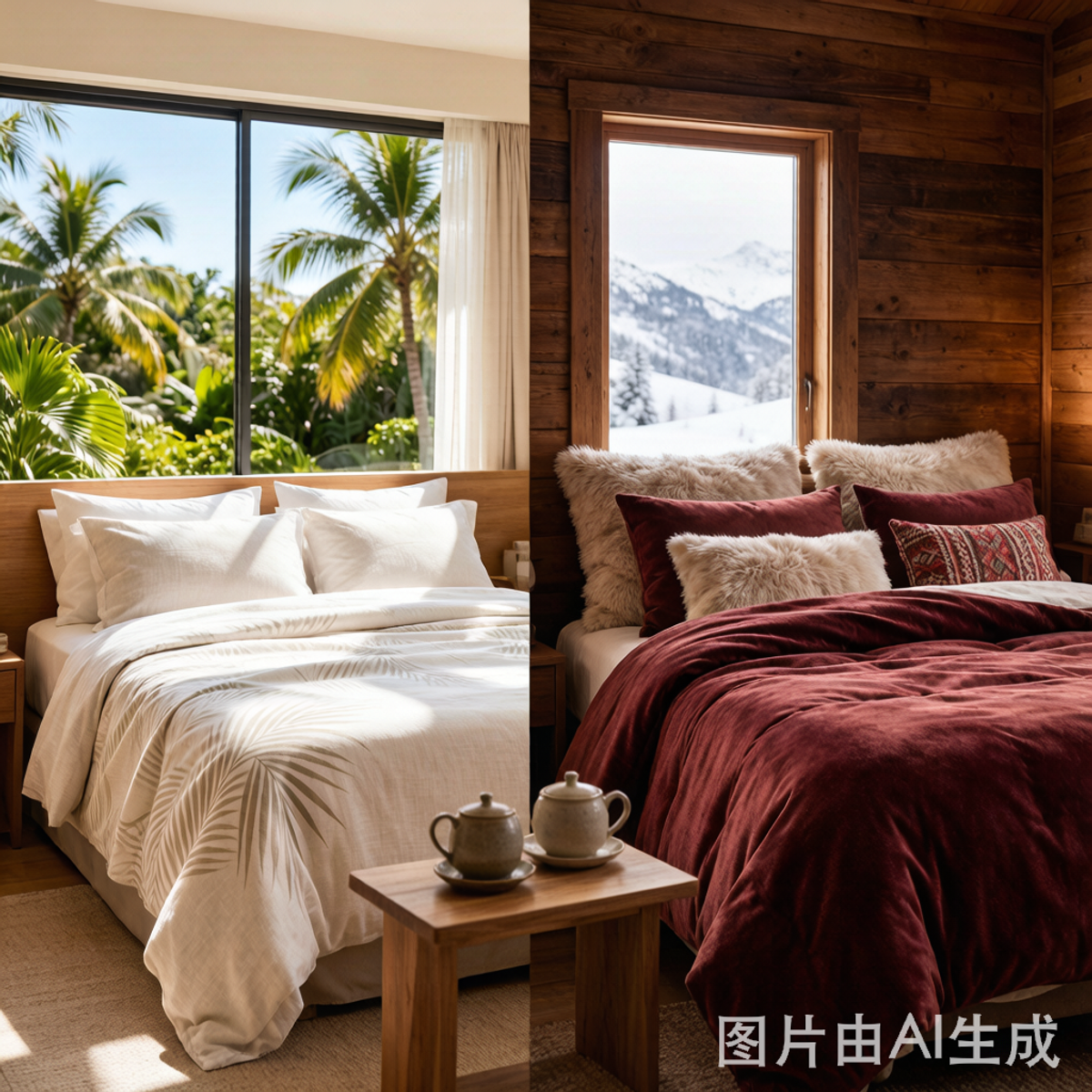
A hotel in Dubai and a hotel in Oslo may both be five-star properties, but their bedding specifications should look completely different. Climate shapes everything: fabric breathability, duvet fill weight, pillow composition, and even sheet weave preference. Getting this wrong leads to guest complaints about being too hot or too cold — one of the most common negative review themes across all hotel categories.
Warm Climate Bedding (Tropical, Desert, Mediterranean Summer)
Priority: Breathability, moisture-wicking, and cool-touch feel. In warm climates, the bedding's job is to provide comfort without trapping heat. Guests in tropical destinations typically sleep with air conditioning, but bedding that retains humidity creates the clammy feeling that generates complaints.
Sheet recommendation: 100% cotton percale, 250-400 thread count. Percale's crisp, matte finish and open weave structure maximize airflow. The lower thread count range (250-300) actually breathes better than higher counts in humid conditions. Avoid sateen — its tighter weave holds heat.
Duvet recommendation: Lightweight (150-200 GSM) microfiber or cotton-filled duvet, or switch to a cotton coverlet/blanket layer only. Many tropical properties use a top sheet plus a lightweight cotton blanket rather than a full duvet. For properties that must offer duvets, 150 GSM hollow-fiber fill provides just enough weight without overheating.
Pillow recommendation: Latex or cooling gel-infused memory foam cores with cotton percale cases. Latex naturally stays cooler than memory foam, and its open-cell structure promotes airflow. Avoid solid memory foam — it retains body heat and becomes uncomfortable in warm rooms.
Cold Climate Bedding (Continental Winter, Alpine, Northern Latitudes)
Need these specs quoted for your property?
Tell us your hotel tier, quantities and timeline — get a free, no-obligation quote within 24 hours.
Priority: Insulation, warmth retention, and soft-touch feel. In cold climates, bedding is part of the heating experience. Guests expect to sink into warmth. The tactile experience matters more — fabric should feel warm to the touch, not cool and crisp.
Sheet recommendation: 100% cotton sateen or cotton-Tencel blend, 300-600 thread count. Sateen's tighter weave and silky surface feel warmer against skin than percale. Cotton-Tencel (70/30) blends add softness and slight moisture management without the cool-touch of full percale.
Duvet recommendation: Medium to heavy fill. 300-400 GSM down or down-alternative for standard cold-climate properties. 400-600 GSM for alpine/mountain resorts. Down provides the best warmth-to-weight ratio, but many properties now use high-quality microfiber alternatives for allergen-sensitive guests. Dual-season duvets (lightweight + midweight that snap together) are increasingly popular for properties that span shoulder seasons.
Pillow recommendation: Down or down-alternative pillows with cotton sateen cases. Down pillows conform to head shape and provide warmth. Medium-firm density suits most cold-climate guests. Side sleepers need higher loft for spinal alignment.
Mixed/Seasonal Climate Bedding
Properties in temperate zones with distinct seasons face the most complex bedding decisions. The most practical solution is a modular system: percale sheets for summer, sateen sheets for winter, and a dual-layer duvet system (150 GSM summer insert + 250 GSM winter insert that can be used separately or combined).
This approach requires roughly 50% more linen inventory but eliminates the seasonal guest complaint cycle that plagues properties using year-round bedding. The additional inventory cost is offset by higher guest satisfaction scores and reduced housekeeping time spent on comfort adjustments.
Procurement Checklist by Climate
When sourcing from China for climate-specific bedding, specify these parameters in your RFQ: (1) weave type — percale for warm, sateen for cold, (2) thread count range appropriate to climate needs, (3) duvet fill weight in GSM, not just fill type, (4) pillow core material and density, (5) sample approval for hand feel at target room temperature. Chinese manufacturers can produce any of these specifications — the key is providing clear climate requirements in the initial brief rather than assuming a generic hotel spec.
Shop Related Products
Free PDF: Complete Hotel Linen Buying Guide
Step-by-step procurement guide covering specs, MOQ, pricing, QC, and shipping — based on real Dieshiqiao experience.
Need help sourcing hotel linens?
Get a free quote within 24 hours. No commitment required.
Request a QuoteRelated Articles
Hotel Duvet & Pillow Filling Guide: Down, Microfiber & Alternative Fillings Compared
Compare down, microfiber, and alternative duvet and pillow fillings for hotels. Learn fill power ratings, weight by climate, hypoallergenic options, and sourcing tips.
Hotel Bedding by Property Type: How to Match Linen Quality to Your Market Segment
Budget, midscale, upscale, and luxury hotels each demand different bedding specifications. Compare thread counts, fabric compositions, and weave types across market segments.
How to Choose Hotel Linens: A Complete Guide for Hospitality Buyers
Key factors in selecting hotel bed sheets, towels, and bathrobes: thread count, GSM, fiber types, and supplier vetting explained.