How to Build a Hotel Linen RFP: Complete Template & Vendor Evaluation Framework
Why a Structured RFP Matters
Most hotel linen procurement starts with an informal email: please quote 200 sets of king sheets. The supplier replies with a price. The buyer compares 2-3 prices and picks the cheapest. Six months later, the sheets are pilling, the towels have shrunk, and the navy bathrobes are three different shades.
The problem is not the supplier — it is the procurement process. An informal quote request gives the supplier no specifications to meet, no quality standards to prove, and no accountability for post-delivery performance. A structured RFP (Request for Proposal) solves all three problems by forcing clarity, enabling like-for-like comparison, and creating a contractual quality baseline.
RFP Document Structure
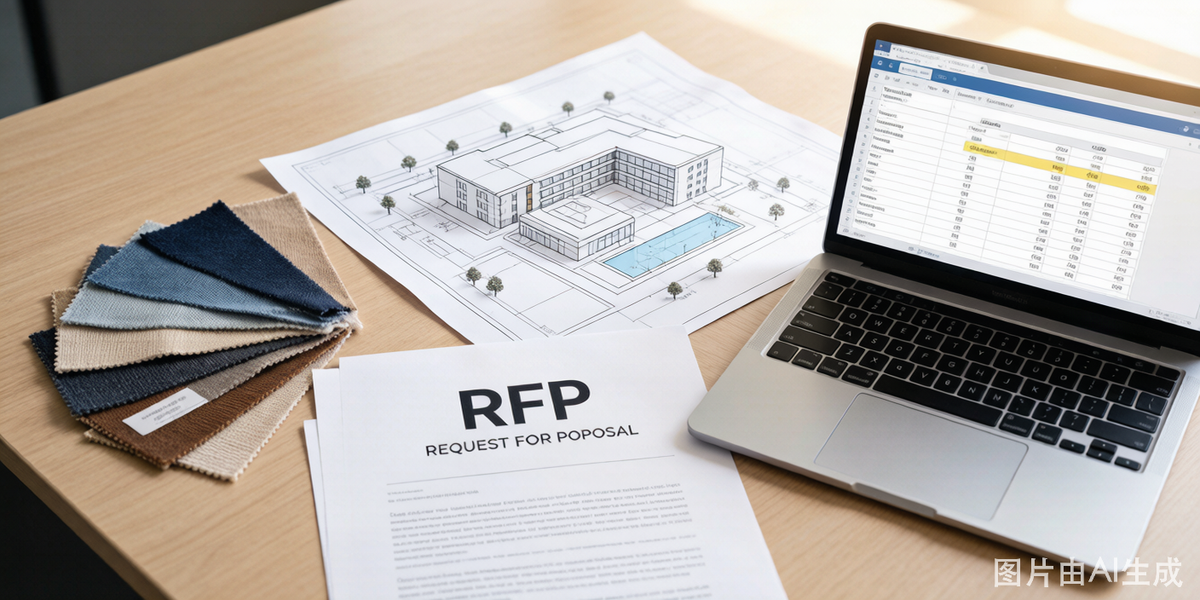
A professional hotel linen RFP should contain these sections: (1) Cover Letter and Timeline — introduction, key dates, submission instructions; (2) Company and Project Overview — your property type, brand standards, volume estimate; (3) Product Specifications — detailed technical specs for each SKU; (4) Quality and Compliance Requirements — standards, certifications, testing protocols; (5) Commercial Terms — pricing format, payment terms, delivery, warranty; (6) Vendor Qualification Questions — factory details, references, capabilities; (7) Evaluation Criteria — how proposals will be scored; (8) Terms and Conditions — legal framework.
Section 1: Cover Letter and Timeline
Keep this concise. Include: brief introduction to your property or project; RFP issue date and submission deadline (allow 3-4 weeks minimum); clarification question deadline (usually 2 weeks before submission); target decision date; target delivery window; contact person and method for questions; statement that this is an RFP, not a purchase order.
Section 2: Product Specifications
This is the most important section. Each SKU needs a complete specification table. For a King Flat Sheet, specify: Finished Size 300 × 300 cm (after pre-shrinking); Fabric Construction 60s × 60s, 173 × 120, 300 TC; Weave Percale (plain weave) 1/1; Fiber Content 100% Combed Cotton Long-Staple; Yarn Ring-spun single-ply; Color Hotel White (WI CIE 120-135); Finish Sanforized and mercerized; Hem 5 cm top hem, 1 cm side and bottom hem; Hem Stitching double-needle lockstitch 10-12 SPI; Label woven brand label plus care label at top hem center; Packaging individual polybag, 10 sets per export carton.
Common Spec Parameters to Include: GSM (fabric weight) — not just thread count; yarn count (Ne) — warp and weft separately if different; thread count (ends × picks per inch); weave type — percale, sateen, twill, dobby, jacquard; fiber origin — for example Xinjiang long-staple cotton or Austrian Lenzing Tencel; combed or carded; ring-spun or open-end; single-ply or multi-ply; pre-shrunk method; mercerized or not; color standard using Pantone TCX code or CIE Whiteness Index; stitching details; packaging requirements.
Section 3: Quality and Compliance Requirements
Mandatory Standards and Certifications: OEKO-TEX Standard 100 Class II; ISO 9001 quality management system at factory level; ISO 14001 environmental management preferred.
Testing Requirements from ISO 17025-accredited third-party lab: dimensional stability (shrinkage) per ISO 6330 with 2.0% maximum warp and weft; color fastness to washing per ISO 105-C06 Grade 4 minimum; color fastness to rubbing per ISO 105-X12 Grade 4 dry and Grade 3 wet; seam slippage per ISO 13936-2 maximum 6mm at 120N; tensile strength per ISO 13934-1 minimum 350N warp and weft; tear strength per ISO 13937-1 minimum 15N warp and weft; pilling resistance per ISO 12945-2 Grade 4 minimum after 7,200 revolutions; pH value per ISO 3071 between 4.0 and 7.5; formaldehyde content per ISO 14184-2 maximum 75 mg/kg.
Inspection: inline inspection during production; pre-shipment inspection AQL 2.5 for Major defects and AQL 4.0 for Minor defects using General Level II; third-party inspection agency such as SGS, Intertek, or Bureau Veritas.
Section 4: Commercial Terms
Pricing: FOB Shanghai or Ningbo or preferred port. Request unit price per SKU, not lump sum. Price validity: 60 days from submission date. Payment Terms: Standard is 30% deposit, 70% against copy of shipping documents (T/T). Letter of Credit (L/C at sight) for orders over $50,000. MOQ: per SKU and per color. Lead Time: from order confirmation to FOB delivery, standard 30-45 days. Shipping: FOB only — buyer arranges freight and insurance. Warranty: 12 months from delivery for manufacturing defects. Samples: pre-production sample for approval before bulk; production sample from bulk for reference.
Need these specs quoted for your property?
Tell us your hotel tier, quantities and timeline — get a free, no-obligation quote within 24 hours.
Section 5: Vendor Qualification Questions
Factory Information to request: factory name, address, year established; total factory area (sqm) and number of production lines; annual production capacity; number of employees; list of major equipment; in-house processes vs outsourced (spinning, weaving, dyeing, finishing, cutting, sewing).
Quality Control questions to ask: QC team size and reporting structure (must report independent of production); in-house testing equipment list; third-party testing lab relationships; QC checkpoints in production process; AQL inspection procedure; defect rate for hotel linen in past 12 months.
Hotel Industry Experience: list 3-5 hotel clients with names, countries, years supplied; hotel categories supplied; certifications held (OEKO-TEX, GOTS, ISO, BSCI, SEDEX).
Section 6: Evaluation Scorecard
Use a weighted scorecard to remove subjectivity from vendor selection. Suggested weights: Price Competitiveness 20%; Product Quality (Sample) 20%; Technical Spec Compliance 15%; Hotel Industry Experience 10%; Factory and QC Capability 10%; Certifications and Compliance 8%; Lead Time 7%; Communication and Responsiveness 5%; Payment and Commercial Terms 5%. Total 100%.
Score each criterion 1-10. Multiply by weight. Sum for total score. Note that price is only 20% of the score — equal to product quality. This reflects the reality that the cheapest linen is rarely the best value.
Common RFP Pitfalls
Vague Specifications. Good quality hotel sheets is not a specification. Every SKU needs fiber, yarn count, thread count, weave, GSM, finish, and dimensions.
No Shrinkage Spec. The most common cause of post-delivery disputes. Always specify finished dimensions after pre-shrinking, with a maximum shrinkage tolerance.
Single-Source Pricing. Even if you plan to award to one supplier, get competitive bids. The RFP process itself drives better pricing.
Ignoring Total Cost of Ownership. A $5.50 sheet that lasts 80 washes costs $0.069 per wash. A $8.50 sheet that lasts 150 washes costs $0.057 per wash. The expensive option is actually 17% cheaper over its lifetime.
No Sample Retention. Always retain the approved pre-production sample and reference it in the contract. Without a physical reference, quality disputes are impossible to resolve.
Skipping the Factory Audit. An RFP response is paperwork. A factory audit is reality. Visit or hire a third party to visit shortlisted suppliers before awarding the contract.
Rushing the Timeline. A good RFP takes 6-8 weeks from issue to contract award. Rushing to 2-3 weeks means suppliers cut corners on their proposals.
A well-structured RFP is the single highest-ROI document in hotel linen procurement. The 20-30 hours invested in creating it will save hundreds of hours in quality disputes, returns, and guest complaints — and will typically reduce total procurement cost by 10-20% through better specification discipline and competitive bidding.
Shop Related Products
Free PDF: Complete Hotel Linen Buying Guide
Step-by-step procurement guide covering specs, MOQ, pricing, QC, and shipping — based on real Dieshiqiao experience.
Need help sourcing hotel linens?
Get a free quote within 24 hours. No commitment required.
Request a QuoteRelated Articles
Pre-Shrunk vs Sanforized Hotel Sheets: What to Write in the PO
Sanforized and pre-shrunk are not the same promise. What each one actually certifies, what your laundry really does, and the lines to add to the PO.
Towel Pile Height vs Terry Weight: Why 600 GSM Feels Different
Two 600 GSM hotel towels can feel completely different. Here is how pile height drives feel, drying and wash life, and the two specs to lock in writing.
Air-Jet vs Rapier Weaving: What Changes in Hotel Sheets
Both loom types make hotel sheets, but the one your mill runs decides weft stop marks, yarn tolerance, price and cut width. Here is what to ask.