Sustainable Hotel Linen Market 2026: Growth, Certifications, and Buyer Demand
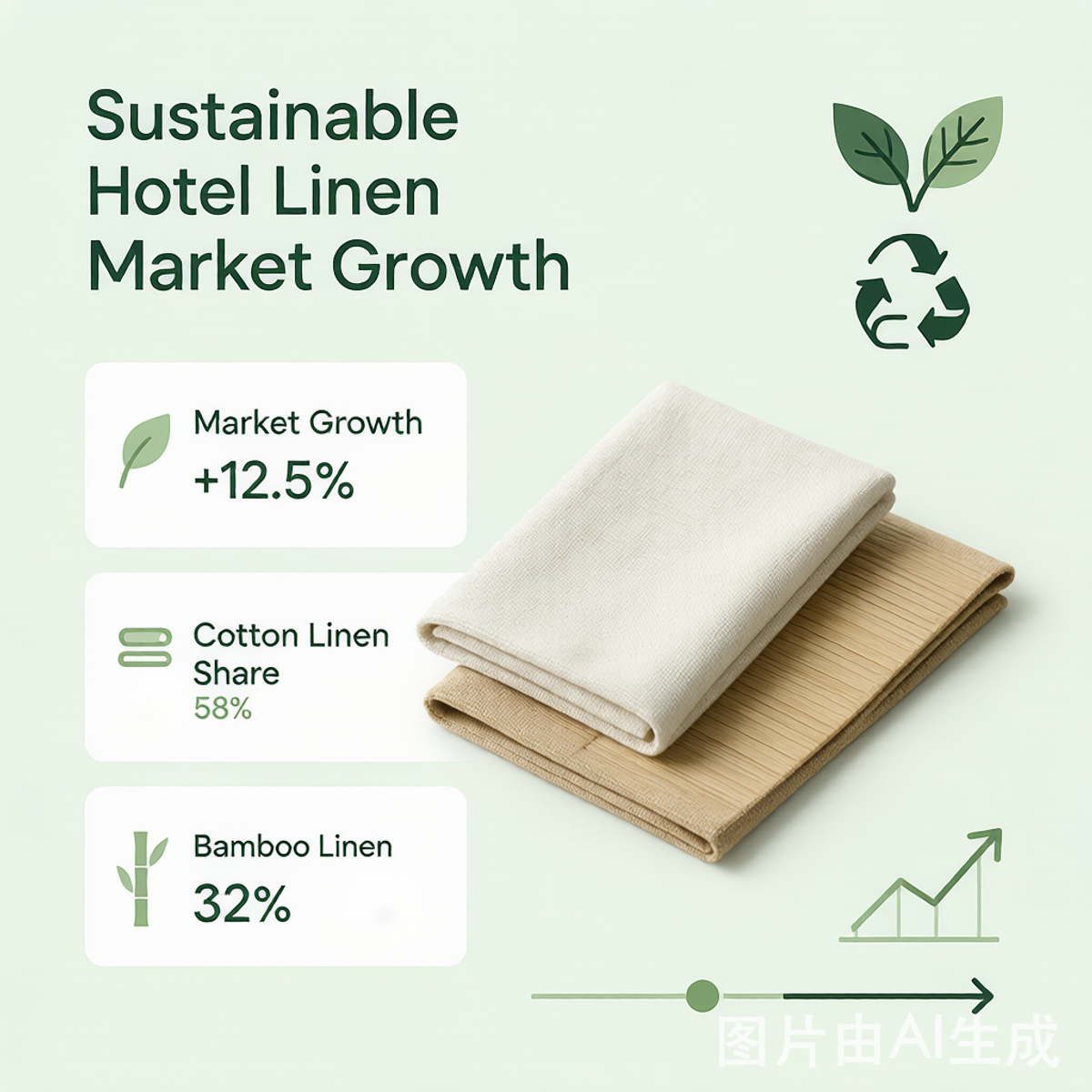
The sustainable hotel linen market is no longer a niche. Industry analysts estimate the global sustainable hospitality textile market at $4.2-4.8 billion in 2026, growing at a 12% compound annual rate “ significantly outpacing the 5% growth of the overall hotel textile market. This growth is driven by mandatory ESG reporting by publicly traded hotel chains, genuine guest preference, and supply-side maturation. This report examines the market landscape, certification ecosystem, and procurement implications for hotel linen buyers.
Market Size and Growth Trajectory
The sustainable hotel linen market breaks down into three segments. Organic cotton products represent approximately 55% of sustainable hotel linen value ($2.3-2.6 billion), with GOTS certification as the dominant standard. Recycled fiber products (rPET T/C blends, recycled cotton blends) represent 25% ($1.0-1.2 billion). Alternative sustainable fibers (Tencel/Lyocell, hemp, bamboo-derived) represent 20% ($0.8-1.0 billion), the fastest-growing segment at 18-20% CAGR. By region: Europe leads in sustainable linen adoption (55% of market), followed by North America at 25%, with Middle East and Asia-Pacific splitting the remaining 20%.
Certification Ecosystem: What Buyers Must Know
The sustainable textile certification landscape is complex. GOTS (Global Organic Textile Standard): the gold standard, covering fiber production through finished product with independent audits at every supply chain stage. OEKO-TEX Standard 100: covers chemical safety only, testing for ~100 harmful substances “ useful as a safety baseline but not a sustainability certification per se. GRS (Global Recycled Standard): covers recycled content verification (minimum 20% for product claims) plus social and environmental criteria. Lenzing Certification: specific to Tencel and Lenzing Modal fibers. Important: always request the actual certificate number and verify it on the certifier’s public database.
Price Premiums and Total Cost Analysis
Sustainable hotel linens carry price premiums. GOTS-certified organic cotton sheets: 25-40% premium over conventional cotton of equivalent quality. GRS-certified rPET T/C 65/35 sheets: 8-12% premium “ the narrowest premium among sustainable options. Tencel-cotton 30/70 blends: 15-20% premium, declining from 25-30% in 2024. Crossover point analysis: if a property’s ADR (average daily rate) exceeds $200 and 30%+ of guests value sustainability, the room rate premium opportunity exceeds the linen cost premium within the first year.
Need these specs quoted for your property?
Tell us your hotel tier, quantities and timeline — get a free, no-obligation quote within 24 hours.
Buyer Demand Patterns: What Hotels Are Actually Buying
The most common entry point: OEKO-TEX Standard 100 certification as baseline requirement “ now the stated policy of multiple international hotel chains. Second step: GOTS-certified organic cotton for pillowcases and top sheets only (the highest-guest-touch items) “ this selective approach captures most of the guest experience benefit at 40-50% of the cost of full GOTS bedding. Third step: full GOTS bedding program. Emerging trend: “circular linen” programs where hotels lease rather than purchase linens, with the supplier responsible for end-of-life recycling.
Greenwashing Risks: How to Verify Claims
Warning signs: supplier claims “eco-friendly” or “green” without referencing specific certification standards with certificate numbers. Supplier says fabric is “organic” but cannot produce a GOTS transaction certificate (TC) for the specific order. OEKO-TEX certificate is for fabric only but product is labeled as certified. Certificate is expired. Certificate appears legitimate but supplier name on the certificate does not match the company you are buying from. Our due diligence process: request the certificate, verify on certifier’s public database, request the Transaction Certificate for your specific order, and perform on-site audit if order value exceeds $50,000.
Procurement Strategy for Sustainable Hotel Linens in 2026
Recommended approach: Start with OEKO-TEX as universal baseline for all purchases. For sustainability-positioned properties: add GOTS-certified organic cotton or Tencel-blend options for high-touch items, budgeting 20-30% premium. For large chains with ESG commitments: develop a phased sustainable linen roadmap (Year 1: OEKO-TEX baseline; Year 2: 30% GOTS; Year 3: full GOTS or GRS; Year 4: circular linen pilot). For independent properties: the sustainability story is a marketing asset “ document your journey and communicate it to guests.
The sustainable hotel linen market is maturing rapidly. The quality gap “ the perception that sustainable means sacrificing quality “ has largely closed. Today’s GOTS-certified organic cotton and Tencel-blend hotel linens match or exceed conventional products on comfort, durability, and appearance. Our Nantong procurement service specializes in verified sustainable hotel linen sourcing, managing the certification verification process so you can confidently market your sustainability commitment to guests.
Shop Related Products
Free PDF: Complete Hotel Linen Buying Guide
Step-by-step procurement guide covering specs, MOQ, pricing, QC, and shipping — based on real Dieshiqiao experience.
Need help sourcing hotel linens?
Get a free quote within 24 hours. No commitment required.
Request a QuoteRelated Articles
Container Shipping Rates Q3 2026: What Hotel Linen Importers Must Budget For
China-US rates hit $5,576/40ft (+66%), China-Europe surges +110%. Drewry index up 6% weekly. Analysis of container shipping rates by route, with budgeting guidance for hotel linen importers.
Weekly Hotel Linen Market Wrap July 7: Cotton at 80.69 Cents, Freight Rising, Middle East Booming
Cotton hits 4-week high at 80.69 cents (+22% YoY). Drewry WCI surges 9%. Middle East hotel pipeline hits record 717 projects. Weekly summary of market s...
India Cotton Import Surge 2026: 42% Increase and Global Supply Chain Impact
India's cotton imports hit 1 million tonnes (+42%) in 2025/26, the highest ever. Monsoon deficit worsens domestic supply. How India's demand reshapes gl...