August Opens with Cotton Steady: State Reserve Hits 12-Day Perfect Streak as Market Awaits Harvest Clarity
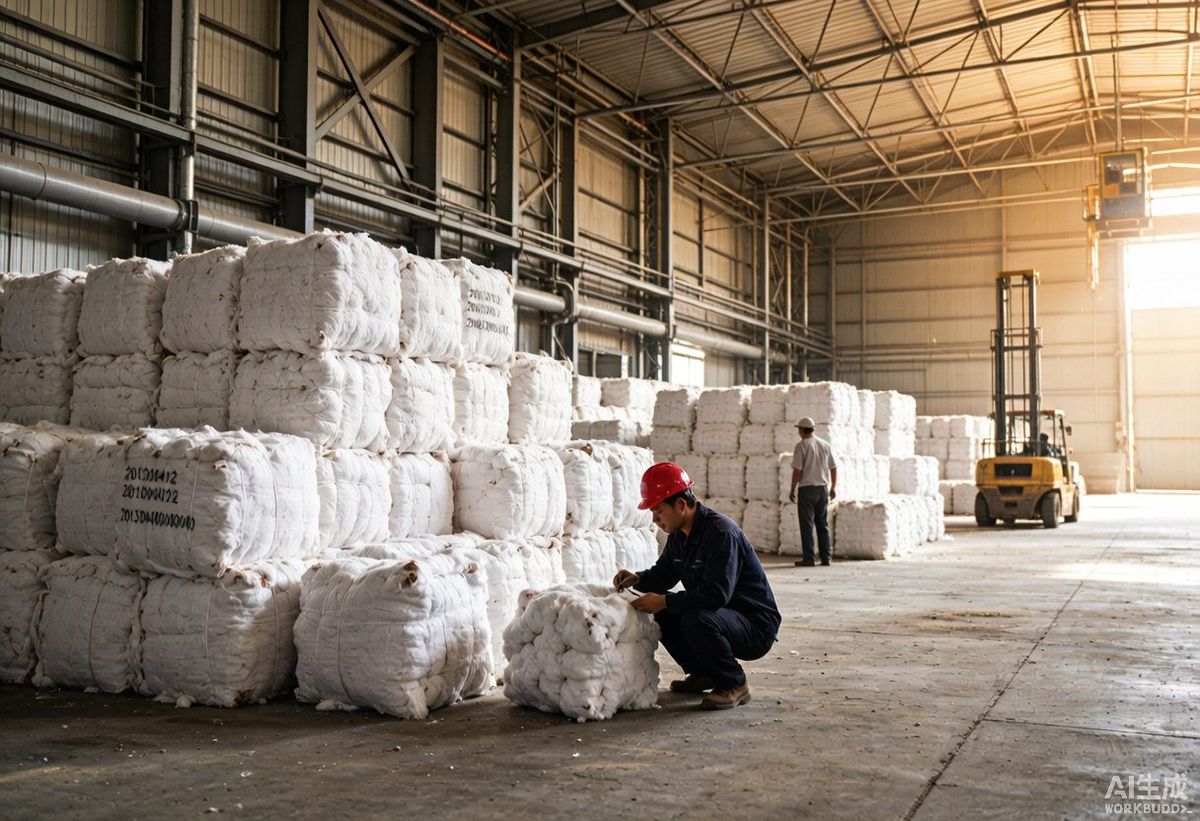
August Opens with Cotton Steady as Market Awaits Harvest
The Chinese cotton market entered August in a state of suspended animation — prices range-bound, futures flat, and all eyes turned toward Xinjiang's cotton fields where the next six weeks will determine whether 2026/27 production forecasts hold.
Price Snapshot (August 1)
Xinjiang 3128B machine-picked: ¥17,400-17,500/ton (flat)
Zhengzhou CF609 futures: 15,855/ton (intraday range 15,780-15,920)
CC Index 3128B: ¥17,393/ton
32S combed cotton yarn: ¥23,751/ton (flat)
Polyester staple fiber: ¥7,400/ton (near 3-year low)
Cotton-polyester spread: ¥9,993/ton (near record)
State Reserve Auction: The Perfect Streak Continues
The central state reserve cotton auction has now completed 12 consecutive trading days with a 100% clearance rate. Cumulative sales have reached approximately 80,000 tons, with average transaction prices gradually easing from the opening ¥17,404/ton toward ¥17,190/ton.
The auction's success reveals two important market dynamics:
First, real demand exists at current price levels. Textile mills are not speculating — they are buying cotton they need for production. This provides a concrete price floor.
Second, the gradual decline in average transaction prices suggests the most urgent mill demand has been satisfied. Subsequent sessions may see more selective bidding, particularly as August progresses and mills assess their autumn order books.
August: The Yield-Determining Month
Need these specs quoted for your property?
Tell us your hotel tier, quantities and timeline — get a free, no-obligation quote within 24 hours.
The Xinjiang Climate Center's August forecast predicts temperatures 1.2-2.8°C above normal across all cotton regions, with northern Xinjiang and eastern Xinjiang seeing temperatures 2°C+ above average. High-temperature events of 35°C+ are expected to be widespread and sustained.
The critical risk is boll shedding. Cotton plants under heat stress will abort bolls to conserve resources. Each aborted boll represents lost yield that cannot be recovered. The next 3-4 weeks are the window where this damage crystallizes.
Commercial Inventory: Destocking Accelerating
National cotton commercial inventory stood at 248 million tons as of July 31, down 11.8 million tons week-on-week. The accelerated destocking reflects:
Mills drawing down stocks rather than buying spot cotton (preferring reserve auction cotton)
Reduced import arrivals as Chinese buyers remain hesitant
Tighter physical availability supporting spot basis
The basis (spot - futures spread) remains firm at ¥1,800+/ton, indicating that physical cotton holders are confident in their negotiating position.
What This Means for Hotel Linen Buyers
The August market presents a window of price stability before the September harvest clarity arrives. For hotel linen procurement:
1. Current cotton prices are not at extremes — ¥17,400 is within the July trading range
2. The polyester-cotton spread at nearly ¥10,000 makes T/C blend products exceptionally cost-effective
3. Risk of price spikes exists if August weather deteriorates further
4. The September-October harvest period will bring price volatility — plan accordingly
Recommendation: For Q4 delivery requirements, consider pricing 40-50% of volume now at current levels. For T/C blend products, current polyester pricing offers excellent value — no need to delay.
Shop Related Products
Free PDF: Complete Hotel Linen Buying Guide
Step-by-step procurement guide covering specs, MOQ, pricing, QC, and shipping — based on real Dieshiqiao experience.
Need help sourcing hotel linens?
Get a free quote within 24 hours. No commitment required.
Request a QuoteRelated Articles
Nantong Soft-Cloud Yarn: A Durability Breakthrough for Hotel Linens
Soft-cloud yarn technology from Nantong solves the softness-durability dilemma in hotel towels and bedding. What procurement managers should know.
September 2026 Textile Market: Peak Season Stalls, Raw Materials Diverge
China's 132nd cotton textile survey shows September peak season underperforming; cotton falls while polyester and viscose surge, creating cost divergence.
September 2026 Hotel Linen: Fabric Market Divergence and Peak Season
August 2026 fabric prices show upstream-downstream divergence as September peak season and ASEAN supply chain shifts reshape hotel linen sourcing.