Brazil Consolidates as China's Largest Cotton Supplier: 52% of Imports
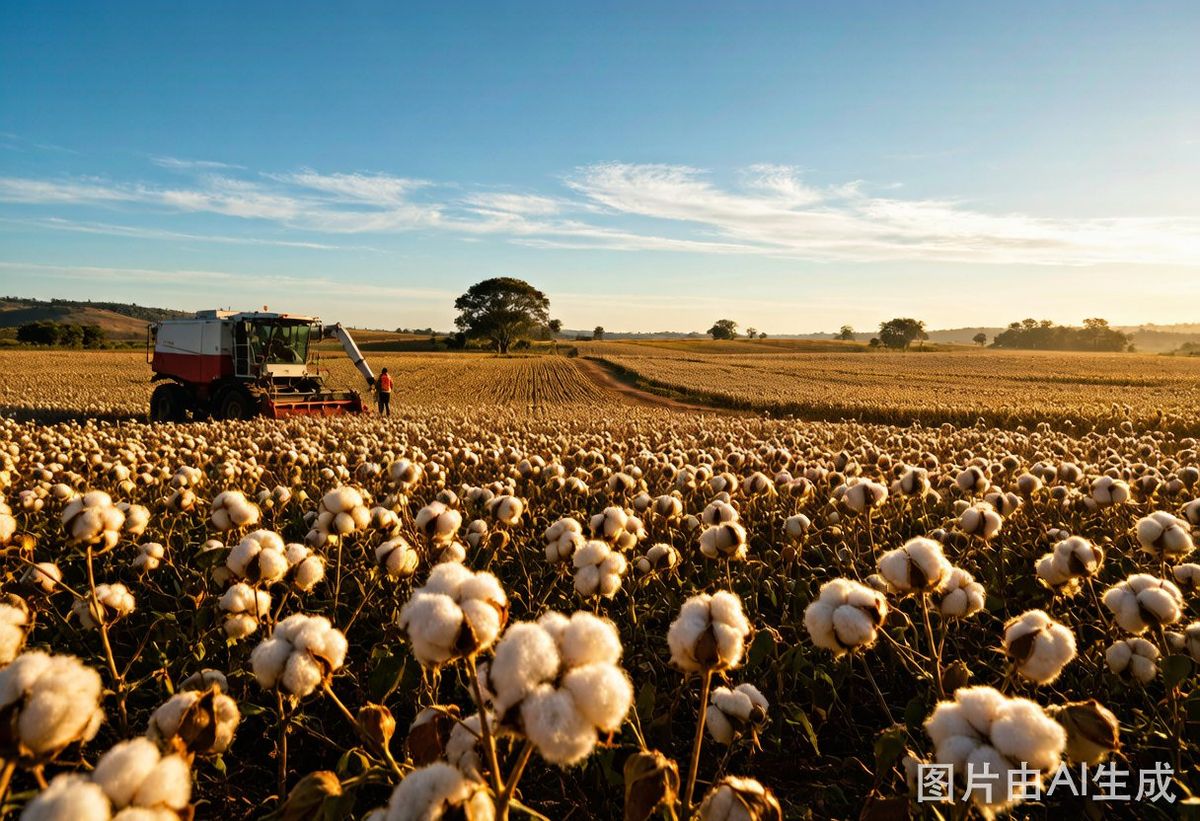
Brazil's Dominance in Chinese Cotton Imports
According to the latest ICAC report, Brazil has consolidated its position as China's largest cotton supplier, accounting for approximately 52 percent of China's cotton imports during the current 2025/26 season. This represents a significant shift in global cotton trade flows.
The Changing Global Cotton Trade Map
Top suppliers to China (2025/26 season)
1. Brazil: approximately 52 percent of imports
2. Australia: second-largest supplier (growing share)
3. United States: declining share due to trade policy impacts
4. India: emerging as both major producer and importer
Key drivers of the shift
**Brazilian advantages**
Consistent quality and large volume availability
Competitive pricing due to favorable exchange rates
Established logistics infrastructure for cotton exports
Mechanized farming reducing production costs
No political trade barriers with China
**US decline**
US-China trade policies continue to influence trade flows
Tariff considerations make US cotton less competitive in the Chinese market
US cotton acreage is declining as farmers switch to soybeans
Drought conditions reducing US crop quality and volume
**Australia's emergence**
Australia has become China's second-largest cotton supplier
Australian cotton is known for high quality (long staple length)
However, El Nino poses significant risk to Australian production
Murray-Darling basin storage at 52.9 percent (down from 60.4 percent a year ago)
China's Cotton Import Recovery
China is expected to regain its position as the world's largest cotton importer during the 2026/27 season, accounting for an estimated 19 percent of global imports. This follows an eight-year low in imports during the previous season.
Import volume recovery
2025/26 imports: projected to increase approximately 42 percent year-on-year
Driven by additional import quotas, higher domestic cotton prices, and the need to sustain consumption levels
China's domestic supply is insufficient to meet its massive textile manufacturing capacity
Why China needs imports
Domestic cotton production cannot meet textile industry demand
Quality requirements (long-staple cotton) exceed domestic supply
Xinjiang cotton faces international compliance concerns in some markets
Import quotas are being expanded to support the textile industry
India: The Demand Center Story
India has become one of the most important drivers of global cotton demand. Cotton lint imports are projected to reach approximately 1 million tons in the 2025/26 season, a 42 percent increase over the previous season and the highest level ever recorded by the country.
Policy drivers
Temporary reductions in import duties
Exemptions for extra-long staple cotton
Improved access to imported fiber
Supporting domestic consumption growth
Global Trade Volume Projections
2026/27 season
Global cotton trade projected to increase by 2.6 percent to 9.6 million tonnes
This growth is driven by recovering Chinese and Indian demand
Need these specs quoted for your property?
Tell us your hotel tier, quantities and timeline — get a free, no-obligation quote within 24 hours.
Implications for cotton prices
Increased trade volume suggests healthy demand
But supply is tightening, creating upward price pressure
ICAC forecasts Cotlook A Index for 2026/27 at 66-85 cents per pound, midpoint 75.7 cents
Current prices already above this range
What This Means for Hotel Linen Buyers
Cotton origin traceability
International buyers should now expect that cotton in Chinese-manufactured hotel linens may originate from:
Brazil (increasingly likely)
Australia (growing share)
China (domestic, primarily Xinjiang)
Other sources (reduced probability)
Compliance considerations
Buyers targeting US markets should verify cotton origin does not conflict with regulations
Request cotton origin certificates from suppliers
Brazilian and Australian cotton face fewer compliance issues than some other origins
The majority-Brazilian supply actually simplifies compliance for many buyers
Pricing implications
Brazilian cotton is competitively priced, helping to moderate hotel linen costs
Australian cotton commands a premium for quality but provides excellent value
The shift away from US cotton means Chinese manufacturers have diversified their raw material sources
This diversification reduces supply chain risk
Quality considerations
Brazilian cotton: good quality, medium to long staple, consistent
Australian cotton: high quality, long staple, excellent for fine yarns
Both origins are suitable for hotel linen manufacturing
Quality is comparable to or better than some US cotton varieties
Procurement Strategy Updates
1. Ask suppliers about their cotton sourcing mix (Brazilian vs. Australian vs. domestic)
2. Request origin certificates for premium products (Egyptian cotton claims)
3. Understand that the majority of Chinese hotel linen now uses Brazilian cotton
4. Use this knowledge to negotiate better pricing (Brazilian cotton is competitively priced)
5. For US-bound shipments, verify cotton origin documentation is complete
6. Consider that Australian cotton products may command a premium but offer quality advantages
Future Outlook
2026/27 season
Brazil is expected to maintain its dominant position
Australian production faces El Nino risks (acreage projected down 30.9 percent)
US production continues to decline
India may increase production but also increases its own imports
Long-term implications
The global cotton trade is becoming more diversified
This is generally positive for supply chain stability
Price volatility may decrease as sourcing options multiply
Quality should improve as competition among suppliers intensifies
Conclusion
Brazil's dominance as China's largest cotton supplier (52 percent of imports) represents a fundamental restructuring of global cotton trade. For hotel linen buyers, this is largely positive: Brazilian cotton offers good quality at competitive prices, and the diversification away from US-only sourcing reduces geopolitical risk. The key takeaway is to understand your cotton origin and ensure it meets your compliance requirements.
Shop Related Products
Free PDF: Complete Hotel Linen Buying Guide
Step-by-step procurement guide covering specs, MOQ, pricing, QC, and shipping — based on real Dieshiqiao experience.
Need help sourcing hotel linens?
Get a free quote within 24 hours. No commitment required.
Request a QuoteRelated Articles
Nantong Soft-Cloud Yarn: A Durability Breakthrough for Hotel Linens
Soft-cloud yarn technology from Nantong solves the softness-durability dilemma in hotel towels and bedding. What procurement managers should know.
September 2026 Textile Market: Peak Season Stalls, Raw Materials Diverge
China's 132nd cotton textile survey shows September peak season underperforming; cotton falls while polyester and viscose surge, creating cost divergence.
September 2026 Hotel Linen: Fabric Market Divergence and Peak Season
August 2026 fabric prices show upstream-downstream divergence as September peak season and ASEAN supply chain shifts reshape hotel linen sourcing.