Cotton Prices to Stay Firm Through H2 2026: BMI Forecasts 77 Cents per Pound Average
BMI Upward Revision
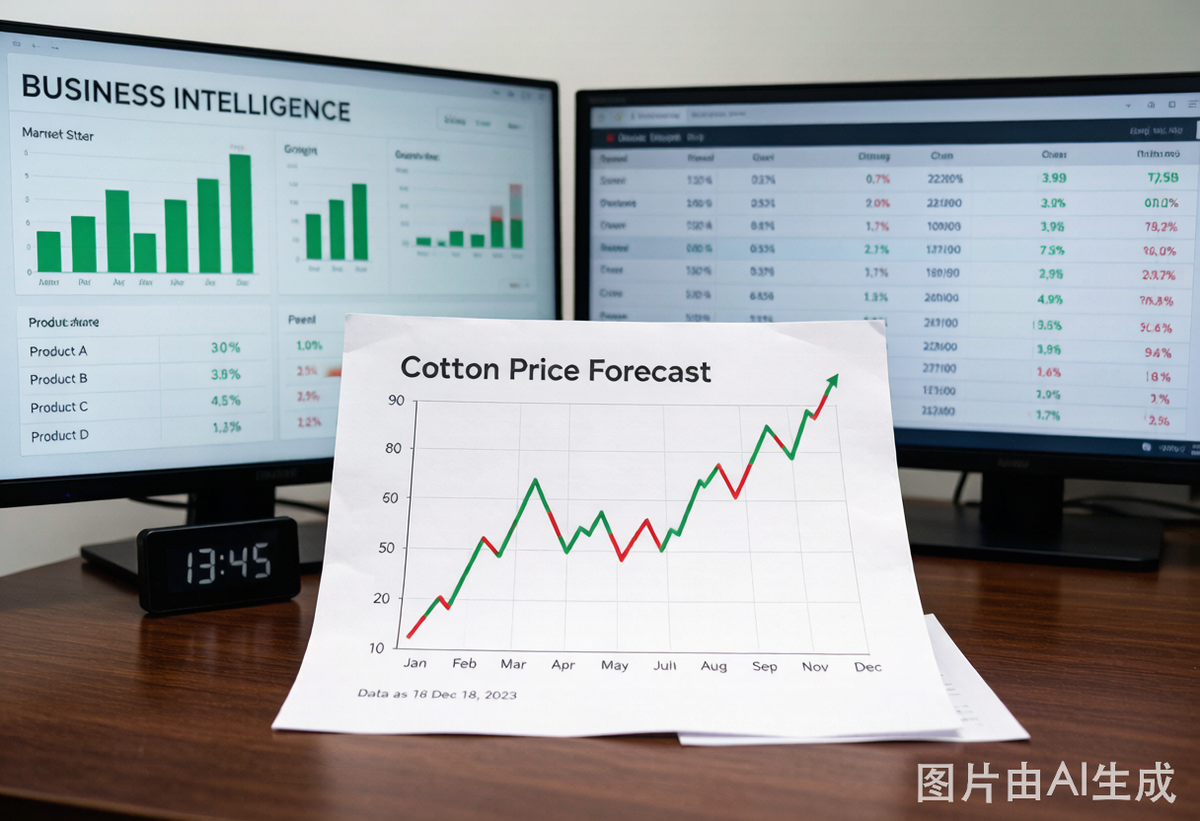
BMI, a Fitch Solutions company, has revised its 2026 annual average forecast for ICE-listed second-month cotton futures upward from 71.4 to 77.0 US cents per pound. This represents a 15.3 percent increase compared to the 2025 annual average of 66.8 cents per pound.
Quarterly Price Projections
The revised forecast breaks down as follows:
Q3 2026: 80.3 cents per pound
Prices are expected to peak in the third quarter as the Northern Hemisphere crop develops and weather risks are most acute. This is the period when hotel linen buyers are typically placing Q4 orders, meaning higher input costs will flow through to product pricing.
Q4 2026: 82.5 cents per pound
The fourth quarter projection is even higher, driven by the confirmation of tighter supply and the approach of the traditional textile peak season. Buyers who wait until Q4 to place orders will likely face the highest prices of the year.
Year-to-date context
Cotton prices have averaged 72.8 cents per pound year-to-date in 2026, up 8.9 percent from the 2025 annual average.
Why Cotton Resists Oil Price Decline
Since mid-May, cotton prices have lost some support from the energy market, tracking the broader decline in oil prices. However, the relatively limited pull-back in cotton prices, down 10.1 percent between May 11 and July 9, compared with a 26.8 percent decline in crude oil prices, suggests supply-side concerns are becoming an increasingly important driver of market sentiment.
In other words, even as oil (a proxy for synthetic fiber competition) gets cheaper, cotton prices remain firm because the supply-side fundamentals are so tight.
El Nino Impact on Cotton
The US National Oceanic and Atmospheric Administration's Climate Prediction Center declared El Nino conditions present in June 2026 and forecasts further strengthening through H2 2026, with a 73 percent probability of at least a strong event developing between July and September.
Regional impacts
Northern Hemisphere producers are expected to be relatively insulated, given limited overlap between weather-sensitive crop stages and the period when El Nino impacts intensify
China and South Asia could see below-average rainfall, which may prove favourable for harvesting
The US faces risks from wetter-than-normal conditions that may disrupt harvesting
Australia faces the greatest downside risk, where El Nino is typically associated with below-average rainfall
Australian Cotton: Major Risk Factor
Need these specs quoted for your property?
Tell us your hotel tier, quantities and timeline — get a free, no-obligation quote within 24 hours.
USDA forecasts published in June project Australian cotton acreage to decline by 30.9 percent year-on-year to 325,000 hectares. A smaller Australian crop, combined with weather-related risk premia, is expected to sustain bullish sentiment through H2 2026.
Speculator Positioning
Market sentiment remains bullish, with net long positions at 31,985 contracts as of June 30. While positioning has eased from the 2026 peak of 62,045 contracts recorded on May 19, the market remains net-long, indicating that traders expect higher prices.
Global Consumption Forecast
Global cotton consumption is forecast at 122.4 million bales in 2025/26 and 123.2 million bales in 2026/27, representing growth of 1.9 percent and 0.7 percent year-on-year respectively. This growth is supported by an expanding global economy despite pressure from a more uncertain macroeconomic and geopolitical backdrop.
What This Means for Hotel Linen Procurement
Budget impact
Cotton represents 60-70 percent of the total cost of cotton-rich hotel linens (sheets, pillowcases, towels)
A 15 percent increase in cotton prices translates to approximately 9-10 percent increase in finished product prices
For a 200-room hotel replacing its full linen set, this could mean an additional $3,000-5,000 in procurement costs
Timing strategy
Place Q4 2026 orders before September to avoid peak pricing
Consider splitting orders: 60 percent immediate, 40 percent contingent on price movements
Lock in 2027 annual contracts now while prices are at 72-77 cents, before the projected move to 80+ cents
Alternative fiber strategy
Microfiber products (not cotton-dependent) offer price stability
Bamboo and lyocell blends provide premium positioning without cotton price exposure
Poly-cotton blends for budget tiers can reduce overall basket cost by 15-20 percent
Conclusion
The BMI forecast confirms what ICAC data and market positioning already suggest: cotton prices will remain firm through H2 2026. Hotel linen buyers who delay procurement decisions risk facing significantly higher costs in Q4 and into 2027.
Shop Related Products
Free PDF: Complete Hotel Linen Buying Guide
Step-by-step procurement guide covering specs, MOQ, pricing, QC, and shipping — based on real Dieshiqiao experience.
Need help sourcing hotel linens?
Get a free quote within 24 hours. No commitment required.
Request a QuoteRelated Articles
Nantong Soft-Cloud Yarn: A Durability Breakthrough for Hotel Linens
Soft-cloud yarn technology from Nantong solves the softness-durability dilemma in hotel towels and bedding. What procurement managers should know.
September 2026 Textile Market: Peak Season Stalls, Raw Materials Diverge
China's 132nd cotton textile survey shows September peak season underperforming; cotton falls while polyester and viscose surge, creating cost divergence.
September 2026 Hotel Linen: Fabric Market Divergence and Peak Season
August 2026 fabric prices show upstream-downstream divergence as September peak season and ASEAN supply chain shifts reshape hotel linen sourcing.