Cradle to Cradle Certified Fabrics for Hotel Linen Procurement
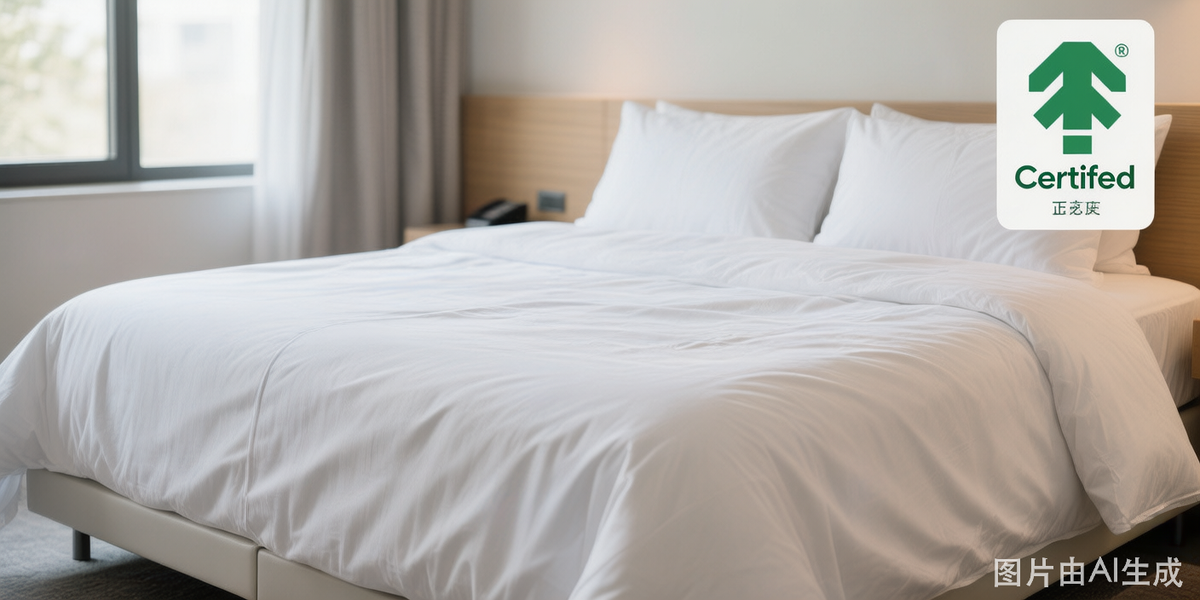
Sustainability is no longer a nice-to-have in the hospitality industry — it is a procurement requirement. For hotel procurement managers sourcing linens and textiles, the ability to verify environmental claims with hard data is becoming a key differentiator when selecting suppliers. A major breakthrough in China's textile industry now makes this level of transparency achievable: the first batch of Cradle to Cradle Certified fabrics with full lifecycle traceability has entered commercial production.
What Is Cradle to Cradle Certification?
Cradle to Cradle (C2C) is one of the world's most rigorous sustainability certifications for materials. Unlike single-attribute labels that focus on one aspect — recycled content or low emissions — C2C evaluates products across five categories: material health, material reutilization, renewable energy use, water stewardship, and social fairness. Achieving Gold-level certification means the fabric is designed for a circular economy: every component can be safely returned to the biological or technical cycle after use.
Full Lifecycle Traceability — A First for China's Textile Industry
This project marks the first end-to-end traceable circular textile initiative in China, independently developed without reliance on overseas technology platforms. The traceability system covers the entire lifecycle: raw material extraction, spinning and weaving, dyeing and finishing, product use, and end-of-life recycling. Every meter of fabric is assigned a unique QR code. Scanning it reveals full-dimensional data — raw material origin, carbon emissions at each production stage, chemical composition, and recyclability percentages. This directly addresses the industry's long-standing pain point: green claims that could not be independently verified.
What This Means for Hotel Procurement
For hotel chains and independent properties alike, procurement teams face growing pressure from corporate ESG goals, guest expectations, and emerging regulations to demonstrate sustainable sourcing. Fabrics with verified lifecycle traceability offer a defensible way to meet these requirements. Instead of relying on supplier claims or generic certifications, procurement managers can now audit the full environmental footprint of the textiles they purchase — from fiber origin to end-of-life disposal — using a single QR code on each bolt of fabric. This level of transparency is especially valuable for properties pursuing LEED certification or reporting under frameworks like the Global Reporting Initiative (GRI).
Three Fabric Categories Relevant to Hospitality
Need these specs quoted for your property?
Tell us your hotel tier, quantities and timeline — get a free, no-obligation quote within 24 hours.
Breaking the Technology Monopoly
Until recently, full textile lifecycle traceability technology was effectively monopolized by a handful of European and North American firms, making it cost-prohibitive for mid-market manufacturers. This breakthrough demonstrates that verified circular textile production is now achievable within China's mature manufacturing ecosystem — and at a commercially viable cost. For hotel procurement professionals sourcing from Asian markets, this means certified sustainable fabrics may soon become accessible without the premium pricing that has historically limited adoption.
Implications for Hotel Linen Sourcing
China remains the world's largest textile manufacturing hub, with the Nantong region alone hosting over 6,000 textile factories and supplying a significant share of global hotel linens. The emergence of independently traceable, certified sustainable fabrics from this ecosystem represents a pivotal shift. In the near term, hotel buyers should expect more mills to adopt similar traceability systems. As the technology diffuses, it will become a baseline expectation rather than a premium feature — similar to how OEKO-TEX certification evolved from a differentiator to a standard requirement over the past decade. Procurement teams that begin incorporating lifecycle traceability into their supplier qualification criteria now will be ahead of the curve.
Key Takeaways for Hotel Buyers
The arrival of fully traceable C2C Gold-certified fabrics from China's textile industry signals that procurement-grade transparency is now a practical reality, not a distant goal. For hotel buyers, the immediate action items are clear: add lifecycle traceability as a weighted criterion in linen RFPs, request QR-code-accessible environmental data from suppliers, and recognize Cradle to Cradle Gold certification as a meaningful differentiator alongside OEKO-TEX and GOTS. As the hospitality industry accelerates toward measurable sustainability, the ability to prove — not just claim — a textile's environmental credentials will become table stakes.
This article was adapted from Chinese textile industry sources. For custom hotel linen inquiries, visit nantonglinens.com.
Shop Related Products
Free PDF: Complete Hotel Linen Buying Guide
Step-by-step procurement guide covering specs, MOQ, pricing, QC, and shipping — based on real Dieshiqiao experience.
Need help sourcing hotel linens?
Get a free quote within 24 hours. No commitment required.
Request a QuoteRelated Articles
Nantong Soft-Cloud Yarn: A Durability Breakthrough for Hotel Linens
Soft-cloud yarn technology from Nantong solves the softness-durability dilemma in hotel towels and bedding. What procurement managers should know.
September 2026 Textile Market: Peak Season Stalls, Raw Materials Diverge
China's 132nd cotton textile survey shows September peak season underperforming; cotton falls while polyester and viscose surge, creating cost divergence.
September 2026 Hotel Linen: Fabric Market Divergence and Peak Season
August 2026 fabric prices show upstream-downstream divergence as September peak season and ASEAN supply chain shifts reshape hotel linen sourcing.