Where to Spend Your First Hotel Linen Budget: A Priority Order
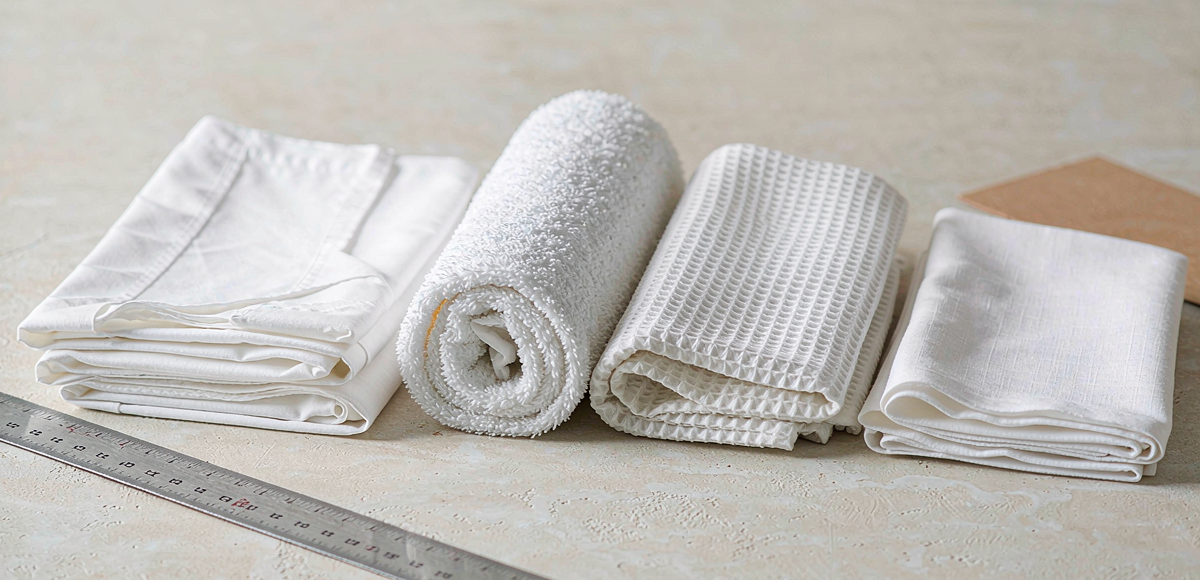
An opening hotel gets one linen number and one brand-standard list. The number is usually set before anyone has counted how many times a pillowcase will be washed in year one, and the list is sorted by department rather than by what a guest actually notices. The result is predictable: 400-thread-count sheets on a mattress with no protector, four bathrobes per suite in a market where the robe mostly stays on its hook, and 2.2 par of towels behind a laundry that turns around in 36 hours. What follows is a spend order, not a product list.
The linen budget is a queue, not a shopping list
Linen is the largest single line in an opening OS&E package: published benchmarks put it at 35 to 45 percent of that package, or roughly USD 1,000 to 2,500 per key before pool and spa stock. That is enough money for the order of commitment to matter more than the unit prices you negotiate.
Two measurements rank the categories honestly: skin contact per guest-night, and replacement cash burn per guest-night. Sort by those and the sequence stops being a matter of taste — bed linen, then bath towels, then bathrobes, then table linen. A first-order split we would defend from a quotation: 55 percent bed linen, 30 percent towels, 8 percent bathrobes, 7 percent food and beverage linen. What follows is the reasoning for each position — you will need it when somebody above you wants the robes first.
First money: bed linen, the only surface a guest lies on for eight hours
Cotton sheets typically survive 200 to 300 commercial washes. Pillowcases do not: published figures put them nearer 150, because they take the most direct contact and the most staining. Act on that asymmetry at the budget stage: set the pillowcase replacement rate above the sheet rate, and expect the first reorder to run two pillowcases per sheet.
On specification, three things are worth money and one is not. Worth money: correct finished width, since a King flat at 280 cm finished needs 290 to 295 cm of greige woven to order at 3,000 m per construction; a written GSM floor rather than a thread count headline; and a sanforized or pre-shrunk commitment measured after the third wash rather than the first. Not worth money at opening: the next thread count tier, which costs more per piece and changes nothing a guest can feel under a duvet.
Member factories quote bedding from 100 pieces per size and colour, with a 50-piece trial possible, and run 25 to 35 days in normal season. Bedding capacity across the alliance is about 100,000 sets a month — a set being duvet cover, flat sheet, fitted sheet and pillowcases — so a 300-room opening does not need splitting across suppliers.
Second money: bath towels, what guests complain about
Towels wear out faster than sheets — 150 to 200 wash cycles against 200 to 300 — and they need more par: four to five sets rather than three, because a towel can cycle through guest, cart and machine in one day. A 600 GSM bath towel at 70 by 140 cm covers 0.98 m² and weighs about 588 g; our member factories quote it at USD 2.80 to 3.50 at 500 pieces. A 650 to 700 GSM towel runs USD 3.80 to 5.00.
The premium buys a heavier hand-feel for the first thirty washes, then turns into a permanent laundry cost: 100 g more per towel, per guest-night, for the life of the towel. Spend on par before weight. 550 to 600 GSM at four par serves guests better than 700 GSM at 2.5 par, because par prevents the 23:00 shortage and weight only improves the first impression. Minimums are 200 pieces per size and colour; dyed-to-match is the exception at 1,000 pieces per colour — the practical reason an opening should be one colour, not four.
Third money: bathrobes, bought for the brochure more often than for the guest
A robe that does get used returns to the laundry at 0.8 to 1.2 kg — the heaviest single item in a guest room. At published European rates of roughly EUR 2.50 to 3.50 per kilogram for bath linen, one robe wash outweighs two bath towels — for a guest who may use it twice in three nights. Robes also retire at the collar and the cuffs long before the body of the fabric fails, so the wear concentrates exactly where it cannot be repaired.
Buy 1.2 to 1.5 par, not three. Choose waffle where drying capacity or laundry cost is the binding constraint, and terry only where a brand standard names terry. Put robes after the towel par count is confirmed — a property with four par of towels and no robes reads better to a guest than the reverse.
Fourth money: table linen, a different customer entirely
Banquet and restaurant linen is judged by event bookers, not by a sleeping guest, and it washes at the highest rate of the flat categories: published European rates for table linen run EUR 3.00 to 4.00 per kilogram against 2.50 to 3.00 for bed linen, because food stains need longer formulas.
Need these specs quoted for your property?
Tell us your hotel tier, quantities and timeline — get a free, no-obligation quote within 24 hours.
That single fact decides the fabric. For banquets, spun polyester: it survives the aggressive formula, holds colour and does not need the ironing cotton damask demands after every wash. Cotton damask belongs in an à la carte room where the property irons in house and the cloth is part of the design. And plan the reorder around napkins rather than tablecloths — napkins are what leave the building.
The arithmetic that reorders the list
Take 100 keys at 70 percent occupancy — 25,550 occupied room-nights a year — and a USD 150,000 opening linen budget split on the ratios above. Replacement then runs to about USD 1.29 per occupied room-night across the three room categories. Laundry is the rest: a bed linen set runs 2.5 to 3 kg and a towel set 1.4 to 1.6 kg, so roughly 4.5 kg per occupied room-night — at USD 1.50 per kilogram, USD 6.75.
That ratio is the whole argument. Purchase price is under one fifth of what linen costs per occupied room-night; laundry is the other four fifths. Which means the heaviest towel is not a one-time upgrade but a nightly charge for three years — and the cheapest one is not cheap either, because you will reorder it twice as often.
| Category | Share of opening linen budget | Par | Published wash life | Buy at opening |
|---|---|---|---|---|
| Bed linen | 55% | 3 par, 4 at high occupancy | 200–300 washes; pillowcases nearer 150 | Full quantity |
| Bath towels | 30% | 4–5 par | 150–200 washes | Full quantity, cap the GSM |
| Bathrobes | 8% | 1.2–1.5 par | Retires at collar and cuff, not at the body | After towel par is confirmed |
| Table linen | 7% | 3 par per cover | Longest of the four if washed to spec | With F&B opening, not with rooms |
| Line | Basis | USD per occupied room-night |
|---|---|---|
| Bed linen replacement | 20% of USD 82,500, over 25,550 room-nights | 0.65 |
| Bath towel replacement | 27% of USD 45,000, over 25,550 room-nights | 0.48 |
| Bathrobe replacement | 30% of USD 12,000, over 25,550 room-nights | 0.14 |
| Laundry | 4.5 kg per room-night at USD 1.50/kg | 6.75 |
| Total | Replacement share of the total | 8.02 |
What to write into the first purchase order
Four clauses do most of the work.
- Split the deliveries: bed linen and towels on the first vessel, table linen with the F&B opening six to ten weeks behind rooms, bathrobes only after the 30-day towel count tells you the real loss rate.
- Use one specification sheet across all four categories, so the sheet GSM floor and the towel GSM floor live in the same document and cannot drift between member factories.
- Apply one inspection standard and one AQL, and keep the same inspector across categories so a decision on a towel is the same decision as one on a duvet cover.
- Schedule a top-up order at day 90, sized off measured loss rather than the opening percentage — if the first count comes back at 14 percent instead of 20, that is budget you can move to the second tower.
Watch the calendar too: peak season, August to November, adds 7 to 10 days to every category here, including deferred ones.
Every member factory of our alliance owns and operates its own production facility, holds its own export licence and can invoice FOB in its own name, accepts buyer audits and on-site visits, and works to the alliance's written specification and inspection standard. The category-to-member mapping is on our factory page. What you sign is one contract, one spec sheet, one inspection standard and one set of shipping documents — and the member factory that makes each order is named on that contract and ships under its own licence.
If you have an opening date and a budget number, send both. The order above changes with the date, and again depending on whether your laundry is outsourced or in house — the one variable that turns a robe from a five-year asset into an annual expense.
This article was written for hotel linen buyers sourcing from China. For custom hotel linen inquiries, visit nantonglinens.com.
Shop Related Products
Free PDF: Complete Hotel Linen Buying Guide
Step-by-step procurement guide covering specs, MOQ, pricing, QC, and shipping — based on real Dieshiqiao experience.
Need help sourcing hotel linens?
Get a free quote within 24 hours. No commitment required.
Related Articles
Hotel Bath Towel Size Guide: 70x140 vs 80x160 vs Bath Sheets
Bath towel size fixes weight, FOB cost, dryer hours and shelf space before comfort. A buyer's comparison of 70x140, 80x160 and 90x180 bath sheets.
Fitted vs Flat Sheets for Hotels: The Housekeeping Cost Gap
Fitted sheets save housekeeping seconds and cost laundry hours. How ironer rules, pocket depth and loom width decide which sheet your property should buy.
Which Hotel Linen to Upgrade First: Towels, Sheets or Bathrobes
Guest reviews reward towel upgrades out loud; sheets only punish when they fail. Rank your next linen upgrade by cost per occupied night, not by age.