Hotel Linen in 2026: Why Strategic Partnerships Now Define Competitive Advantage
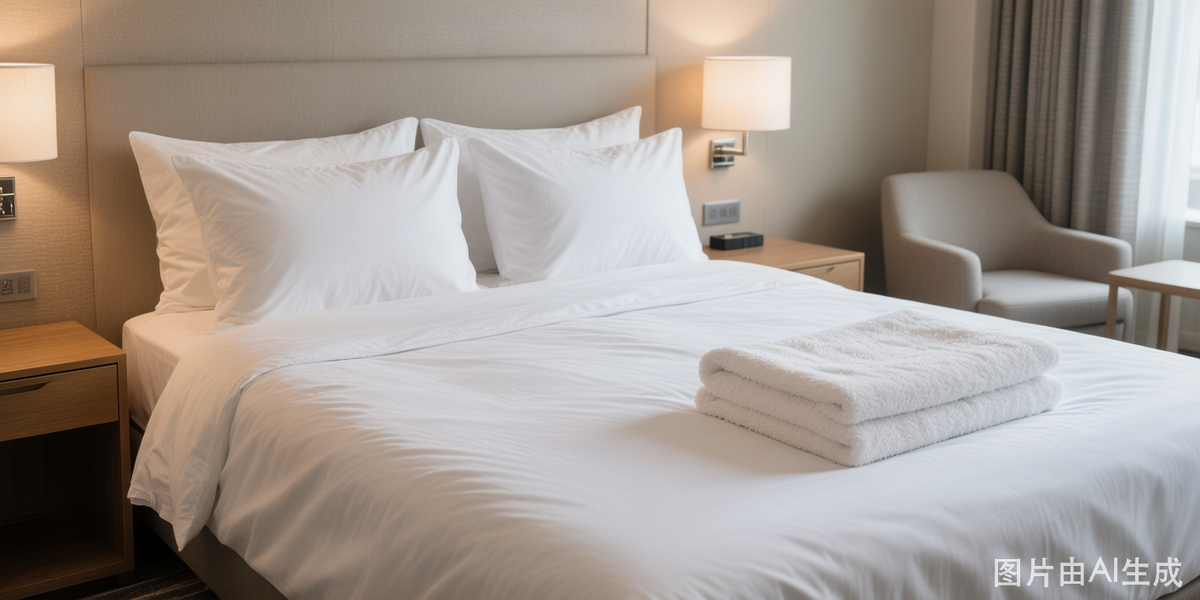
The hospitality industry is navigating a period of deep structural change. Between 2025 and 2026, the expectations placed on hotel linen have shifted dramatically. What was once a checklist item defined by thread count and basic comfort has evolved into a complex ecosystem of performance requirements: antimicrobial treatments, flame retardancy, environmental certifications, bespoke design, and supply chain responsiveness. For hotel owners and procurement managers, the message is clear: linen is no longer a cost line item. It is a strategic asset that directly shapes guest experience, brand equity, and operational efficiency.
The New Reality: Linen as Strategic Infrastructure
Recent industry data paints a telling picture. China's domestic hotel linen market reached RMB 15.68 billion in 2025, posting 9.2% year-on-year growth, with projections exceeding RMB 17 billion in 2026. More significantly, the average annual linen replacement rate at mid-to-high-end hotels across China has climbed from 35% in 2021 to 58% in 2025. This acceleration is driven by two forces: rising guest expectations around hygiene and comfort, and the growing recognition that poorly maintained linen generates negative reviews and erodes pricing power.
Hotels that invested in premium, systematically managed linen programs have reported measurable outcomes: higher average daily rates, fewer guest complaints related to bedding, and stronger repeat booking ratios. In contrast, properties that treated linen as a commodity procurement exercise experienced supply disruptions, quality inconsistencies, and brand damage during peak occupancy periods.
Trend 1: Deep Customization Replaces One-Size-Fits-All
The era of standardized white bedding for every property is fading. Boutique hotels now require bed linen patterns that align with interior design concepts. Resort properties demand higher GSM towels with superior water absorption for poolside and spa environments. Business hotels prioritize wrinkle resistance and durability over sheer softness, given their higher wash-cycle frequency. The suppliers who thrive in this landscape are those offering full-category, deeply customizable solutions rather than off-the-shelf catalogs. 'One hotel, one program' is replacing bulk uniformity.
Trend 2: Full-Chain Quality Control Is Non-Negotiable
Guest sensitivity to hygiene has increased substantially. It is no longer enough for linen to look clean. Procurement teams now demand documented proof of antimicrobial properties, environmental compliance, and performance under repeated industrial laundering. The supplier landscape reveals a critical divide: those who operate their own manufacturing facilities with in-house quality testing laboratories, and those who outsource production and rely solely on third-party inspection reports. The latter model introduces hidden risks in batch consistency, lead time stability, and customization responsiveness.
In-house production means every stage is controllable and traceable, from raw material procurement through weaving, dyeing, finishing, cutting, sewing, and final inspection. Independent quality laboratories test for pilling resistance, color fastness, and shrinkage rates on every batch before shipment. For hotels that need full-category linen (bedding, duvet inserts, towels, bathrobes, table linens), a single supplier with unified standards eliminates the communication overhead and quality variance of managing multiple vendors.
Trend 3: Agile Supply Chain Response
The post-pandemic hospitality market is characterized by sharp fluctuations in occupancy. Hotels can no longer afford to hold months of linen inventory or wait 60-day lead times for replenishment. The competitive advantage now belongs to suppliers with self-owned production bases, flexible production lines, and logistics networks capable of small-batch rapid response, emergency replenishment, and seasonal peak capacity guarantees. This agility reduces the hotel's working capital burden and insulates operations from demand shocks.
The Risks of the OEM-Broker Model
A significant portion of the hotel linen supply chain still operates on a broker or OEM-aggregation model: design is outsourced, production is subcontracted to third-party factories, and the supplier handles only sales and logistics. While this model may appear cost-competitive on paper, it carries structural risks. When a hotel's linen program spans bedding, toweling, robes, and table linens across multiple subcontractors, quality becomes inconsistent, lead times become unpredictable, and accountability becomes diffuse. When problems arise, tracing root causes across a chain of subcontractors is operationally expensive and reputationally dangerous.
Performance Specifications That Matter in 2026
Need these specs quoted for your property?
Tell us your hotel tier, quantities and timeline — get a free, no-obligation quote within 24 hours.
Fabric construction: Warp and weft density, yarn count, and finishing processes determine the balance between softness and durability under industrial laundering. A well-engineered 60s cotton sateen will feel luxurious on first touch and maintain shape after 200+ wash cycles.
Towel GSM and absorption: Resort and spa properties require towels in the 600-700 GSM range with rapid water absorption. Lower GSM towels degrade faster and generate guest complaints about thinness.
Antimicrobial and anti-mite treatments: Post-pandemic, these are increasingly baseline expectations rather than premium add-ons. Suppliers with in-house capability to apply and test functional finishes hold a clear advantage.
Certification matrix: ISO 9001 quality management, ISO 14001 environmental management, and OEKO-TEX Standard 100 are the minimum bar. Properties pursuing green building certifications (LEED, BREEAM) increasingly require documented chain-of-custody for sustainable fibers.
Three Hard Criteria for Supplier Selection
Based on current market analysis, hotel decision-makers should prioritize these three questions when evaluating linen partners:
1. Does the supplier operate its own full-category production facility, or is it primarily a trading operation aggregating from multiple factories?
2. Does the supplier maintain an independent quality testing laboratory with environmental management certification, or does it rely exclusively on third-party test reports?
3. Has the supplier successfully served star-rated hotel clients comparable to your own brand positioning, with verifiable case studies?
Looking Ahead
China's Ministry of Industry and Information Technology, together with the Ministry of Ecology and Environment and the State Administration for Market Regulation, released the 'Standards-Led Textile Industry Optimization and Upgrading Action Plan (2026-2028)' in March 2026. The policy framework mandates higher environmental and quality benchmarks across the textile supply chain, with direct implications for hotel linen procurement. Suppliers that have already invested in compliance infrastructure will be positioned to serve increasingly regulated markets, while those lagging behind will face escalating barriers.
In this environment, the choice of a linen partner is not a procurement decision. It is a competitive strategy decision. Hotels that select partners with manufacturing depth, quality infrastructure, and demonstrated experience serving comparable properties will enter the next cycle with a measurable advantage in guest satisfaction, operational reliability, and brand resilience.
This article was adapted from Chinese textile industry sources. For custom hotel linen inquiries, visit nantonglinens.com.
Shop Related Products
Free PDF: Complete Hotel Linen Buying Guide
Step-by-step procurement guide covering specs, MOQ, pricing, QC, and shipping — based on real Dieshiqiao experience.
Need help sourcing hotel linens?
Get a free quote within 24 hours. No commitment required.
Request a QuoteRelated Articles
Nantong Soft-Cloud Yarn: A Durability Breakthrough for Hotel Linens
Soft-cloud yarn technology from Nantong solves the softness-durability dilemma in hotel towels and bedding. What procurement managers should know.
September 2026 Textile Market: Peak Season Stalls, Raw Materials Diverge
China's 132nd cotton textile survey shows September peak season underperforming; cotton falls while polyester and viscose surge, creating cost divergence.
September 2026 Hotel Linen: Fabric Market Divergence and Peak Season
August 2026 fabric prices show upstream-downstream divergence as September peak season and ASEAN supply chain shifts reshape hotel linen sourcing.