How to Evaluate Hotel Linen Suppliers: A 6-Dimension Framework
Selecting the right hotel linen supplier is one of the highest-stakes procurement decisions a hotel operator makes. Bed sheets, towels, and bathrobes are the most tactile touchpoints in any guest room — they directly shape satisfaction scores, online reviews, and repeat bookings. Yet many procurement teams still default to price comparison alone, overlooking critical factors that determine long-term value. This article presents a six-dimension evaluation framework designed to help hotel buyers move beyond surface-level comparisons and identify partners who can deliver consistent quality, reliable supply, and measurable cost efficiency over time.
Dimension 1: Raw Material Expertise and Weaving Craft
The foundation of any quality linen product lies in fiber selection and weaving technique. When evaluating suppliers, look beyond basic fabric composition labels. Ask specific questions: What is the long-staple cotton ratio in the blend? What yarn count and thread density are used for core products? Does the supplier offer multiple weave structures — percale, sateen, twill, dobby, and jacquard — to match different hotel tiers and brand standards? For towels, examine loop construction and pile height, as these directly determine absorbency and hand feel. A supplier with deep textile engineering knowledge will be able to explain how each specification affects the guest experience, from the crisp coolness of a 300-thread-count percale sheet to the plush absorbency of a zero-twist yarn towel. This technical fluency is a reliable signal that the supplier understands quality at the fiber level, not just at the finished product level.
Dimension 2: Manufacturing Maturity and Quality Control
The gap between suppliers is often widest in quality control capabilities. Modern textile factories are increasingly adopting AI-powered visual inspection systems capable of detecting stitching irregularities, color inconsistencies, and fabric defects with accuracy rates approaching 99%, compared to the industry average of 85–90% for manual inspection. This translates to fewer than one defective item per hundred units shipped, dramatically reducing guest complaint rates and return processing costs. When auditing a factory, examine its QC workflow in detail: Does it maintain dedicated inspection stations at fabric receiving, cutting, sewing, and finishing stages? Is the quality team organizationally independent from production teams? Can the supplier provide batch-level test records and defect rate trends for the past twelve consecutive months? These records offer an objective, data-driven view of actual quality performance that far exceeds any marketing claim.
Dimension 3: Supply Chain Responsiveness
In hotel operations, supply chain disruptions translate directly into empty rooms or inconsistent guest experiences. Key responsiveness metrics to evaluate include standard lead time from order confirmation to delivery, emergency order turnaround capability, and batch-to-batch color consistency. Suppliers with vertically integrated operations — in-house weaving, dyeing, and finishing facilities — eliminate the coordination delays and quality handoff losses that plague multi-vendor outsourcing models. Pay particular attention to color consistency: for chain hotels where brand visual identity demands absolute uniformity, the ability to maintain Delta E color difference below 1.5 across separate production runs is a critical technical capability that separates professional-grade suppliers from commodity producers.
Dimension 4: Customer Validation and Market Proof
A supplier's client portfolio reveals more about its capabilities than any marketing brochure ever will. Look for suppliers who have successfully passed the procurement qualification processes of demanding institutional buyers — national railway systems, government procurement platforms, and international hotel chains — where durability standards are exceptionally rigorous. Railway-grade linens provide a particularly instructive benchmark: they must endure up to 200 industrial wash cycles per year while maintaining dimensional stability, color fastness, and fabric integrity. If a supplier can consistently serve such extreme-usage environments over multiple years, their products will comfortably exceed the demands of any standard hotel operation. Ask for verifiable client references and, where possible, review continuous order records rather than one-time project lists.
Need these specs quoted for your property?
Tell us your hotel tier, quantities and timeline — get a free, no-obligation quote within 24 hours.
The hidden cost of working with multiple specialized suppliers is coordination overhead. Industry data suggests that hotels can reduce procurement coordination labor by approximately 30% and improve linen inventory turnover by roughly 20% when consolidating to a full-category supplier that provides bedding, towels, bathrobes, mattress protectors, and pillow inserts under a single procurement relationship. Beyond category breadth, evaluate whether the supplier offers customization services — custom embroidery with hotel logos, color matching to brand palettes, bespoke packaging design, and private labeling options. These services strengthen brand consistency and reduce the operational burden of managing fragmented supplier relationships.
Dimension 6: Production Scale and Long-Term Investment
A supplier's production footprint and capital reinvestment rate are leading indicators of long-term reliability. Key signals include total production facility area, number of skilled technical workers, annual R&D investment ratio, and recent capital expenditures on equipment upgrades. A supplier investing in advanced jacquard looms, automated cutting lines, and digital color management systems is signaling genuine commitment to quality improvement and capacity growth — both essential for multi-year hotel procurement partnerships. Conversely, stagnant facilities with aging equipment are a warning sign of potential quality drift and capacity constraints as order volumes grow.
From Price Comparison to Total Cost of Ownership
The most common procurement mistake is equating the lowest unit price with the best overall value. A bed sheet set that costs 20% less upfront but requires replacement after just 8 months — versus 18 to 24 months for a higher-quality alternative with dense long-staple cotton construction — actually incurs significantly higher costs when factoring in replacement labor, disposal logistics, and the hidden cost of guest dissatisfaction during the product's decline phase. The six-dimension framework forces a total-cost-of-ownership perspective: evaluating product lifespan, maintenance requirements, supply reliability, and ongoing service support as integral components of procurement value, not afterthoughts to the purchase price.
Applying the Framework: A Practical Scoring Method
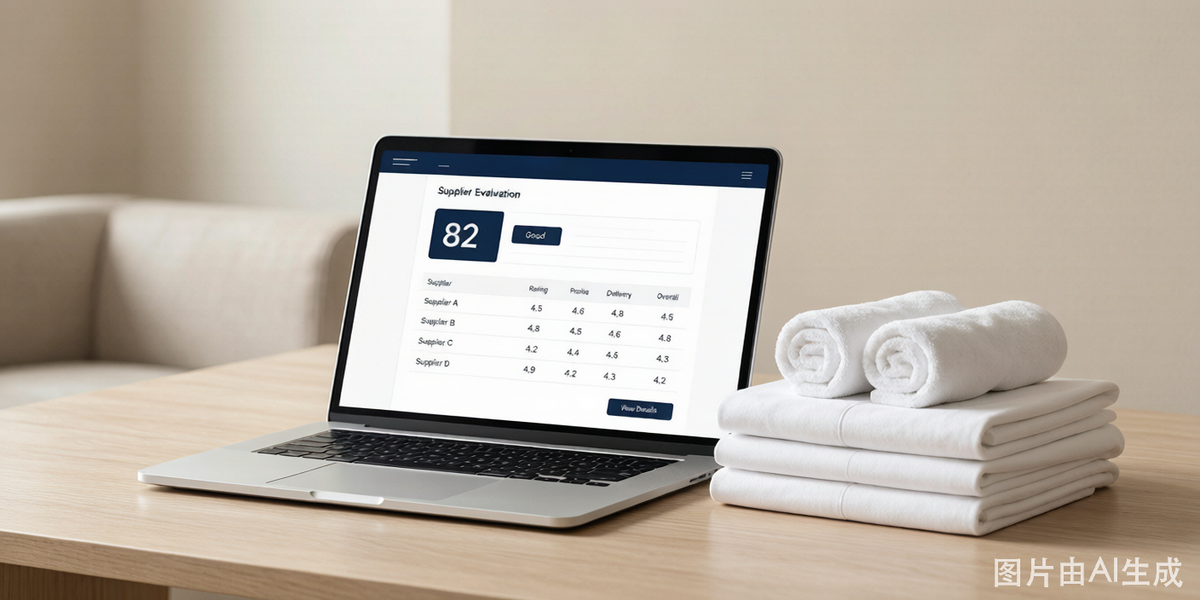
For your next linen procurement cycle, score each shortlisted supplier on a simple 1-to-5 scale across all six dimensions. Weight the dimensions according to your property's specific priorities — a luxury boutique hotel may place heavier weight on weaving craft and customization capability, while an economy chain may prioritize supply chain responsiveness and production scale. For each dimension, request documented evidence rather than verbal assurances: lab test reports for fabric specifications, QC inspection logs for quality control performance, verifiable client references for market validation, and independent factory audit results for manufacturing maturity. This structured, evidence-based approach transforms what is often a subjective, relationship-driven decision into a defensible, data-driven procurement process that consistently delivers better long-term outcomes.
This article was adapted from Chinese textile industry sources. For custom hotel linen inquiries, visit nantonglinens.com.
Shop Related Products
Free PDF: Complete Hotel Linen Buying Guide
Step-by-step procurement guide covering specs, MOQ, pricing, QC, and shipping — based on real Dieshiqiao experience.
Need help sourcing hotel linens?
Get a free quote within 24 hours. No commitment required.
Request a QuoteRelated Articles
Nantong Soft-Cloud Yarn: A Durability Breakthrough for Hotel Linens
Soft-cloud yarn technology from Nantong solves the softness-durability dilemma in hotel towels and bedding. What procurement managers should know.
September 2026 Textile Market: Peak Season Stalls, Raw Materials Diverge
China's 132nd cotton textile survey shows September peak season underperforming; cotton falls while polyester and viscose surge, creating cost divergence.
September 2026 Hotel Linen: Fabric Market Divergence and Peak Season
August 2026 fabric prices show upstream-downstream divergence as September peak season and ASEAN supply chain shifts reshape hotel linen sourcing.