Understanding Hotel Linen Yarn Count and Fabric Density: A Buyer's Guide
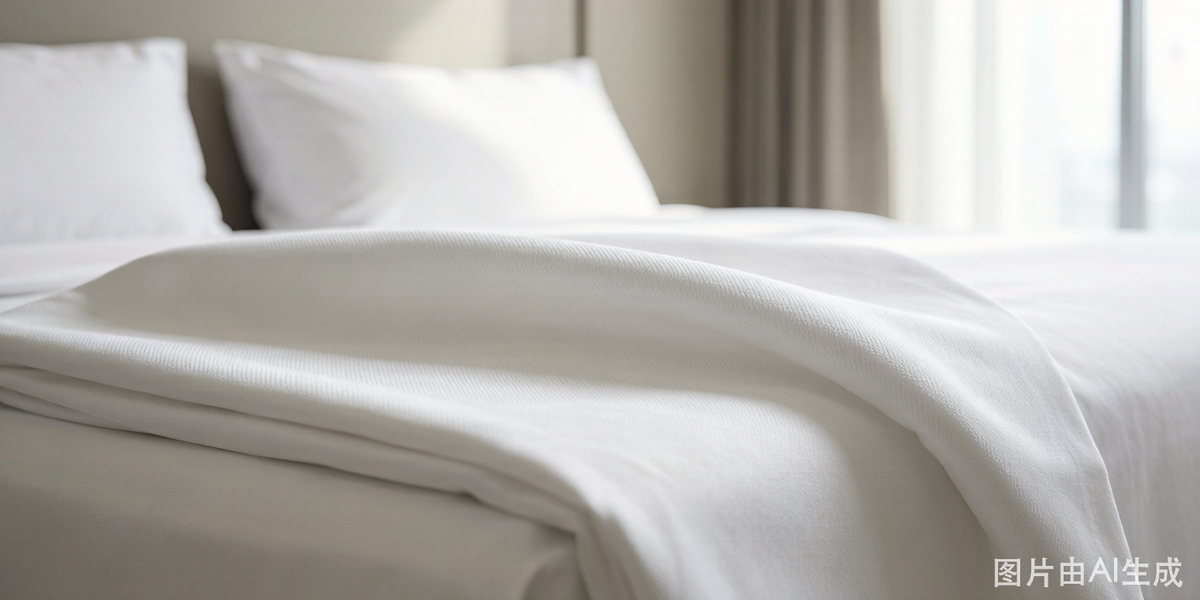
In hotel procurement, few decisions have a more direct impact on guest satisfaction than linen selection. A sheet that feels smooth and stays crisp after 200 industrial washes is not an accident — it is the result of precise fiber selection, yarn engineering, and fabric construction. Yet many buyers negotiate prices without understanding the technical specifications that determine whether a product will last six months or three years. This guide breaks down the fundamentals every hotel linen buyer should know: yarn count, thread density, fabric classification, and how to match specifications to property type.
Fiber Fundamentals — Natural vs. Synthetic in Hotel Textiles
The foundation of any linen product is the fiber itself. Fibers fall into two broad categories: natural and synthetic. Natural fibers — primarily cotton and linen — are harvested directly from plants. Cotton dominates hotel bedding because it breathes, absorbs moisture, and softens with washing. Synthetic fibers such as polyester, acrylic, and nylon are manufactured through chemical extrusion and offer advantages in durability and wrinkle resistance. The key distinction for procurement is fiber length: long-staple cotton produces smoother, stronger yarns that resist pilling, while short fibers create rougher fabrics that degrade faster. Always ask suppliers to specify cotton origin and staple length.
What Yarn Count (S) Actually Means
Yarn count — expressed with the notation "S" — is the single most misunderstood metric in textile procurement. The number before S indicates yarn fineness: the higher the number, the finer the yarn. Specifically, one English cotton count (Ne) equals the number of 840-yard hanks of yarn that weigh one pound. A 60S yarn means 60 hanks of 840 yards weigh one pound — significantly finer than a 40S yarn. Higher yarn counts require longer, higher-quality cotton fibers, which is why 60S-80S fabrics command premium pricing. Here is the procurement reality: 40S offers excellent durability for mid-scale and economy properties; 60S provides the smooth, crisp hand feel expected in four-star hotels; 80S delivers luxury softness but demands more careful laundering. Going beyond 80S typically reduces wash durability without meaningful guest-perceptible improvements.
Thread Density — Warp, Weft, and Why Both Numbers Matter
Yarn count alone tells only half the story. Thread density — measured as the number of yarns per inch in both warp (lengthwise) and weft (widthwise) directions — determines fabric weight, durability, and hand feel. Industry notation like "60S×40S / 173×124" means 60S warp yarns and 40S weft yarns, with 173 warp threads and 124 weft threads per inch. A balanced construction with equal or near-equal warp and weft counts produces stable fabric that resists distortion through repeated washing. Asymmetric constructions — where weft count is significantly lower — can save cost but often result in fabrics that stretch, skew, or develop thin spots over time. For hotel bedding expected to withstand 200+ commercial wash cycles, a minimum total thread count of 250-300 per square inch with balanced construction is a practical baseline.
Moisture Regain — The Hidden Quality Variable
Need these specs quoted for your property?
Tell us your hotel tier, quantities and timeline — get a free, no-obligation quote within 24 hours.
Fabric Classification — Woven, Nonwoven, Pure, and Blended
Hotel linens primarily use woven fabrics, where warp and weft yarns interlace on a loom in a structured grid. Among woven constructions: plain weave (percale) offers a crisp, cool feel ideal for warm climates; satin weave (sateen) produces the silky surface popular in luxury properties but is more prone to snagging; twill weave provides durability for heavy-use items like duvet covers. Nonwoven textiles — made by bonding fibers through adhesives or mechanical methods — appear in disposable items like slippers and laundry bags. Pure cotton fabrics dominate hotel bedding, but polyester-cotton blends (typically 65/35 or 50/50) remain common in budget properties because they dry faster, wrinkle less, and cost less up front. The trade-off: blends pill more readily and feel less breathable than 100% cotton.
Bed Linen Sizing — Getting the Specs Right
Incorrect sizing is one of the most common procurement errors, and it creates visible quality problems. The industry standard: flat sheets should extend 80 cm beyond the mattress on all sides to drape properly and tuck securely. For a standard 200×120 cm single bed, that means a flat sheet of approximately 280×200 cm. Fitted sheets must accommodate mattress depth — typically 20 cm — plus sufficient under-mattress overlap to stay in place. Duvet covers should be sized to fully conceal the mattress-to-frame gap, which is why many hotels order oversized covers. Including exact bed dimensions and mattress depths in purchase specifications prevents costly sizing errors.
Towel Quality — GSM, Weave, and Durability Signals
Hotel towels are the most frequently used linen category and often the first to show wear. GSM (grams per square meter) is the standard weight metric: 400-500 GSM suits economy and mid-scale properties; 550-650 GSM delivers the plush feel expected at upscale hotels; above 700 GSM becomes heavy to handle and slow to dry, increasing laundry energy costs. Beyond weight, weave type matters: terry loop construction with uniform, dense loops maximizes absorbency; sheared velour finishes create a velvety surface but reduce loop volume over time; dobby borders add durability to edges that take the most stress. Common failure points — holes, frayed edges, surface graying — can be minimized by specifying ring-spun cotton yarns (which produce fewer loose fiber ends than open-end spun) and reinforced edge stitching.
Selecting hotel linens is a technical decision, not a price comparison. Yarn count determines texture and durability; thread density controls fabric stability; fiber type governs breathability and laundering behavior; and sizing specifications prevent operational friction. For procurement managers, the most cost-effective approach is to define target specifications before soliciting quotes, request lab test reports for key metrics (colorfastness, shrinkage, tensile strength), and validate with wash-test samples before committing to volume orders.
This article was adapted from Chinese textile industry sources. For custom hotel linen inquiries, visit nantonglinens.com.
Shop Related Products
Free PDF: Complete Hotel Linen Buying Guide
Step-by-step procurement guide covering specs, MOQ, pricing, QC, and shipping — based on real Dieshiqiao experience.
Need help sourcing hotel linens?
Get a free quote within 24 hours. No commitment required.
Request a QuoteRelated Articles
Nantong Soft-Cloud Yarn: A Durability Breakthrough for Hotel Linens
Soft-cloud yarn technology from Nantong solves the softness-durability dilemma in hotel towels and bedding. What procurement managers should know.
September 2026 Textile Market: Peak Season Stalls, Raw Materials Diverge
China's 132nd cotton textile survey shows September peak season underperforming; cotton falls while polyester and viscose surge, creating cost divergence.
September 2026 Hotel Linen: Fabric Market Divergence and Peak Season
August 2026 fabric prices show upstream-downstream divergence as September peak season and ASEAN supply chain shifts reshape hotel linen sourcing.