Hotel Textile Procurement 2026: A Quality-Driven Evaluation Framework
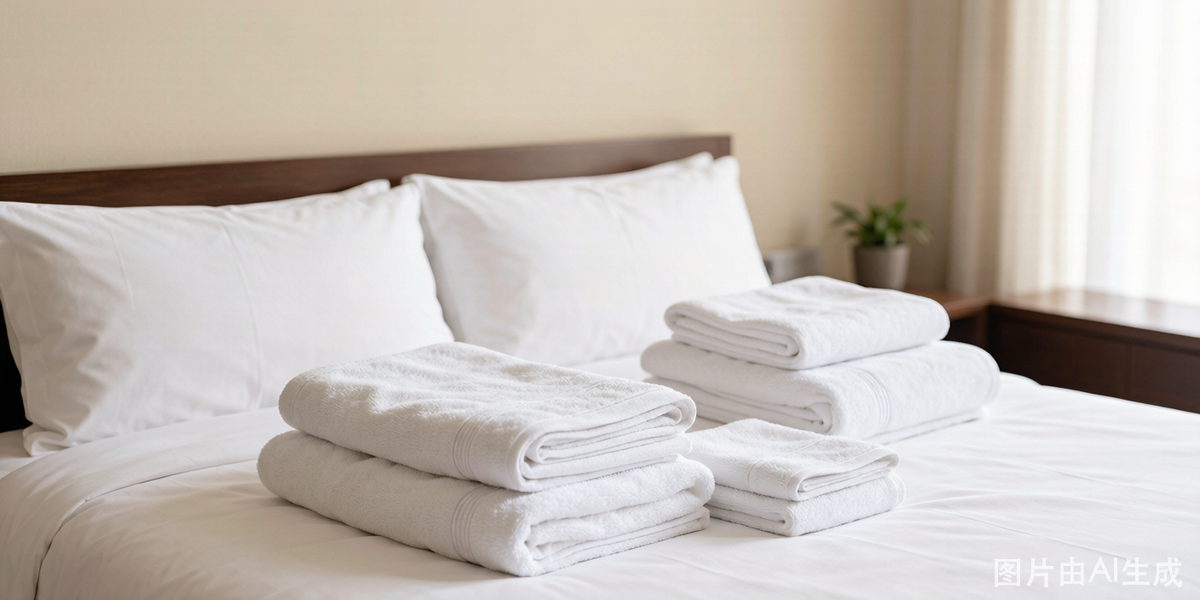
In 2026's fiercely competitive hospitality market, guestroom experience has emerged as a decisive factor in driving repeat bookings and brand loyalty. Studies show that the tactile quality, perceived cleanliness, and visual consistency of hotel linens influence over 68% of how guests evaluate a property's star rating. This data point reflects a broader industry shift: hotel textiles are no longer viewed as disposable operational supplies but as strategic assets that directly impact guest satisfaction, operational efficiency, and brand positioning. For procurement managers, this means the traditional price-comparison approach is no longer sufficient. What follows is a practical evaluation framework built around four pillars: manufacturing stability, quality control metrics, industry expertise, and service infrastructure.
The Strategic Value Shift in Hotel Textiles
The economics of hotel linen procurement have changed. Property managers now recognize that investing in higher-quality textiles reduces long-term replacement costs, lowers housekeeping complaints, and strengthens brand perception. A textile supplier today must be evaluated not just on per-unit pricing but on total lifecycle value — how their products perform over hundreds of wash cycles, how consistently they meet specifications across repeat orders, and how effectively their service network supports multi-property operations. This shift aligns with broader hospitality trends toward operational excellence and differentiated guest experiences.
Manufacturing Stability: The Foundation of Reliable Supply
The single most important criterion in supplier evaluation is manufacturing stability. A vertically integrated production chain — spanning yarn sourcing, weaving, dyeing, finishing, and quality inspection — gives suppliers direct control over every stage of production. This control translates into predictable lead times, consistent material sourcing, and the ability to trace quality issues back to specific production steps. Procurement managers should verify whether a supplier operates their own weaving and finishing facilities or subcontracts to third parties, as the latter introduces variability that can affect both quality and delivery schedules. For high-volume hotel groups with recurring procurement needs, supplier production capacity must demonstrably match peak-season demand without compromising turnaround times.
Quality Control Metrics That Matter
Leading textile manufacturers now employ AI-powered quality inspection systems that achieve fabric defect recognition accuracy exceeding 99%. This level of automated inspection dramatically reduces the human error inherent in manual QC processes and ensures that every piece leaving the factory meets specification. When evaluating suppliers, procurement managers should request documented quality control data rather than accepting verbal assurances. Key metrics to verify include the supplier's internal defect rate — best-in-class manufacturers maintain rates below 0.5% — and the scope of their testing protocols, which should cover tensile strength, colorfastness, dimensional stability after washing, and absorbency. Suppliers who invest in automated inspection technology demonstrate a commitment to quality consistency that directly benefits hotel operations.
Fabric and Construction Standards for Hotel Linens
Understanding product specifications is essential for meaningful supplier comparison. For hotel bathrobes, the optimal weight range is 450–550 grams per square meter (GSM), providing the plush hand feel guests expect while maintaining adequate drying efficiency. Hotel towels should target 400–500 GSM, balancing absorbency with practical laundry throughput. Beyond weight, procurement teams should evaluate fiber content — long-staple or combed cotton varieties significantly reduce pilling and linting compared to standard carded cotton — and finishing treatments. Pre-shrinking, anti-pilling, and color-fixing processes applied during manufacturing directly determine how linens perform after repeated commercial laundering. Requesting pre-production samples and conducting in-house wash testing before committing to volume orders is a low-cost way to validate supplier claims.
Need these specs quoted for your property?
Tell us your hotel tier, quantities and timeline — get a free, no-obligation quote within 24 hours.
Visual consistency across multiple property locations is a non-negotiable requirement for hotel groups. Different production batches of the same specification can exhibit noticeable color variation if the supplier lacks precise dye control systems. The industry-accepted standard for batch-to-batch color difference is a Delta E value below 1.5 — a threshold that requires digital dye-control technology and spectrophotometer verification rather than visual inspection alone. Procurement contracts should explicitly include color tolerance specifications, and suppliers should be required to retain physical archive samples from every production batch to ensure that repeat orders match the approved standard. For properties undergoing renovation or brand refresh cycles, this archival capability becomes critical for maintaining design continuity over time.
Industry Experience and Service Network Evaluation
A supplier's track record with comparable clients provides the most reliable indicator of their ability to meet your requirements. Look for suppliers who have served large-scale hospitality operations — major hotel chains, railway hospitality systems, and government procurement platforms — as these clients typically impose rigorous qualification processes that validate production capability, quality systems, and financial stability. Beyond production expertise, evaluate the supplier's after-sales infrastructure: response time for quality issues, replacement and replenishment policies, warehousing proximity to your properties, and willingness to accommodate custom specifications such as non-standard sizes or specific GSM requirements. A supplier who treats post-delivery service as an afterthought will create operational friction that erodes any upfront cost savings.
Avoiding Common Procurement Pitfalls
Three recurring problems plague hotel textile procurement and can be traced back to supplier selection decisions. First, new linens that pill, fade, or shrink after initial laundering typically indicate low-grade yarn and inadequate pre-treatment — avoid suppliers who cannot document their yarn sourcing and finishing processes. Second, bathrobes and towels with poor absorbency or excessive linting often result from incorrect fabric construction or insufficient quality testing; always request third-party test data for absorbency rate and lint release, and compare against AATCC or equivalent international standards. Third, inconsistent color and texture between production batches signal the absence of digital process control — a red flag for any multi-property operation. Each of these issues can be prevented by insisting on documented quality data and sample validation during the supplier qualification phase rather than after delivery.
Building a Long-Term Supplier Partnership
The most successful hotel procurement relationships transcend transactional buying. When a supplier understands your property's specific operational context — guest demographics, laundry infrastructure, replacement cycles — they can proactively recommend specification adjustments that improve performance or reduce costs. Establish quarterly quality reviews with key suppliers to discuss defect data, delivery performance, and upcoming demand forecasts. Share your property's occupancy projections so suppliers can plan production capacity accordingly, reducing rush-order surcharges. This collaborative approach transforms the supplier from a vendor into a strategic partner whose success is aligned with your property's operational goals.
Hotel textile procurement in 2026 demands a systematic, data-driven approach that goes far beyond price comparison. By evaluating suppliers against measurable criteria — manufacturing integration, quality control metrics, fabric specifications, color consistency standards, industry experience, and service infrastructure — procurement managers can make informed decisions that reduce total cost of ownership while elevating guest experience. The suppliers worth partnering with are those who welcome this level of scrutiny and can back their claims with documented performance data.
This article was adapted from Chinese textile industry sources. For custom hotel linen inquiries, visit nantonglinens.com.
Shop Related Products
Free PDF: Complete Hotel Linen Buying Guide
Step-by-step procurement guide covering specs, MOQ, pricing, QC, and shipping — based on real Dieshiqiao experience.
Need help sourcing hotel linens?
Get a free quote within 24 hours. No commitment required.
Request a QuoteRelated Articles
Nantong Soft-Cloud Yarn: A Durability Breakthrough for Hotel Linens
Soft-cloud yarn technology from Nantong solves the softness-durability dilemma in hotel towels and bedding. What procurement managers should know.
September 2026 Textile Market: Peak Season Stalls, Raw Materials Diverge
China's 132nd cotton textile survey shows September peak season underperforming; cotton falls while polyester and viscose surge, creating cost divergence.
September 2026 Hotel Linen: Fabric Market Divergence and Peak Season
August 2026 fabric prices show upstream-downstream divergence as September peak season and ASEAN supply chain shifts reshape hotel linen sourcing.