Reactive vs Pigment Dyeing for Hotel Linen: Fastness and Cost
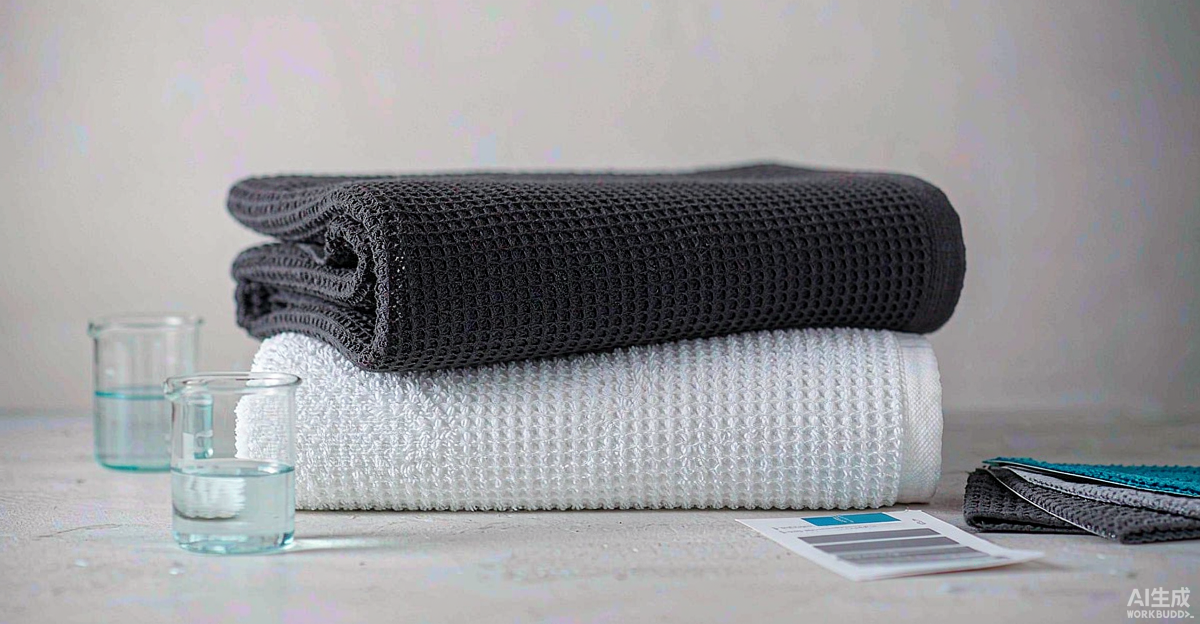
A 180-key property approves a sage and charcoal colorway. The sample matches the mood board, the quotation lands below the white programme, the order ships. Fourteen months later housekeeping is pulling towels off the third floor because the sage has gone grey and the charcoal is marking the white sheets washed in the same load. Nothing about the cotton failed. What failed was a decision taken at the dyehouse before a single towel was woven: the dye class, which most quotations from Dieshiqiao never name.
Reactive and Pigment Dyeing: The Difference You Can Measure
Reactive dyes form a covalent bond with the cellulose molecule. The color goes into the fiber and becomes part of it, so a reactive-dyed towel keeps its shade through laundering and still feels like cotton.
Pigment dyeing does not dye the fiber. Insoluble pigment particles are held on the surface by an acrylic or polyurethane binder and cured at roughly 150-170 C. Nothing penetrates, and there is no salt, no alkali, no soaping and no washing-off step: the fabric is padded, dried and cured.
That short process is why pigment turns up in hotel quotations. It is cheaper, faster and more forgiving on mixed-fiber goods. It is also why the item behaves differently in a commercial laundry, because you are no longer testing how the fiber holds color. You are testing how well a film of resin stays glued to it.
A colorfastness grade measures resistance to one specific stress, on a grey scale running 1 to 5 where 5 means no change. Two fabrics can both be sold as colorfast and sit two grades apart on the single test that decides whether your programme survives.
| Dye class | Wash, ISO 105-C06 | Rub dry, ISO 105-X12 | Rub wet, ISO 105-X12 | Chlorine, ISO 105-N01 |
|---|---|---|---|---|
| Reactive, bifunctional hotel grade | 4-4.5 | 4-5 | 3-4, less on deep shades | 2-3, the shade is stripped |
| Pigment with binder, correctly cured | 3-4 | 4-5 | 3-4 | Poor, binder and shade both hit |
| Pigment with binder, under-cured | 2-3 | 3-4 | 2-3 | Poor |
| Vat, the institutional bleach class | 4-5 | 4 | 3-4 | 4-5 |
The grades are indicative, not promises. Read the wet-rub line twice, because that is where deep shades fail: on dark reactive cotton a wet-rub grade of 3 is a good result, while the same 3 on a pastel would be a warning. That is why asking a mill whether a fabric is colorfast cannot produce an honest answer, while asking for the wet-rub grade on your shade, from the bulk lot rather than a lab swatch, can.
Chlorine Decides This, Not Wash Fastness
Most hotel specifications argue about wash fastness. The test that ends colored programmes is hypochlorite bleach, ISO 105-N01.
Chlorine attacks the chromophore of reactive dyes. A dark reactive shade that scores a comfortable 4-5 on repeated 60 C laundering can lose several grades after a few bleach cycles at the concentration a hotel laundry actually runs. Vat dyeing is the class engineered to resist that.
The conclusion is counter-intuitive but useful: white hotel linen is not the compromise option, it is the low-risk one. White goods are not dyed at all. They are bleached and optically brightened, and a greyed white sheet can be re-bleached and returned to service. A faded colored sheet cannot, because bleach would strip it.
That is the mechanism behind something housekeeping managers observe without naming: colored hotel linen carries a higher replacement rate than white on the same programme. The fiber has not worn out. The color has, and there is no recovery route.
Where Pigment Is Defensible, and Where It Is Not
Pigment dyeing is not a defect. It has a legitimate place, and a buyer who understands it can take the saving deliberately rather than discovering it later.
- Defensible: pastel shades, low-abrasion items such as a valance or a runner rather than a bath towel dragged across a wet floor, low-temperature laundering without chlorine, and programmes on a twelve-to-eighteen-month replacement cycle.
- Not defensible: deep shades on high-abrasion items, where the binder film frosts and the color wears off the high points of the terry loop before the fiber fails; anything entering a chlorine wash; and any programme where the color is the brand, because a pigment shade drifts with every wash.
The right test for a supplier claiming pigment is adequate is not whether the fabric is colorfast. It is: name the wet-rub grade on my shade, name the bleach concentration your laundry will run, and show me the report from the bulk lot rather than the lab swatch.
Need these specs quoted for your property?
Tell us your hotel tier, quantities and timeline — get a free, no-obligation quote within 24 hours.
Dyeing Has Its Own Minimum, and It Is Higher
Color changes the order structure before the color goes wrong. White goods can be quoted at the small end of a category minimum; a color has to batch to the dyehouse's own floor. On our towel line, dyed-to-match (Pantone-matched) color is a 1,000-piece proposition, while white towels start at 200 pieces per color.
| Programme | Minimum | Sample time |
|---|---|---|
| Bed sheets, duvet covers, pillowcases, bathrobes, white | From 100 pcs per size and per color | 5-7 days |
| Towels, bath mats, table linen, white | From 200 pcs per color | 5-7 days |
| Dyed-to-match towels, any shade | From 1,000 pcs per shade | 7-10 days |
| Bedding fabric by the metre, any shade | From 3,000 m per construction | 7-10 days |
| Trial order, white | From 50 pcs | 5-7 days |
A five-colorway programme is not one order of 1,000 pieces. It is five minimum runs, batched in sequence, each with its own chance to drift from the approved standard and its own slot in the production calendar.
That is why our standing advice to a first-time buyer is to put color on a named, limited part of the programme and keep everything the guest touches at high frequency in white.
Six Lines to Put in the Spec Sheet Before You Approve Bulk
Each line is checkable, and each closes off one way the order can go wrong.
| Spec line | What to write | Why it matters |
|---|---|---|
| Dye class | Dyed with reactive, vat or pigment dyes; supplier states the class in the quotation | The dye class, not the color name, predicts laundry behavior |
| Wash fastness | ISO 105-C06 at your laundry temperature, color change 4 or better, staining 4 or better | Testing at 40 C when you launder at 75 C proves nothing |
| Rubbing | ISO 105-X12, dry 4 or better, wet 3 or better | Wet rub is the figure that fails on deep shades |
| Chlorine | ISO 105-N01, minimum grade stated, plus the bleach concentration your laundry uses | Chlorine, not plain washing, ends colored programmes |
| Light | ISO 105-B02, 4 or better for anything near a window | Curtains and poolside goods fade from light, not from washing |
| Test report | Names the method, the condition, the date and the actual shade, sampled from the bulk lot | A report on a similar shade proves nothing about yours |
Pool and beach towels are a separate case. The relevant test there is colorfastness to chlorinated pool water, ISO 105-E03, which is the standard our pool towel line is tested against. If your property has a pool, write the E03 line and not the N01 line.
Two clauses cost nothing and settle arguments later. State your laundry chemistry in the contract, because chlorine at 60 C and no chlorine describe two different products. And agree the color-difference tolerance for a shade match, and who assesses it, before the bulk shade is approved.
Where the Cost Difference Actually Sits
The quotation line is not where the money is. Reactive exhaust dyeing on cotton consumes roughly 70-150 litres of water and 0.6-0.8 kg of salt per kilogram of fabric, plus 30-60 g of dyestuff, and published industry figures put unfixed, hydrolysed reactive dye at 20-30 percent of what is applied. That is why the process needs salt, alkali, soaping and repeated rinsing. Modern jet and cold pad-batch routes cut water use sharply, but reactive stays a heavy wet process.
Pigment dyeing skips all of it: pad, dry, cure. No salt, no alkali, no washing-off, minimal water. When a supplier quotes pigment and wins on price, that is where the saving comes from, and it is a real saving in process cost rather than a hidden defect.
The mistake is treating that saving as the whole comparison. The cost of a colored programme is not the price per piece; it is the price per piece divided by the number of washes the color survives to the standard your guests judge by. If the color is a signature and every guest touches the item, buy reactive chemistry and specify the bleach conditions it must survive. If the color is decorative and short-cycle, buy pigment and take the saving deliberately. What you should not do is accept a colored programme from a quotation that never names a dye class, because that is not a saving. It is a deferred decision.
The Action to Take This Week
Pull the quotation for every colored item in your programme and look for one word: reactive, pigment or vat. If it is missing, send one email asking for the dye class, the wet-rub grade on your shade, and the bleach concentration the mill expects your laundry to run. Those three answers tell you whether the price you approved was a price for the product you thought you were buying.
Then allocate color by position rather than preference: white on everything with a high replacement rate, color on a named subset you have chosen to protect.
Our alliance is a manufacturer alliance of independently owned FOB export factories in Nantong. Every member owns and operates its own production facility, holds its own export licence and can invoice FOB in its own name, accepts buyer audits and on-site visits, and works to the alliance's written specification and inspection standard. You can walk the dyehouse and the inspection room yourself. Whichever member factory makes your order is named on the contract and ships under its own licence, with one contract, one specification sheet, one inspection standard and one set of shipping documents.
This article was written for hotel linen buyers sourcing from China. For custom hotel linen inquiries, visit nantonglinens.com.
Shop Related Products
Free PDF: Complete Hotel Linen Buying Guide
Step-by-step procurement guide covering specs, MOQ, pricing, QC, and shipping — based on real Dieshiqiao experience.
Need help sourcing hotel linens?
Get a free quote within 24 hours. No commitment required.
Request a QuoteRelated Articles
Ring-Spun vs Combed vs Carded Cotton for Hotel Bedding
Carded, ring-spun and combed cotton sit on three price steps. Here is what each step buys in a hotel sheet, and when the upgrade is wasted.
China's New Green Textile Standard: What Hotel Linen Buyers Must Know
China's GB/T 35611-2024 green textile standard took effect October 1. Here's what the new low-carbon and chemical limits mean for hotel linen buyers.
RFID Smart Linen Management: What Hotel Buyers Need to Know in 2026
Chinese hotels are sewing RFID chips into sheets and towels to track wash cycles, cut losses and prove hygiene. What the shift means for hotel buyers.