Xinjiang Heatwave Threatens China's Cotton Crop: Implications for Textile Buyers
Second Heatwave Hits Xinjiang Cotton Belt
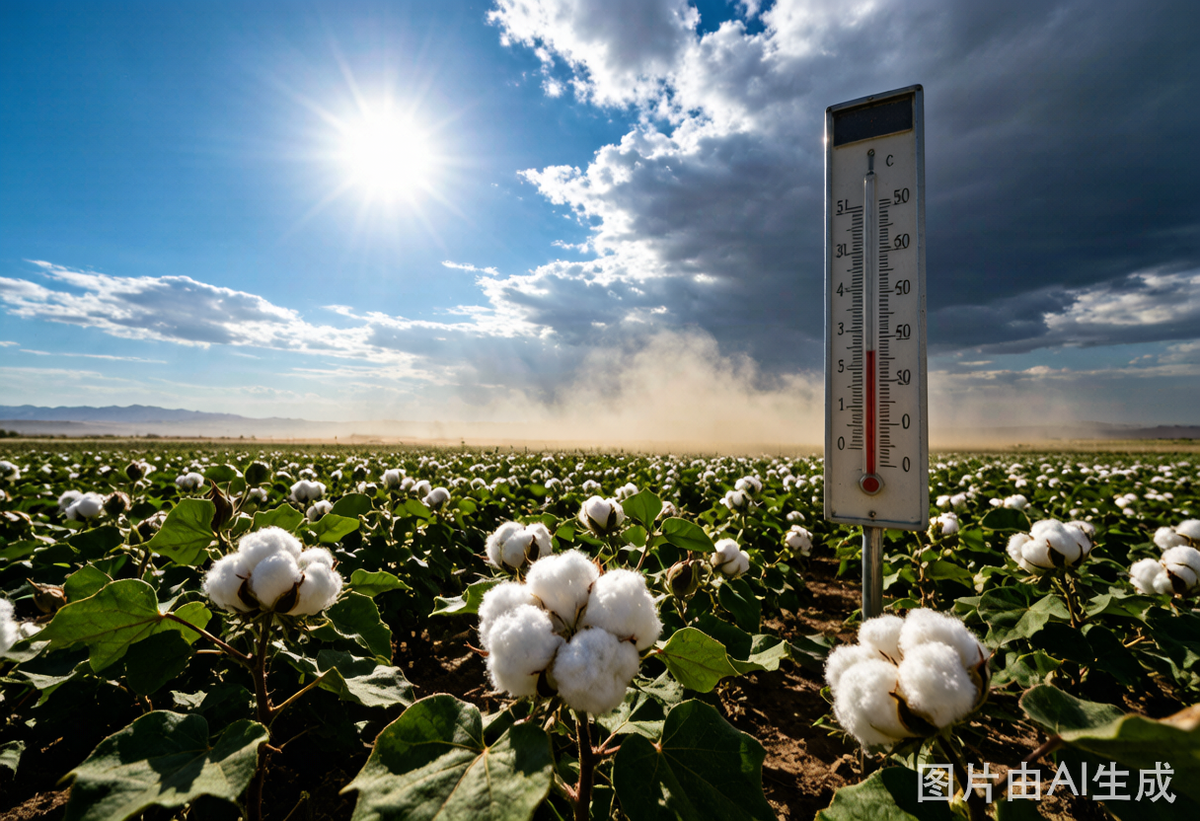
A second round of persistent extreme heat is sweeping across Xinjiang, China's largest cotton-producing region, threatening the critical flowering-to-boll-setting growth stage that determines final crop yields.
According to a joint warning from the Xinjiang Meteorological Bureau and the Department of Agriculture and Rural Affairs, the heatwave struck on July 11-12 and is expected to persist.
Temperature Breakdown
Southern Xinjiang Basin and Eastern Xinjiang
Maximum temperatures forecast above 40 degrees Celsius
Localized areas in Turpan and Hami potentially reaching 45 degrees or higher
Northern Xinjiang Plains
Eastern Bortala, southern Tacheng, Shihezi, and Changji
Maximum temperatures could reach 39-41 degrees Celsius
Heat damage risk for major cotton production areas elevated to high level
Why This Growth Stage Is Critical
Cotton across Xinjiang has entered the flowering-to-boll-setting stage, with the overall flowering rate reaching 83.7 percent. This is the most temperature-sensitive period in the cotton growing cycle.
Temperature thresholds for cotton damage
28-30 degrees Celsius: optimal growing temperature during flowering-boll stage
Above 33 degrees: damage symptoms begin to appear
Above 35 degrees: severe heat damage occurs
Physiological effects of extreme heat
When temperatures persistently exceed 35 degrees, cotton plants experience:
Pollen inactivation, reducing fertilization rates
Increased shedding of flowers and bolls
Reduced boll-setting rates
Accelerated pest and disease proliferation
Both yield and quality risks for the new crop
Current Crop Conditions
The US Department of Agriculture reports that as of July 12, the US cotton crop shows a 60 percent squaring rate and 22 percent boll-setting rate, tracking close to the five-year average. However, the crop condition rating has dropped to 44 percent good-to-excellent, down 10 percentage points year-on-year.
In China, the situation is more concerning. Northern Xinjiang experienced early-season low temperatures followed by persistent high-temperature heat stress. Water scarcity in some areas is raising the risk of bud and boll shedding. Southern Xinjiang growth remains relatively stable.
Supply Chain Implications
Chinese cotton supply chain
Commercial cotton inventories continue to decline
Need these specs quoted for your property?
Tell us your hotel tier, quantities and timeline — get a free, no-obligation quote within 24 hours.
Xinjiang commercial stock at 1.814 million tonnes, down 6.69 percent week-on-week
High-quality grades (Double-29, Double-30) increasingly scarce
State reserve cotton sales began July 20, providing partial relief
Yarn production impact
National spinning mill operating rate at 74.6 percent
Xinjiang mills maintaining 90 percent operating rate (local raw material advantage)
Shandong and Henan inland mills running at only 60-70 percent capacity
Pure cotton yarn inventory accumulating to 28 days of supply
Mills under cash flow pressure, buying on-demand only
What This Means for Hotel Linen Prices
Direct cost impact
If the heatwave causes even a 5 percent reduction in Xinjiang cotton yields, the resulting supply tightness could push 32-count cotton yarn prices above 27,000 yuan per tonne, up from the current 26,000+ yuan level.
Timeline
July-August: Critical period for cotton yield determination
October: New-crop cotton enters the market, revealing actual yield impact
November-December: Yarn prices adjust based on confirmed crop size
Q1 2027: Finished hotel linen prices reflect the new cotton cost baseline
Risk scenarios
**Base case (minimal damage):** Cotton prices hold at current levels, hotel linen prices stable through Q4.
**Moderate damage scenario (5-10% yield loss):** Cotton prices rise 5-8 percent, hotel linen prices increase 3-5 percent in Q4 orders.
**Severe damage scenario (15%+ yield loss):** Cotton prices spike 15-20 percent, hotel linen prices increase 10-15 percent. Early-ordered inventory becomes significantly more valuable.
Procurement Recommendations
1. Place Q4 orders before September 1 to lock in current pricing
2. Request price validity extensions of 60-90 days from suppliers
3. Build buffer inventory for high-cotton-content items (sheets, pillowcases, bath towels)
4. Consider pre-paying deposits to secure pricing on 2027 contracts
5. Monitor Xinjiang weather reports weekly through August
6. Maintain flexibility to switch to poly-cotton blends if pure cotton becomes too expensive
Conclusion
The Xinjiang heatwave is a real-time risk factor that could tighten global cotton supply further. Hotel linen buyers should treat the current price environment as a window of opportunity rather than a baseline, and secure their Q4 and 2027 procurement needs before weather damage is fully priced into the market.
Shop Related Products
Free PDF: Complete Hotel Linen Buying Guide
Step-by-step procurement guide covering specs, MOQ, pricing, QC, and shipping — based on real Dieshiqiao experience.
Need help sourcing hotel linens?
Get a free quote within 24 hours. No commitment required.
Request a QuoteRelated Articles
Nantong Soft-Cloud Yarn: A Durability Breakthrough for Hotel Linens
Soft-cloud yarn technology from Nantong solves the softness-durability dilemma in hotel towels and bedding. What procurement managers should know.
September 2026 Textile Market: Peak Season Stalls, Raw Materials Diverge
China's 132nd cotton textile survey shows September peak season underperforming; cotton falls while polyester and viscose surge, creating cost divergence.
September 2026 Hotel Linen: Fabric Market Divergence and Peak Season
August 2026 fabric prices show upstream-downstream divergence as September peak season and ASEAN supply chain shifts reshape hotel linen sourcing.