Hotel Bathrobe Quality Inspection: Terry, Velour & Waffle Weave Standards
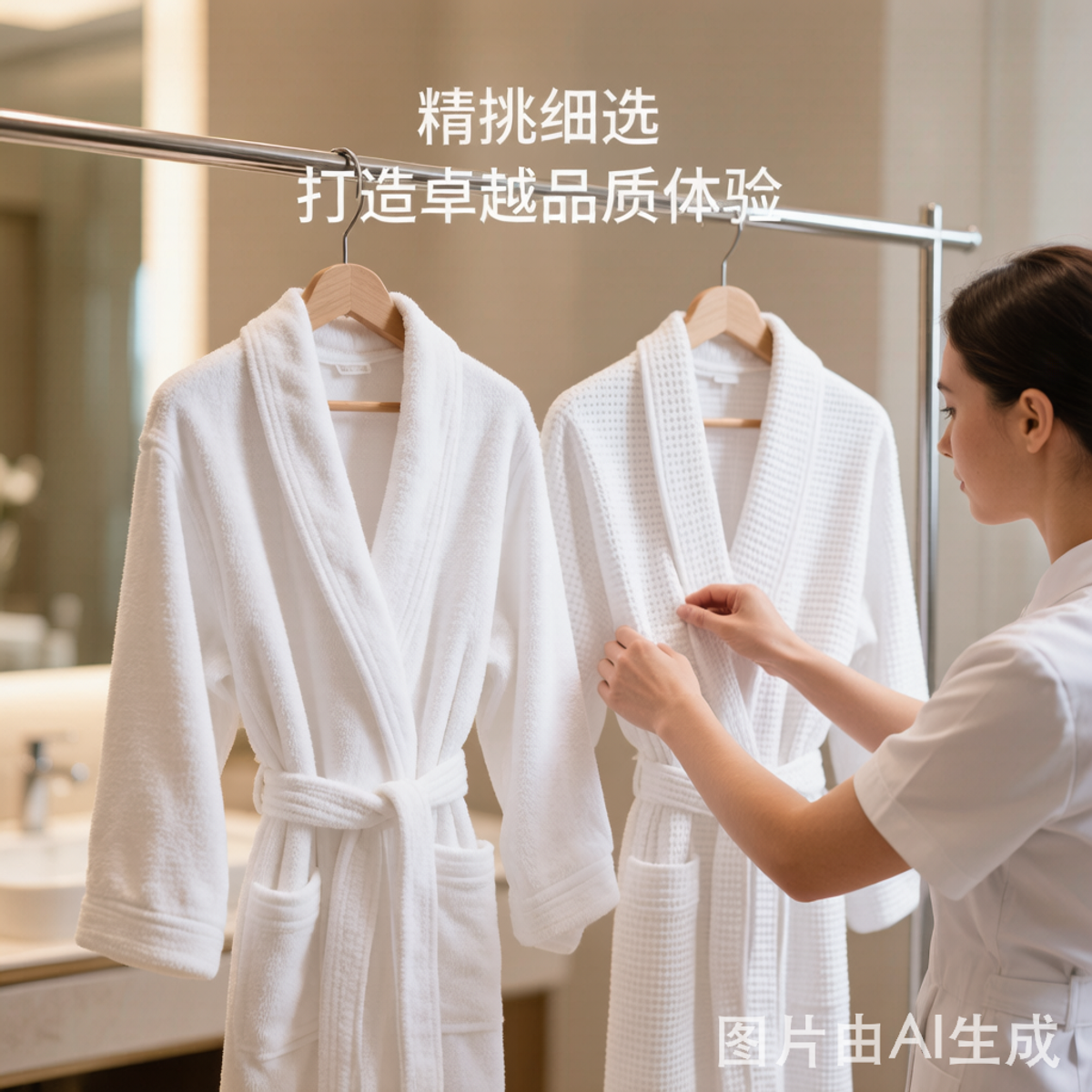
The bathrobe is a status signal in the hotel guest experience. A bathrobe with loose belt loops, unraveling embroidery, or fabric that pills after two washes undermines the luxury positioning that properties invest heavily to create. Bathrobe QC requires attention to construction details and fabric types that differ significantly from regular toweling or sheeting.
1. Fabric Type Verification and GSM Standards
Three primary bathrobe fabrics dominate the hotel market. Terry robes: looped pile on both sides or one side (single-face terry), GSM 350-500, the most common hotel choice. Velour robes: sheared terry on the face side creating a velvet-like surface with looped terry on the reverse, GSM 350-450, premium/luxury positioning. Waffle weave robes: distinctive honeycomb texture, GSM 200-300, lighter weight, popular in spa and resort settings. Verify fabric type matches purchase order specification. GSM testing per ISO 3801 on the body panel. For velour robes, check pile cut uniformity under side lighting.
2. Belt and Belt Loop Construction
Belt loops are the single highest-failure component on hotel bathrobes. Loop attachment method: bar-tack at both top and bottom of each loop “ surface stitching without bar-tack fails within 10 wash cycles. Loop count: minimum 2 side loops (left and right), plus 1 rear center loop for premium robes. Belt construction: double-layer fabric, fully turned edges (no exposed raw edges), bar-tacked at both ends. Belt length must be body width + 80 cm minimum. Belt storage loop inside the collar (hanging loop) must support the robe weight when hung.
3. Pocket Construction and Placement
Patch pockets are standard on hotel bathrobes. Pocket attachment: top corners must have triangular reinforcement stitching (bartack or triangle tack). Pocket dimensions: 17 cm width “ 18 cm depth minimum. Pocket alignment: measure distance from shoulder seam to pocket top on left and right sides “ variance must not exceed 5mm. For robes with embroidery on the pocket, verify the embroidery does not penetrate the pocket bag.
Need these specs quoted for your property?
Tell us your hotel tier, quantities and timeline — get a free, no-obligation quote within 24 hours.
4. Embroidery and Branding Inspection
Hotel logos on bathrobes must be crisp, centered, and durable. Embroidery type: satin stitch for logos, running stitch for text outlines. Thread: 100% polyester embroidery thread (cotton thread fades and shrinks at different rates). Backing: tear-away or cut-away stabilizer must be cleanly removed. Placement: left chest position, center of pocket, or center back collar. Verify placement matches artwork specification. After 5 wash tests, embroidery must show no puckering, no color bleeding, no thread breaks.
5. Sizing and Fit Verification
Hotel bathrobes are typically sized S/M, L/XL, or one-size (“unisex”). Key measurements: center back length (collar seam to hem), chest width (laid flat, armpit to armpit “ 2), sleeve length (shoulder seam to cuff end). For kimono-style robes, verify cross-over width at the chest “ minimum 25 cm overlap to prevent gaping. Sleeve cuff: minimum 20 cm circumference. Check size consistency across 5+ samples from different cartons.
6. Post-Wash Performance Testing
Bathrobes must survive industrial laundry. Wash test procedure: 5 cycles at 60”C (terry/velour) or 40”C (waffle), tumble dry medium heat. After washing: maximum shrinkage 5% in length and width. Check for: pile loss, belt loop integrity, embroidery condition, color fastness (especially for colored robes and contrast piping), shape retention. For velour robes, check pile crushing “ velour pile should recover its upright position after washing.
Bathrobe QC is detail-intensive because the product is high-touch. Our Nantong QC team inspects bathrobes on a mannequin form to assess drape and fit, tests every belt loop under tension, and performs full wash testing on every production lot.
Shop Related Products
Free PDF: Complete Hotel Linen Buying Guide
Step-by-step procurement guide covering specs, MOQ, pricing, QC, and shipping — based on real Dieshiqiao experience.
Need help sourcing hotel linens?
Get a free quote within 24 hours. No commitment required.
Request a QuoteRelated Articles
Hotel Linen Color Consistency QC: Dye Lot Management & Inspection Standards
Dye lot variation is one of the most common hotel linen quality complaints. Learn lab dip approval, Delta E measurement, light box testing, AQL sampling, and color QC protocols.
Hotel Bed Sheet Quality Inspection Checklist: From Fabric to Packaging
Complete QC checklist for hotel bed sheets: fabric weight, stitch quality, shrinkage, color fastness, and packaging standards. Ensure every shipment meets spec.
Hotel Duvet Cover & Pillowcase QC: Stitching, Zippers, and Labeling
QC inspection guide for hotel duvet covers and pillowcases: zipper durability, closure types, seam strength, and label compliance. Catch defects before shipment.