Hotel Linen Color Consistency QC: Dye Lot Management & Inspection Standards
Why Color Consistency Matters
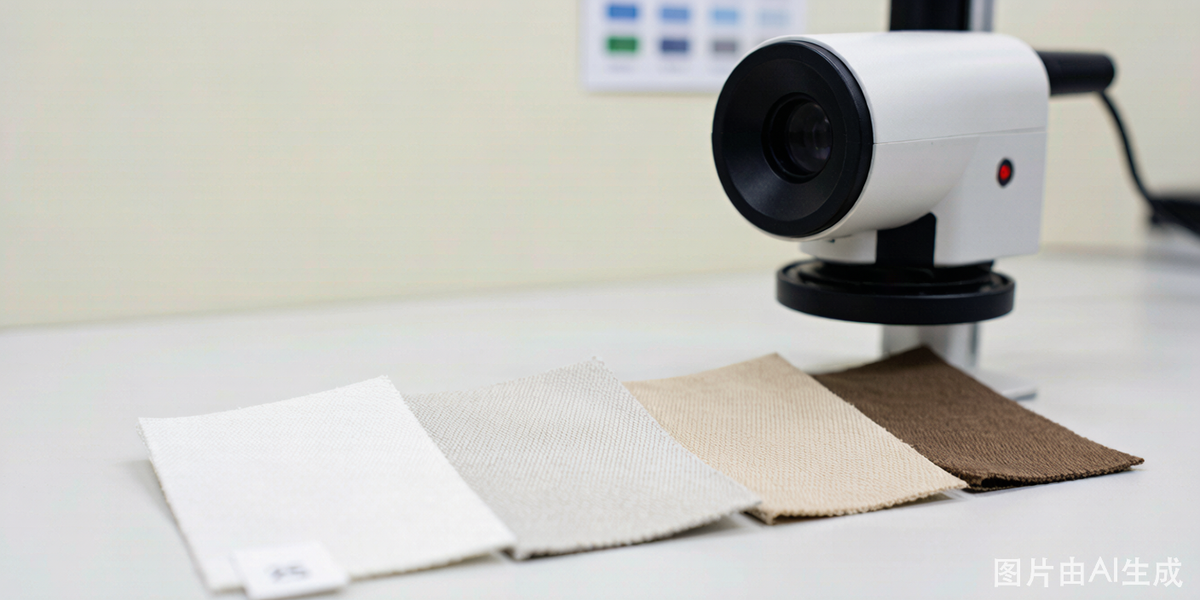
Color inconsistency is one of the most frequent — and most visible — quality complaints in hotel linen procurement. A procurement manager might approve a perfect lab sample, only to receive bulk production where pillowcases are visibly cream while sheets are optical white, or where navy blue varies by two shades across different shipment batches.
The impact is not just aesthetic. When housekeeping mixes inconsistent-color items on the same bed, guests perceive poor quality and lack of attention to detail. For chain hotels with standardized brand imagery, color mismatches can violate brand standards and trigger rejection of entire shipments.
Color consistency QC is not difficult — but it requires a structured process, the right measurement tools, and clear acceptance criteria in your purchase order.
Understanding Dye Lots: Why Batches Vary
A dye lot is a single batch of fabric dyed under identical conditions. Even when using the same dye recipe, variations occur because:
Raw fiber variation. Natural cotton absorbency differs slightly between bales, affecting dye uptake. Even 1-2% variation in fiber maturity or micronaire can shift final shade.
Water quality. pH, mineral content, and water hardness in the dye bath affect dye fixation. A dye house switching from municipal to well water mid-production can produce noticeably different results.
Temperature and time. Plus or minus 2 degrees Celsius in dye bath temperature or 5 minutes in dyeing time can shift shade by half a shade or more.
Post-dye finishing. Softeners, optical brightening agents, and resin finishes applied after dyeing all affect the perceived color. Different finishing batches produce different final appearance.
Fabric construction. Even when dyed in the same bath, a 60s percale will appear slightly different from a 40s twill due to how light reflects off the weave structure.
The key QC insight: you cannot prevent dye lot variation entirely. What you can do is control it within commercially acceptable tolerances and catch out-of-spec batches before they ship.
Step 1: Lab Dip Approval Process
The lab dip is your color contract with the supplier. The process: (1) Provide a physical color standard such as a Pantone TCX cotton swatch, competitor sample, or previously approved production piece. (2) Supplier creates 3 lab dips: one on-target, one slightly lighter, one slightly darker. (3) Evaluate all three under standardized lighting. (4) Approve one or request revision in writing with specific comments. (5) Approved lab dip becomes the contractual color reference for bulk production.
Do NOT approve a lab dip from a phone photo as screens distort color. Do NOT accept close enough verbally — get a physical approved swatch. Do NOT approve a lab dip on polyester if your bulk is cotton, as they have different dye uptake. Do NOT skip the lighter/darker variants.
For White and Off-White: white is the hardest color to match consistently because it depends on optical brightening agents (OBAs) rather than dyes. Specify whiteness using CIE Whiteness Index: Optical White WI CIE above 140; Hotel White WI CIE 120-135; Natural White WI CIE 90-110; Unbleached WI CIE below 60.
Step 2: Color Measurement — Understanding Delta E
Delta E (dE) is the standard measurement of color difference. It is a single number representing the total color distance between a sample and the reference standard.
Delta E scale for textiles: below 0.5 is imperceptible, pass with excellent match. 0.5 to 1.0 is perceptible only to trained eye, pass as commercially acceptable. 1.0 to 2.0 is slightly perceptible, conditional pass depending on end use. 2.0 to 3.0 is noticeable to untrained eye, fail for solid-color hotel linen. Above 3.0 is clearly different, reject.
For hotel linen, specify Delta E 1.5 or less against the approved lab dip when measured with a spectrophotometer using D65 illuminant and 10-degree observer. This is stricter than general apparel (Delta E 2.0) but appropriate for the controlled uniformity hotels require.
Measurement Conditions: Instrument should be a benchtop spectrophotometer from X-Rite, Datacolor, or equivalent. Illuminant: D65 (simulated daylight, 6500K). Observer: 10-degree (CIE 1964). Minimum 4 readings per sample, averaged.
Need these specs quoted for your property?
Tell us your hotel tier, quantities and timeline — get a free, no-obligation quote within 24 hours.
Require the supplier to provide spectrophotometer readings for the lab dip and for each dye lot in bulk production. Reject any lot with average Delta E above 1.5 or any single reading above 2.5 against the approved standard.
Step 3: Light Box Visual Assessment
Instrumental measurement is essential but not sufficient. Metamerism — where two colors match under one light source but not another — can only be detected by visual assessment under multiple light sources.
Standard Light Sources for Textile QC: D65 at 6500K simulates natural daylight and is the primary evaluation source. TL84/F11 at 4000K simulates retail/store lighting for secondary evaluation. Incandescent (A) at 2856K simulates warm home lighting for secondary evaluation. UV light is used for OBA fluorescence checking.
Light Box QC Protocol: Place the approved lab dip and bulk sample side by side, touching, on a 45-degree angled viewing surface. Evaluate under D65 first — this is your primary pass/fail. Evaluate under TL84 and Incandescent — if metamerism is visible, flag for discussion. Under UV, check that OBA fluorescence is uniform between samples.
If the supplier does not have a light box, that is a red flag. A standardized light box from VeriVide, GretagMacbeth Judge, or equivalent is minimum equipment for any dye house producing hotel-quality textiles.
Step 4: Color Fastness Testing
Color consistency at receipt is meaningless if the color shifts after 20 commercial washes. Key fastness tests include: Wash Fastness per ISO 105-C06 or AATCC 61 requiring Grade 4 minimum; Rub Fastness Dry per ISO 105-X12 requiring Grade 4 minimum; Rub Fastness Wet per ISO 105-X12 requiring Grade 3 minimum; Light Fastness per ISO 105-B02 requiring Grade 4-5 minimum for indoor use; Perspiration Fastness per ISO 105-E04 requiring Grade 4 minimum; Chlorinated Water per ISO 105-E03 requiring Grade 4 minimum for pool towels.
These are standard textile tests that any competent testing lab (SGS, Intertek, Bureau Veritas) can perform. Require test reports from an ISO 17025-accredited third-party lab — do not accept the supplier's in-house test results for color fastness.
Step 5: Bulk Lot Acceptance — AQL Sampling
Acceptance Quality Limit (AQL) sampling is the statistical method for deciding whether to accept or reject a production lot based on a random sample.
Recommended AQL levels for hotel linen color QC: Color mismatch (Critical) at AQL 1.0; Shade variation within lot (Major) at AQL 2.5; Minor color unevenness (Minor) at AQL 4.0.
For a typical hotel linen order with lot size 2,000 sheet sets using AQL 2.5, General Inspection Level II: sample 200 pieces, accept if 10 or fewer defects, reject if 11 or more defects.
Always inspect at the factory before shipment, not at your receiving warehouse. Once goods have left China, it is exponentially harder to negotiate replacements or compensation.
Common Color Defects and Root Causes
Shade tailing shows as gradual color shift from start to end of roll, caused by dye bath exhaustion during continuous dyeing. Prevention: use pad-batch or jig dyeing for critical colors.
Selvedge-to-center shade shows edges darker or lighter than center, caused by uneven padding pressure or poor fabric preparation. Prevention: specify plus or minus 0.3 Delta E tolerance from selvedge to center.
Listing shows as a darker line down the fabric center, caused by over-drying at center fold or improper batching. Prevention: flat drying or controlled batching tension.
Frosting shows as whitish patches especially on creases, caused by mechanical abrasion revealing undyed fiber core. Prevention: ring-dyeing check and crocking test.
OBA migration shows as uneven white patches, caused by optical brightener migration during drying. Prevention: controlled drying and uniform OBA application.
For each shipment, document color measurements, light box assessments, and any deviations. This data becomes invaluable for supplier performance tracking and continuous improvement.
Shop Related Products
Free PDF: Complete Hotel Linen Buying Guide
Step-by-step procurement guide covering specs, MOQ, pricing, QC, and shipping — based on real Dieshiqiao experience.
Need help sourcing hotel linens?
Get a free quote within 24 hours. No commitment required.
Request a QuoteRelated Articles
Hotel Bathrobe Quality Inspection: Terry, Velour & Waffle Weave Standards
QC checklist for hotel bathrobes: fabric weight comparison (terry vs velour vs waffle), belt and pocket construction, embroidery quality, and sizing verification.
Hotel Bed Sheet Quality Inspection Checklist: From Fabric to Packaging
Complete QC checklist for hotel bed sheets: fabric weight, stitch quality, shrinkage, color fastness, and packaging standards. Ensure every shipment meets spec.
Hotel Duvet Cover & Pillowcase QC: Stitching, Zippers, and Labeling
QC inspection guide for hotel duvet covers and pillowcases: zipper durability, closure types, seam strength, and label compliance. Catch defects before shipment.