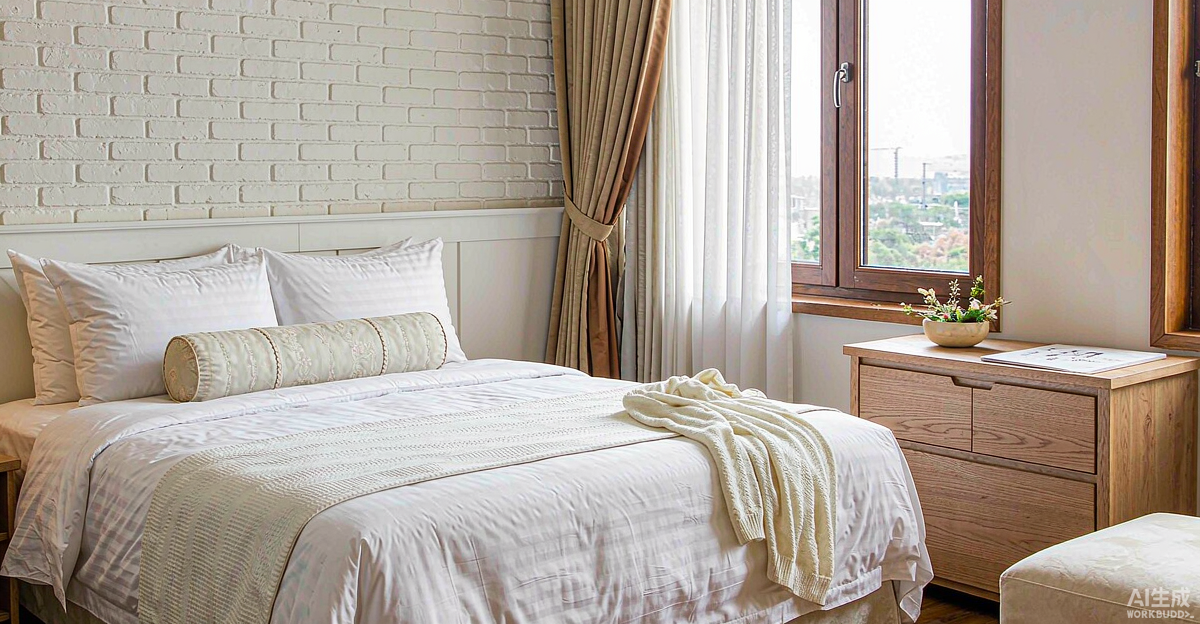
China's hotel textile sector entered a new compliance era on 1 July 2026. Two regulatory layers now govern every duvet, pillow, sheet and towel shipped from China to a hotel property: GB 18383-2025, the mandatory national standard for filling-fiber products, and the revised GB/T 22800-2023 specification for tourist-hotel textiles. For international procurement managers, this convergence marks the moment when supplier selection moves from price-led sourcing to evidence-led compliance. Industry survey data reinforces the stakes: 78.4% of hotel guests rank clean, soft bedding among the top three drivers of satisfaction, and 62.1% say visible defects lower their review score.
The 2026 Chinese Standards Landscape
GB 18383-2025, titled General Technical Requirements for Products with Filling Materials, was issued on 2 December 2025 by the State Administration for Market Regulation (SAMR) and took full effect on 1 July 2026. It replaces GB 18383-2007 and is mandatory across all filling-fiber goods sold in China, including hotel duvets and pillows. Alongside it, the SAMR also published the updated Administrative Measures for the Quality Supervision of Fiber Products on 25 December 2025, which entered force on the same 1 July 2026 date. Together they form the regulatory backbone that global hotel groups must navigate when sourcing from Chinese mills.
GB 18383-2025: Mandatory Rules for Filling Materials
The new GB 18383-2025 standard codifies what may and may not enter a Chinese-made hotel duvet. Article 7 of the standard prohibits five categories of feedstock: medical fibrous waste, used burial-textile products, fibers from epidemic zones that cannot be proven uncontaminated, waste fibers whose import is banned, and any fiber deemed seriously polluted or toxic. Inspection provisions further require that life-use filling-fiber products contain no detectable metal or sharp objects such as needles, wire splinters or wood fragments, and no visible dust at the lot level. Procurement managers should request lot-level traceability documentation for every down, feather or synthetic filling shipment.
GB/T 22800-2023: Technical Specifications for Hotel Textiles
GB/T 22800-2023, the recommended standard titled Textiles for Tourist Hotels, was issued in late 2024 and supersedes the long-standing GB/T 22800-2009. Although recommended rather than mandatory, the standard is referenced in most Chinese hotel brand procurement documents and aligns Chinese hotel linen quality benchmarks with international hotel group expectations. Its scope covers sheets, duvet covers, pillowcases, towels, bathrobes, table linen, curtains and mattress pads, defining class A (premium), class B (first-grade) and class C (qualified) thresholds for every measurable parameter.
Breaking Strength and Colorfastness Thresholds
GB/T 22800-2023 sets grade-specific minimum breaking-strength values that procurement managers can demand verbatim in supplier qualification questionnaires. Premium-class sheets and duvet covers must exceed 350 N warp and weft; first-grade products 300 N; qualified products 250 N. Premium towels must reach 300 N; first grade 250 N; qualified 200 N. Table linen and chair covers top the chart at 400 N for premium, while curtains require 350 N premium and 250 N qualified. Water absorbency for towels is capped at 10 seconds for premium, 20 seconds for first grade and 30 seconds for qualified. Colorfastness must remain at grade 3-4 or above after industrial laundering, and pH must sit between 4.0 and 8.5 for skin-contact articles.
Need these specs quoted for your property?
Tell us your hotel tier, quantities and timeline — get a free, no-obligation quote within 24 hours.
Industry monitoring data from 2025 indicates that colorfastness compliance across Chinese hotel linen suppliers stands at just 78%, while OEKO-TEX or equivalent eco-certification coverage sits at 63%. A typical three- or four-star property loses about 20% of its negative reviews to room consumables, with bedding and towel complaints among the most frequently cited triggers. Many of those complaints trace back to fabric shrinkage, color loss or pilling within the first six months of use, all symptoms of cut-corner finishing that the new standards are designed to expose. Replacing a single low-cost batch across 200 rooms can cost USD 12,000 to USD 18,000 in unscheduled procurement plus the labor of accelerated QA inspection.
A Three-Step Verification Protocol for Buyers
Procurement managers can convert the new regulations into a practical qualification workflow. Step one is documentation: require every mill to provide a recent CMA- and CNAS-accredited test report covering formaldehyde, pH, colorfastness, breaking strength and antibacterial rate, with sample dates no older than six months. Step two is reference verification: cross-check the report against the mill's own batch records and against the GB/T 22800-2023 grade they claim. Step three is lot-level re-test: pull three random cartons per shipment, send them to an independent laboratory in the buyer's home market, and reject the lot if any metric falls below the agreed grade threshold. This protocol simultaneously satisfies Chinese regulatory expectations and ISO 2859-1 sampling logic.
Practical Recommendations for International Buyers
For hotel groups buying from Chinese mills for the first time or re-qualifying legacy suppliers, three operational rules reduce the cost of compliance. First, audit at the product family level rather than per SKU, since laboratories charge per article and a single sheet fabric test can cover the entire bedding range when the mill uses the same warp and weft. Second, demand a written compliance attestation referencing both GB 18383-2025 and GB/T 22800-2023, signed by the mill's quality director, before the first PO. Third, bake a 5% over-shipment allowance into every contract to absorb the cost of lot re-sampling; this is far cheaper than the unscheduled expedited replacement of an entire shipment.
2026 as a Pivotal Year for Hotel Linen Sourcing
The combined force of GB 18383-2025, the revised Administrative Measures for Fiber Products and the technical benchmarks embedded in GB/T 22800-2023 has shifted Chinese hotel linen sourcing from a price conversation to a documented compliance conversation. Mills that have invested in traceability systems, independent lab partnerships and digital batch records now hold a clear competitive edge. For procurement teams, the practical path is to treat the new standards as a baseline requirement rather than an upgrade, then build a verification protocol that can scale across multiple properties and multiple seasons without renegotiation.
This article was adapted from Chinese textile industry sources. For custom hotel linen inquiries, visit nantonglinens.com.
Shop Related Products
Free PDF: Complete Hotel Linen Buying Guide
Step-by-step procurement guide covering specs, MOQ, pricing, QC, and shipping — based on real Dieshiqiao experience.
Need help sourcing hotel linens?
Get a free quote within 24 hours. No commitment required.
Request a QuoteRelated Articles
Hotel Linen Buyers: Two New China Textile Standards for 2026
Two new China textile standards - GB/T 29862-2026 fiber labels and GB/T 47782-2026 cooling tests - are reshaping hotel linen procurement compliance.
Hotel Textile Shrinkage Standards: Pre-Shrunk Processing, Testing & Buyer Specifications
Shrinkage is one of the most costly hidden defects in hotel linen. Learn mechanical vs relaxation shrinkage, sanforization processing, testing methods, and how to write shrinkage specs in your PO.
Hotel Linen Durability Testing: Wash Cycles, Tensile Strength & Pilling Explained
Understand the 5 key durability tests for hotel linen: Martindale abrasion, tensile strength, wash cycle rating, pilling resistance, and color fastness. Know what to ask suppliers.