Sample Lead Time vs Production Lead Time: Why 7 Days Becomes 45
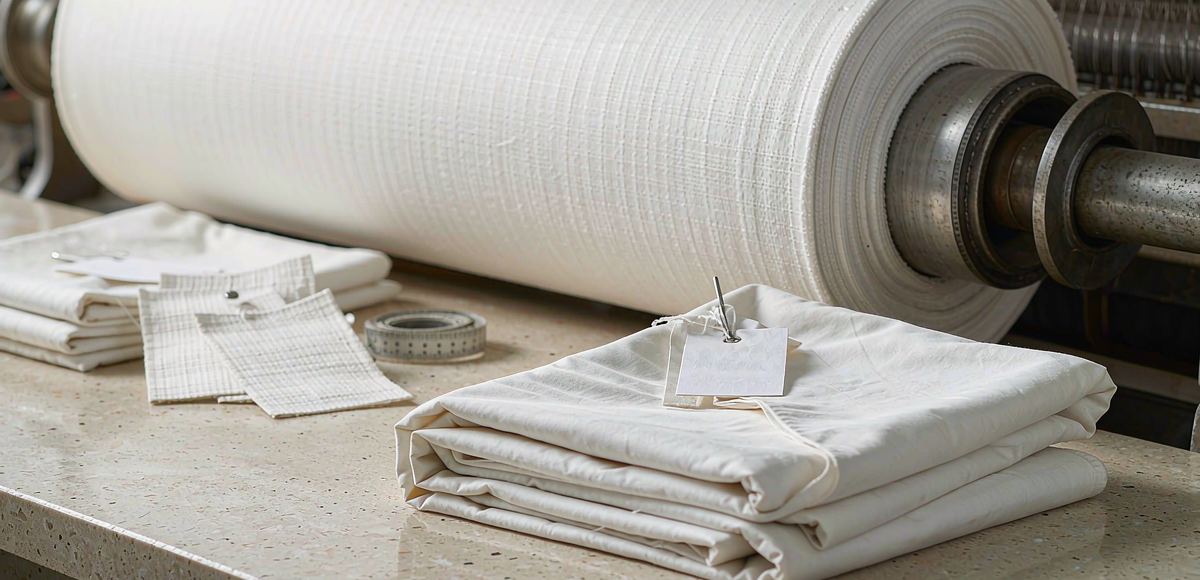
The sample arrives six days after you ask for it. You approve it, wire the deposit, and then the order confirmation quotes twenty-five to thirty-five days for bedding, twenty to thirty for towels. Nothing was padded and nobody is lying. A sample runs on shortcuts — greige already on the floor, trims pulled from a drawer, a beaker of dye instead of a bulk lot. The bulk order cannot use those shortcuts, and every choice you made while admiring that sample decides where the production timeline will bottleneck.
What a Seven-Day Sample Actually Runs On
A white sample for a sheet set or a bathrobe takes five to seven days because it skips every step that consumes bulk time. The fabric comes from whatever greige or finished roll the workshop already holds. The thread, zippers, and binding come from the sewing floor's own stock. If the sample is white, there is no dyeing at all. Nothing is ordered, nothing is queued, and nothing waits behind another customer's lot.
What the sample proves is real: seam construction, stitch density, hand feel, weight in the hand, how a hem sits. What it does not prove is availability. It cannot tell you whether 290-centimeter greige exists in quantity, whether your labels have been produced, or how long the dyehouse queue is — the three questions the bulk timeline actually answers.
Decision One: How Many Colors You Ask For
Color is the decision that buyers widen most casually and pay for most dearly. A white sample costs the mill nothing to match. The moment a bulk order carries custom colors, each color becomes its own dye lot: its own lab dip round, its own dyehouse slot, its own quality check. A lab dip round takes roughly five to ten days per round across the industry, and difficult shades routinely need two or three rounds before approval. Add one color after the sample stage and you are not adding a swatch — you are adding a two-week approval cycle that sits in front of bulk dyeing, not parallel to it.
Quantity follows the same logic. On our program, white towels start at 200 pieces per size, but dyed-to-match towels need 1,000 pieces per color, and bedding runs at 100 pieces per size-color. That is not a markup trick — small lots get pushed behind returning customers' dye slots, and a dye lot set up for 150 towels costs the dyehouse the same changeover time as one set up for 5,000. If your colors are approximate rather than brand-critical, staying on a stock shade removes the entire cycle.
Decision Two: Fabric Width Nobody Measured
Samples are almost always cut from standard-width cloth. That is fine for a Queen flat sheet at 250 centimeters finished width. It stops being fine the moment your spec includes a King flat at 280 centimeters with no center seam, because the greige must be woven at roughly 290 to 295 centimeters before finishing shrinkage. Wide-greige constructions are not shelf items; they are woven to order, and on our program a special construction carries a 3,000-meter minimum per weave. Industry minimums run the same direction: one Hong Kong converter publishes 1,000 yards per color for solid yarn-dyed, 3,000 to 6,000 for special weaves, and 30 to 45 days bulk weaving — 55 to 60 for special constructions.
The trap: the sample looked perfect because it was sewn from exactly that wide cloth, a roll left on the floor by a previous order. It proves the construction works — not how long the next 3,000 meters take to weave. Ask directly whether the sample fabric was from stock or woven for the sample; the answer moves your bulk date more than any negotiation will.
Decisions Three and Four: Trims and Construction Weight
Trims are the bottleneck nobody photographs. A sample wears a blank label or whatever the sewing floor had. Your bulk order wears your brand, and woven labels are a separate manufacturing run: the standard trade minimum is about 1,000 pieces per design, produced in roughly seven to twelve working days after artwork approval, at a few cents each. The cost is trivial; the sequencing is not. Artwork confirmed two weeks after the PO means finished goods that cannot be folded, polybagged, or cartoned.
Construction weight hides the same gap. A sample's GSM is whatever the sample swatch measured. Bulk runs to a written tolerance, typically plus or minus five percent, verified per piece at inspection. If the sample was cut slightly heavy to impress you — a common, mostly harmless habit — bulk now needs more yarn per piece, and yarn of the right staple may not be in stock. When a specified cotton staple is not on hand, yarn procurement adds five to seven days before weaving even starts.
The Days the Sample Skipped
Need these specs quoted for your property?
Tell us your hotel tier, quantities and timeline — get a free, no-obligation quote within 24 hours.
The bulk timeline is not the sample timeline plus waiting. It is a different sequence: yarn and greige preparation, weaving, dyeing and finishing, cutting and sewing, then inspection and packing. On bedding that lands at 25 to 35 days in normal season; towels at 20 to 30; duvet and set programs at 30 to 40. Orders in production between August and November carry an extra seven to ten days across the board, and a November order is still inside that window.
| Element | What the sample used | What bulk needs | When it surfaces |
|---|---|---|---|
| Fabric | A roll already on the floor | Woven to order, wide greige 3,000 m per construction | Weaving queue, week 1-3 |
| Color | Stock white or a beaker dip | Lab dip per color, then a bulk dye lot per color | Before weaving starts |
| Trims | Blank or drawer labels | Custom woven labels, about 1,000 pcs, 7-12 working days | Packing, final week |
| Weight | One swatch, cut generously | Written GSM with plus or minus 5% tolerance, per-piece checks | Inspection, final week |
Read the last column: two of the four items surface in the final week of production, after the fabric is already sewn. That is why trims and label artwork are cheapest to fix on day zero and most expensive to fix on day thirty.
How to Close the Gap Before You Sign
The buyers who get near-sample speed on bulk are not the ones who push hardest on price. They are the ones who close the four decision gaps while the sample is still in their hands:
- Freeze the colorway count at approval. Every color added after the PO is a fresh lab-dip cycle in front of dyeing. Approve lab dips under D65 daylight, not office lighting — metamerism is a real rejection reason, not a technicality.
- Confirm greige width and availability in writing. State finished dimensions per item and ask whether the construction is stock or woven to order, including the 3,000-meter minimum if it applies.
- Approve label artwork and all trims before the PO. The 1,000-piece label minimum and its 7-to-12-day run should start the day you sign, not after.
- Put the GSM and its tolerance in the spec sheet. Ask what the sample actually weighed against the bulk target, and whether the specified cotton staple is in stock or a 5-to-7-day yarn buy.
One more ask separates professionals from first-timers: ask which elements of the approved sample are production-representative and which are substitutes. A mill that tells you "the label is a placeholder and the greige came from stock" has just handed you your real timeline.
Where the Alliance Structure Changes the Answer
Every question in this article is answerable faster when the workshop, the dyehouse, and the inspection room are not three different companies. We are a manufacturer alliance of FOB export factories, and the member factory that makes your order is named on your contract and ships under its own export licence. Each member owns and operates its own production facility, holds its own export licence and can invoice FOB in its own name, accepts buyer audits and on-site visits, and works to the alliance's written specification and inspection standard — which means the width, color, trim, and weight decisions above are settled against one written standard, not chased across subcontractors. You can walk any member factory, including our founding member's 5,000-square-meter bedding mill in Chuanjiang, and check the greige stock yourself before you sign.
Because orders move through one contract, one spec sheet, one inspection standard, and one set of shipping documents, the answers to all four questions above come from one desk — a conversation that would otherwise take a week of emails takes an afternoon. See how the alliance is organized and which member makes which category at our factory page.
Before you send the deposit on your next order, do one thing: write down every element of the approved sample that was stock rather than made-to-order, and attach it to the PO. That single page is the difference between a seven-day sample and a forty-five-day surprise.
Shop Related Products
Free PDF: Complete Hotel Linen Buying Guide
Step-by-step procurement guide covering specs, MOQ, pricing, QC, and shipping — based on real Dieshiqiao experience.
Need help sourcing hotel linens?
Get a free quote within 24 hours. No commitment required.
Request a QuoteRelated Articles
Chinese New Year 2027: Hotel Linen Cut-Off Dates and Ramp-Up
Eight days off on paper, four weeks gone in practice. The 2027 dates that decide whether your hotel linen order sails before February 5.
Dieshiqiao Peak Season Calendar: When to Place Hotel Linen Orders
Hotel linen capacity in Dieshiqiao is not spread evenly across the year. A month-by-month calendar of the five squeeze windows, and what to place when.
Hotel Linen Lead Times from China: A Stage-by-Stage Timeline
The 20-35 day quote hides four queues. Elapsed days by stage for towels, bed linen and bathrobes, plus the transit days most quotes leave out.