Hotel Textile Shrinkage Standards: Pre-Shrunk Processing, Testing & Buyer Specifications
Shrinkage: The Hidden Cost in Hotel Linen
A fitted sheet that no longer fits the mattress. A duvet cover that is 5 cm shorter than the insert. Pillowcases that barely close. Towels that have shrunk from bath sheet to bath towel dimensions after three washes.
These are not rare occurrences — they are the predictable result of buying hotel linen without proper shrinkage specifications. Shrinkage is a hidden cost that manifests as guest complaints about ill-fitting bedding, accelerated replacement of too-small items, housekeeping time wasted wrestling shrunken sheets onto mattresses, and brand image damage from sloppy bed presentation.
The fix is straightforward: understand the science of textile shrinkage, specify pre-shrunk processing, include shrinkage tolerances in your PO, and verify with pre-shipment testing.
The Science: Mechanical vs Relaxation Shrinkage
Textile shrinkage occurs through two distinct mechanisms.
Relaxation Shrinkage. When yarns are woven into fabric, they are held under tension. In the first few wash cycles, fibers relax and recover toward their natural state, causing the fabric to contract. Relaxation shrinkage accounts for 70-80% of total shrinkage in cotton fabrics and occurs primarily in the first 1-3 washes.
Progressive Shrinkage (Mechanical). Continued shrinkage over multiple wash cycles, caused by the mechanical action of washing and drying gradually compacting the fiber structure. Progressive shrinkage is typically 0.5-1.5% per wash cycle after the initial relaxation phase.
Shrinkage by Fiber Type: Cotton untreated has 4-8% relaxation and 1-2% progressive shrinkage. Cotton sanforized or compacted has 1-3% relaxation and 0.3-0.8% progressive shrinkage. Polyester has 0.5-1.5% relaxation and less than 0.3% progressive. TC 65/35 blend has 1.5-3% relaxation and 0.3-0.8% progressive. Linen untreated has 3-5% relaxation and 1-1.5% progressive. Tencel/Lyocell has 2-4% relaxation and 0.5-1% progressive. Bamboo Viscose has 5-8% relaxation and 1-3% progressive shrinkage.
Note the bamboo viscose warning: this popular eco fiber has the highest shrinkage rate of any commonly used hotel textile fiber. Always specify pre-shrunk bamboo fabrics and verify shrinkage after 3 or more wash cycles.
Pre-Shrunk Processing Methods
Sanforization (Compressive Shrinkage). The gold standard for woven cotton fabrics. The fabric passes between a thick rubber blanket and a heated cylinder under controlled tension and moisture. The rubber blanket compresses the fabric in the warp direction, mechanically pre-shrinking it. Sanforized fabrics typically achieve less than 1% residual shrinkage. Specify compressive shrinkage to Sanfor standards in your PO.
Compacting (for Knits). Similar principle to sanforization but optimized for knitted fabrics. A felt blanket compresses the knit structure. Residual shrinkage less than 3% for cotton knits.
Mercerization. Treatment of cotton with a cold sodium hydroxide solution under tension. While primarily a luster and strength treatment, mercerization also significantly reduces shrinkage by swelling and restructuring the cotton fiber. Mercerized cotton typically has 30-50% less progressive shrinkage than non-mercerized.
Relaxation Drying (Mechanical Pre-Shrinking). Overfeed drying where the fabric is overfed onto a conveyor dryer, allowing it to relax without tension. Less effective than sanforization but lower cost. Residual shrinkage typically 2-4%.
Enzyme Washing. Used primarily for linen and specialty fabrics. Cellulase enzymes partially break down the fiber surface, pre-softening the fabric and reducing initial shrinkage. Often combined with mechanical pre-shrinking.
Need these specs quoted for your property?
Tell us your hotel tier, quantities and timeline — get a free, no-obligation quote within 24 hours.
For hotel linen, specify: Sanforized (woven) or Compacted (knit) plus relaxation dried. This combination consistently achieves less than 2% residual shrinkage.
Industry Shrinkage Standards
GB/T 411-2017 covers cotton woven fabric in China, requiring warp 5% or less and weft 4% or less. GB/T 22800-2023 covers hotel textile products in China, requiring bedding 5% or less and towels 7% or less. AATCC 135 covers dimensional change after home laundering and requires reporting the percentage change. ISO 5077 covers dimensional change after washing and drying and also requires reporting the percentage change.
Warning: GB/T standards allow up to 5-7% shrinkage for hotel textiles — this is far too loose for professional hospitality use. A sheet with 5% shrinkage (15 cm on a 300 cm length) is visibly and functionally unacceptable. Always specify stricter tolerances than the minimum national standards.
Recommended Hotel Linen Shrinkage Spec: Woven bedding 2.0% warp and 2.0% weft maximum after 3 wash cycles (ISO 6330, 60 degrees Celsius). Towels 3.0% warp and 2.0% weft maximum after 3 wash cycles. Knit bedding 4.0% length and 3.0% width maximum after 3 wash cycles.
Shrinkage Testing Protocol
Test Method: ISO 6330 (domestic washing and drying procedures) or AATCC 135, using procedure 6N (normal cycle, 60 degrees Celsius) for cotton hotel linen. For commercial laundry simulation, use 75 degrees Celsius wash and tumble dry.
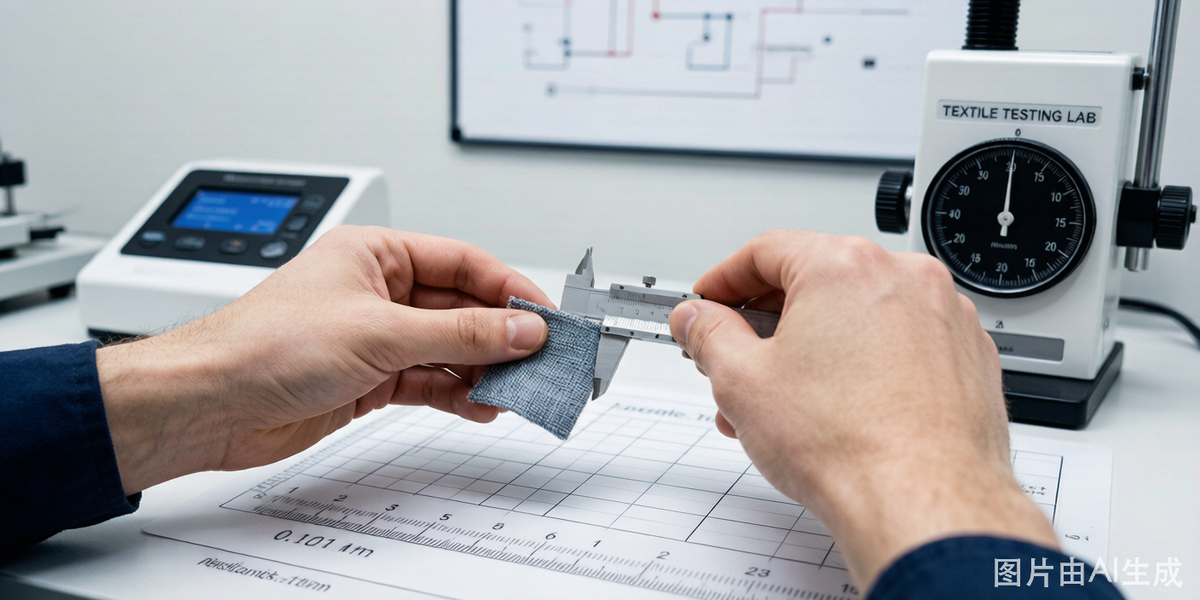
Sample Preparation: Cut samples 500mm by 500mm minimum. Mark three 250mm benchmarks in both warp and length directions. Condition samples at 21 degrees Celsius, 65% relative humidity for minimum 4 hours before measurement. Measure benchmarks to plus or minus 0.5mm accuracy.
Test Procedure: wash with 1.8 kg makeweight (ballast) to simulate real laundry loading. Use standard detergent (IEC reference detergent). Tumble dry at normal setting until dry. Condition and re-measure. Repeat for total 3 wash-dry cycles.
Calculating Shrinkage: Shrinkage percentage = (Original Length minus Final Length) divided by Original Length, multiplied by 100. A negative value means shrinkage; a positive value means growth (rare with some synthetics).
How to Write Shrinkage Specs in Your Purchase Order
Include these lines in every hotel linen PO: Pre-shrunk processing — Sanforized (woven) or Compacted (knitted) required. Test method: ISO 6330, Procedure 6N (60 degrees Celsius cotton cycle), tumble dry. Test cycles: 3 complete wash-dry cycles before measurement. Tolerance: 2.0% warp and 2.0% weft maximum for woven bedding. Tolerance: 3.0% warp and 2.0% weft maximum for towels. Tolerance: 4.0% length and 3.0% width maximum for knit bedding. All cut-and-sew dimensions below are finished dimensions after pre-shrinking. Supplier to provide third-party shrinkage test report from ISO 17025 accredited lab. Reject if any single dimension exceeds tolerance after 3 cycles.
Critical: Finished vs Cut Dimensions. Never specify cut size in your PO — always specify finished size after pre-shrinking. If you need a 300 by 300 cm king flat sheet, write finished size: 300 by 300 cm after pre-shrinking. The supplier is responsible for cutting the fabric large enough that it reaches 300 cm after the pre-shrinking process.
Pre-Shipment Shrinkage QC Checklist
Require shrinkage test report from ISO 17025-accredited third-party lab (SGS, Intertek, or Bureau Veritas). Test performed on fabric from actual production lot, not a separate pilot batch. Minimum 3 wash-dry cycles completed before measurement. Warp and weft shrinkage both within specified tolerances. All SKUs tested separately (sheets, pillowcases, duvet covers, towels). If blended fabrics, shrinkage tested at the highest temperature the fiber blend can tolerate. Visual inspection for seam puckering, distortion, or twist after washing. Compare measured dimensions after 3 washes against PO finished dimensions.
Shrinkage is one of the most preventable quality failures in hotel linen procurement. A clear specification, verified by third-party testing before shipment, eliminates the risk entirely — and costs a fraction of what one rejected container would cost.
Shop Related Products
Free PDF: Complete Hotel Linen Buying Guide
Step-by-step procurement guide covering specs, MOQ, pricing, QC, and shipping — based on real Dieshiqiao experience.
Need help sourcing hotel linens?
Get a free quote within 24 hours. No commitment required.
Request a QuoteRelated Articles
Reactive vs Pigment Dyeing for Hotel Linen: Fastness and Cost
Both look identical in a sample. The dye class decides whether colored hotel linen survives chlorine and 60 C laundering, and who pays when it does not.
Ring-Spun vs Combed vs Carded Cotton for Hotel Bedding
Carded, ring-spun and combed cotton sit on three price steps. Here is what each step buys in a hotel sheet, and when the upgrade is wasted.
China's New Green Textile Standard: What Hotel Linen Buyers Must Know
China's GB/T 35611-2024 green textile standard took effect October 1. Here's what the new low-carbon and chemical limits mean for hotel linen buyers.