Nantong's Soft-Cloud Yarn: What Hotel Towel Buyers Should Know
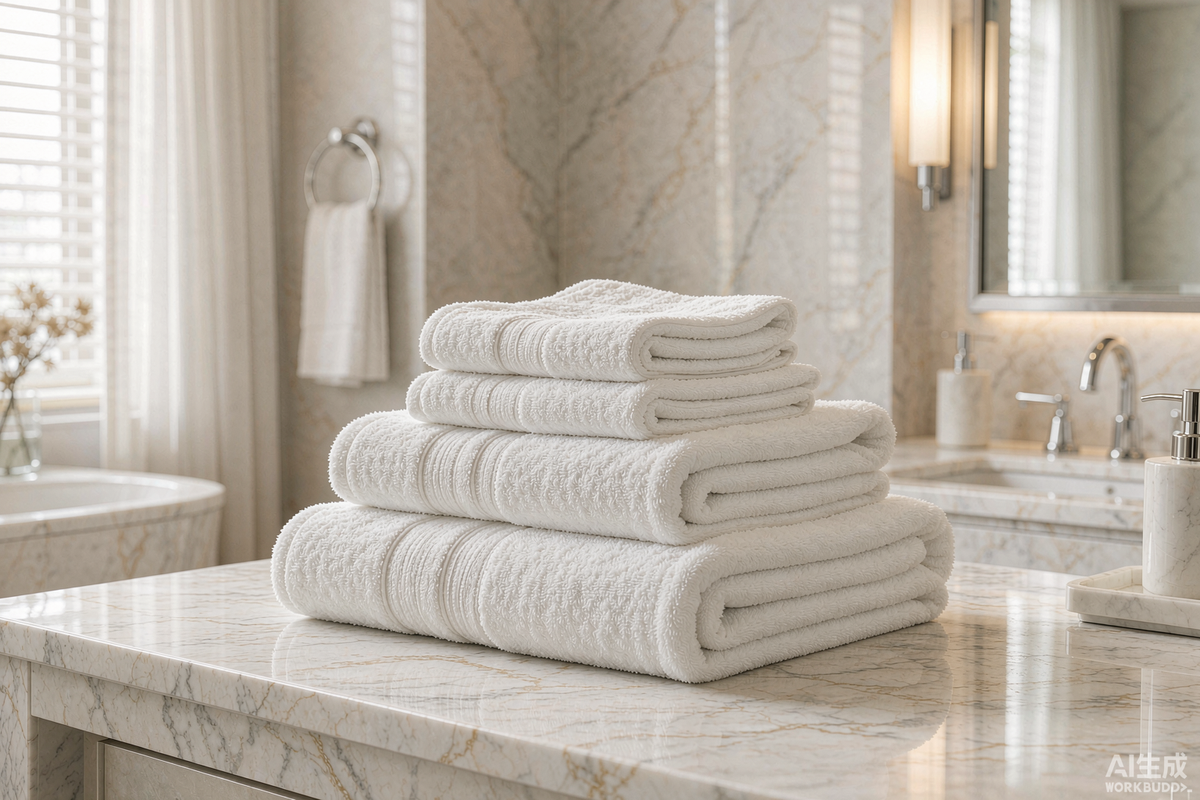
A new textile patent from Nantong, China's home-textile hub, promises to end one of hospitality's oldest frustrations: towels that feel luxurious when new but turn stiff, flat, and fuzzy after repeated commercial laundering. The technology, called soft-cloud yarn, was developed through a three-year industry-university collaboration and recently received a national invention patent. For hotel procurement teams, it is a signal that the next generation of bath textiles may finally deliver both guest comfort and housekeeping durability.
The Hidden Cost of 'Soft' Hotel Towels
Most hotel buyers have seen the cycle. A towel sample arrives fluffy and inviting, but after fifty industrial wash cycles the pile collapses, the edges curl, and guests start leaving notes about roughness. The root cause is a structural tension in conventional yarn: the processes that make cotton feel soft tend to weaken the fiber, while treatments that add strength often leave the fabric boardy. Chemical softening, repeated rinsing, and high-temperature dissolution have been the default fixes, yet they shorten lifespan, increase water use, and raise effluent costs.
The result is a hidden cost that does not always show up in the unit price. A towel that loses absorbency or shape after a few months forces earlier replacement, increases laundry rejects, and quietly erodes the guest experience. In an era when online reviews photograph everything from thread count to towel quality, that erosion is more expensive than ever.
What Soft-Cloud Yarn Changes
Soft-cloud yarn takes a different path. Instead of adding chemical softeners or dissolving fiber to create loft, engineers restructure the yarn itself through physical modification. The goal is to create internal space and surface texture that deliver plushness without sacrificing tensile strength. Because the softness is built into the yarn geometry rather than applied as a finish, it survives the mechanical stress of commercial laundry.
According to the patent documentation, the development team ran thousands of sample trials and hundreds of parameter adjustments before achieving stable mass production. Early prototypes either met softness targets but failed abrasion tests, or passed durability tests but felt harsh. The breakthrough came from balancing raw-material ratios, yarn structure, machine settings, and finishing conditions as one integrated system rather than as isolated tweaks.
Performance Implications for Hotel Procurement
For procurement managers, the most practical question is whether a towel made with soft-cloud yarn can reduce total cost of ownership. The answer depends on three metrics: wash-cycle retention, absorbency stability, and dimensional stability. Conventional plush towels often peak in comfort at delivery and decline steadily. A structurally soft yarn should maintain its hand feel and absorbency over more cycles, stretching replacement intervals and reducing the number of towels housekeeping pulls from circulation.
The technology also matters for quality consistency. Because the yarn is engineered rather than chemically finished, batch-to-batch variation in softness should be smaller. That matters for large hotel groups that need every towel in every property to match the same tactile standard. Fewer rejected lots and fewer guest complaints translate directly into lower operational friction.
Sustainability and Regulatory Pressure
Need these specs quoted for your property?
Tell us your hotel tier, quantities and timeline — get a free, no-obligation quote within 24 hours.
That aligns with tightening expectations across the hospitality industry. From green-hotel certifications to corporate ESG reporting, procurement teams are being asked to document the environmental footprint of textiles. A yarn technology that reduces chemical input and water use without sacrificing performance is easier to defend in an audit than one that relies on disposable softening chemistry.
Questions to Ask Before Specifying It
If you are considering soft-cloud yarn towels for your next replenishment, treat the new material like any other supplier claim. Request independent test reports covering tensile strength, pile retention after a defined number of wash cycles, absorbency, and dimensional change. Ask for a trial lot sized to your actual laundry conditions, because hotel results differ from laboratory results.
You should also clarify the supply-chain structure. Is the yarn produced in-house by the mill, or is it sourced from a licensed partner? Can the supplier guarantee repeatability across multiple orders six or twelve months apart? What certifications cover chemical safety and environmental claims? The answers will tell you whether the technology is a stable production platform or a marketing label.
What This Means for Sourcing Strategy
Soft-cloud yarn is unlikely to replace every hotel towel overnight. Premium and upper-midscale properties are the natural first adopters, because their guests notice tactile quality and their operators can absorb a modest initial price premium in exchange for longer life. Economy properties may wait until economies of scale bring the cost closer to conventional yarns.
Still, the underlying lesson is broader than one patent. Chinese textile clusters such as Nantong are moving from pure cost competition toward engineered performance. Buyers who still evaluate suppliers only on piece price risk missing innovations that lower total cost and raise guest satisfaction. The most effective sourcing strategy now combines traditional quality checks with a deliberate scan for material and process improvements.
Conclusion
Nantong's soft-cloud yarn is a useful case study in how a single material innovation can address multiple pain points at once: guest comfort, housekeeping durability, water use, and regulatory compliance. For hotel buyers, the next step is not to rewrite specifications immediately, but to add the technology to the list of options worth testing. In a market where towel quality increasingly shows up in reviews and repeat bookings, that small step could yield a measurable return.
This article was adapted from Chinese textile industry sources. For custom hotel linen inquiries, visit nantonglinens.com.
Shop Related Products
Free PDF: Complete Hotel Linen Buying Guide
Step-by-step procurement guide covering specs, MOQ, pricing, QC, and shipping — based on real Dieshiqiao experience.
Need help sourcing hotel linens?
Get a free quote within 24 hours. No commitment required.
Request a QuoteRelated Articles
Hotel Linen Buyers: Two New China Textile Standards for 2026
Two new China textile standards - GB/T 29862-2026 fiber labels and GB/T 47782-2026 cooling tests - are reshaping hotel linen procurement compliance.
Hotel Linen Compliance 2026: New China Standards Guide
China's GB 18383-2025 and revised GB/T 22800 reshape hotel linen procurement in 2026. Non-compliant suppliers risk losing major chain contracts.
Hotel Textile Shrinkage Standards: Pre-Shrunk Processing, Testing & Buyer Specifications
Shrinkage is one of the most costly hidden defects in hotel linen. Learn mechanical vs relaxation shrinkage, sanforization processing, testing methods, and how to write shrinkage specs in your PO.