2026 Textile Trends: Sleep Economy Reshapes Hotel Linen Sourcing
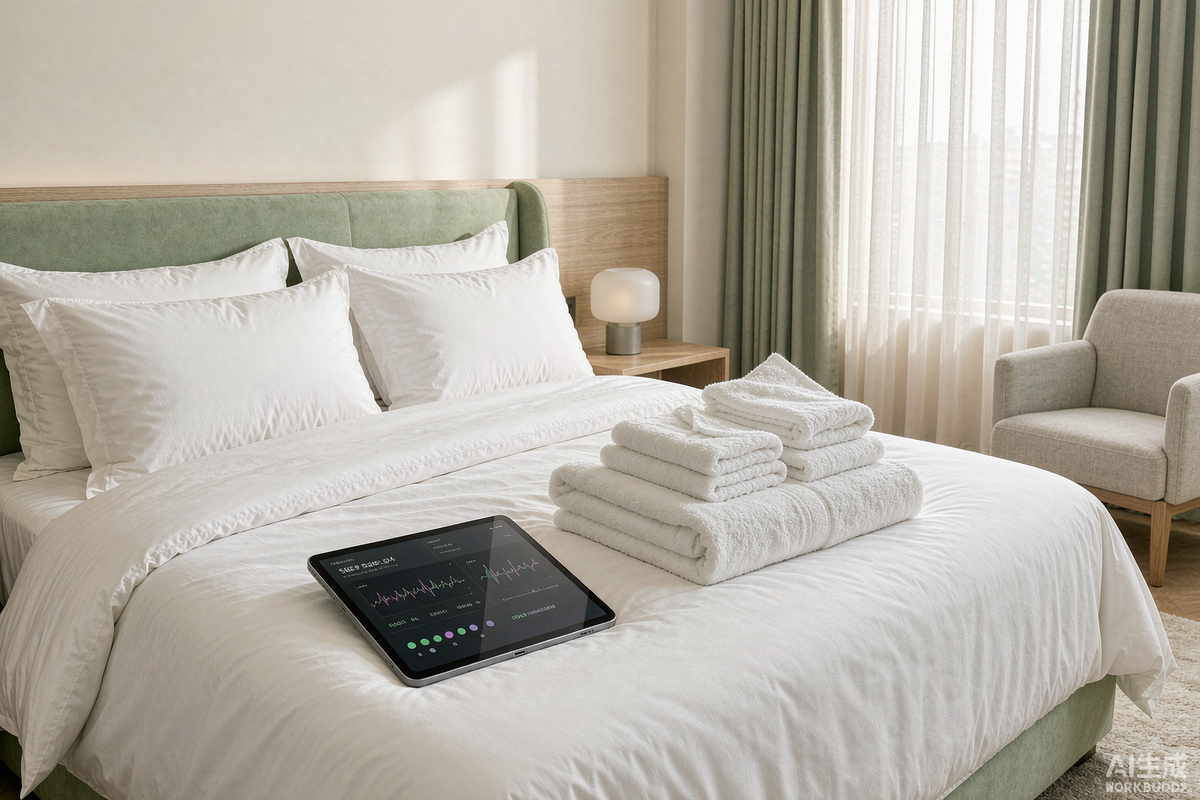
The 2026 home textile landscape is undergoing its most significant transformation in a decade. China's sleep economy has grown to an estimated ¥617 billion, driven by 81% of nationals reporting sleep issues and a fundamental consumer shift from owning bedding to investing in sleep quality. For hotel linen buyers, these consumer-level trends cascade directly into procurement strategy — functional textiles now outpace traditional products by three to five times in growth rate, and national subsidy programs have formally incorporated home textiles into consumer stimulus frameworks. Understanding these shifts is no longer optional for sourcing professionals.
The Sleep Economy Imperative
China's sleep economy reached ¥573.7 billion in 2025, growing 7.3% year-over-year, and is projected to hit ¥617 billion in 2026. According to the 2026 Sleep Aid Insights Report, 71% of consumers now rank replacing comfortable bedding as their preferred sleep improvement method, surpassing all other interventions. The 26 to 45 age demographic accounts for over 60% of sleep-related spending, and premium-tier consumer orders on major e-commerce platforms grew 73.8%. For hotel procurement teams, this signals that guests increasingly evaluate sleep quality through the same lens as retail consumers — they expect hotel bedding to deliver functional performance, not just cleanliness.
Export Resilience and Structural Shifts
Despite geopolitical headwinds and raw material cost pressures, China's home textile exports demonstrated remarkable resilience in 2026. Customs data shows H1 2026 exports reaching $24.21 billion, up 3.79% year-over-year, with January through July cumulative exports at $19.64 billion, up 3.7%. Bedding exports reached $7.56 billion, up 3.58%, while fabric products hit $9.40 billion, up 5.32%. Decoration textile products emerged as the standout growth category, even as towels continued a multi-year decline. The data reveals a structural pivot: buyers in Southeast Asia, the Middle East, and Eastern Europe increased orders for antibacterial, washable, and modular bedding products by 29.1%, signaling that functional specifications now drive procurement decisions globally.
From Incremental to Replacement Demand
China's home textile market reached ¥336 billion in 2025, recovering from a two-year contraction triggered by the real estate downturn. The recovery logic has fundamentally changed — growth is no longer fueled by new home purchases but by replacement demand and quality upgrades. E-commerce penetration rose 7.2 percentage points over five years to reach 34.4% of total sales, with interest-driven commerce becoming the primary battleground. The profit picture has also improved: regulated bedding enterprises saw profits rise 3.84% while operating costs fell 2.33%, easing margin pressure that had squeezed the industry since 2022. For hotel buyers, this means suppliers are financially healthier and more capable of investing in quality improvements.
Six Functional Trends Redefining Textiles
A leading e-commerce platform's 2026 autumn and winter home textile trend report identifies six core themes reshaping consumer expectations: sensory healing textiles with high-weight plush fabrics and tactile stress relief, easy-care textiles featuring quick-disassembly designs with fiber-level antimicrobial properties, smart temperature control using phase-change materials to replace passive insulation, skin symbiosis with pH-balanced fabrics incorporating collagen and hyaluronic acid, playful interactive textiles targeting Gen Z social currency, and pet-friendly home textiles with scratch-resistant and hair-repellent surfaces. While some trends target retail consumers, several translate directly to hotel linen applications. Hotel buyers should evaluate suppliers offering these functional innovations as differentiators in guest experience.
Need these specs quoted for your property?
Tell us your hotel tier, quantities and timeline — get a free, no-obligation quote within 24 hours.
Sales data reveals a clear divergence between functional and traditional products. Smart mattresses grew 15.0% year-over-year, bamboo cooling mats 11.2%, memory foam pillows 9.6%, and latex pillows 8.2%, while traditional bedding grew only 3.2%. Memory foam pillows now account for 54.3% of all pillow transaction value. White noise audio devices grew 60-fold, weighted eye masks 55-fold, and under-pillow speakers 22-fold, indicating consumers are building complete sleep ecosystems. For hotel procurement, these data points suggest that guests arriving at properties increasingly compare hotel bedding against their own upgraded home setups. Properties offering memory foam pillows, temperature-regulating bedding, and functional textiles can command rate premiums and improve review scores.
National Subsidy and Policy Catalyst
A significant policy development for 2026 is the inclusion of home textiles in China's national consumer subsidy program. Multiple provinces, including Shanghai, Jiangsu, Zhejiang, Fujian, Hunan, and Sichuan, have implemented subsidy frameworks covering home textile purchases. This policy intervention stimulates domestic demand while also signaling government endorsement of quality upgrades in the textile sector. For hotel buyers sourcing from China, the subsidy environment means domestic suppliers face stronger domestic competition, which can improve export pricing flexibility and accelerate product innovation cycles. Additionally, the continued implementation of updated national standards ensures a compliance floor that benefits quality-conscious international buyers.
Procurement Action Framework for Hotel Buyers
Given these trends, hotel linen sourcing professionals should consider five actions. First, prioritize suppliers offering functional textile innovations — antimicrobial, temperature-regulating, and skin-friendly treatments are no longer premium add-ons but baseline expectations. Second, evaluate suppliers' e-commerce capabilities and digital integration readiness, as the industry's digital transformation is accelerating supply chain response times from 28 to 19 days. Third, leverage the structural shift toward replacement demand by negotiating longer-term contracts with quality-focused suppliers who are financially stable. Fourth, monitor the national subsidy program's impact on domestic pricing, which may create temporary windows of export pricing advantage. Fifth, incorporate guest-facing sleep quality metrics into supplier evaluation frameworks, aligning procurement decisions with the sleep economy trend that drives guest satisfaction and repeat bookings.
Conclusion
The 2026 home textile market is not merely recovering — it is being restructured around sleep quality, functional innovation, and digital channel transformation. Hotel linen buyers who recognize these shifts and align their sourcing strategies with consumer-level trends will gain competitive advantage in both cost management and guest experience differentiation. The sleep economy is not a passing fad; it is a structural change that will define textile procurement for the next decade.
This article was adapted from Chinese textile industry sources. For custom hotel linen inquiries, visit nantonglinens.com.
Shop Related Products
Free PDF: Complete Hotel Linen Buying Guide
Step-by-step procurement guide covering specs, MOQ, pricing, QC, and shipping — based on real Dieshiqiao experience.
Need help sourcing hotel linens?
Get a free quote within 24 hours. No commitment required.
Request a QuoteRelated Articles
Nantong Soft-Cloud Yarn: A Durability Breakthrough for Hotel Linens
Soft-cloud yarn technology from Nantong solves the softness-durability dilemma in hotel towels and bedding. What procurement managers should know.
September 2026 Textile Market: Peak Season Stalls, Raw Materials Diverge
China's 132nd cotton textile survey shows September peak season underperforming; cotton falls while polyester and viscose surge, creating cost divergence.
September 2026 Hotel Linen: Fabric Market Divergence and Peak Season
August 2026 fabric prices show upstream-downstream divergence as September peak season and ASEAN supply chain shifts reshape hotel linen sourcing.