RFID Hotel Linen Management: ROI Analysis and Implementation Guide for 2026
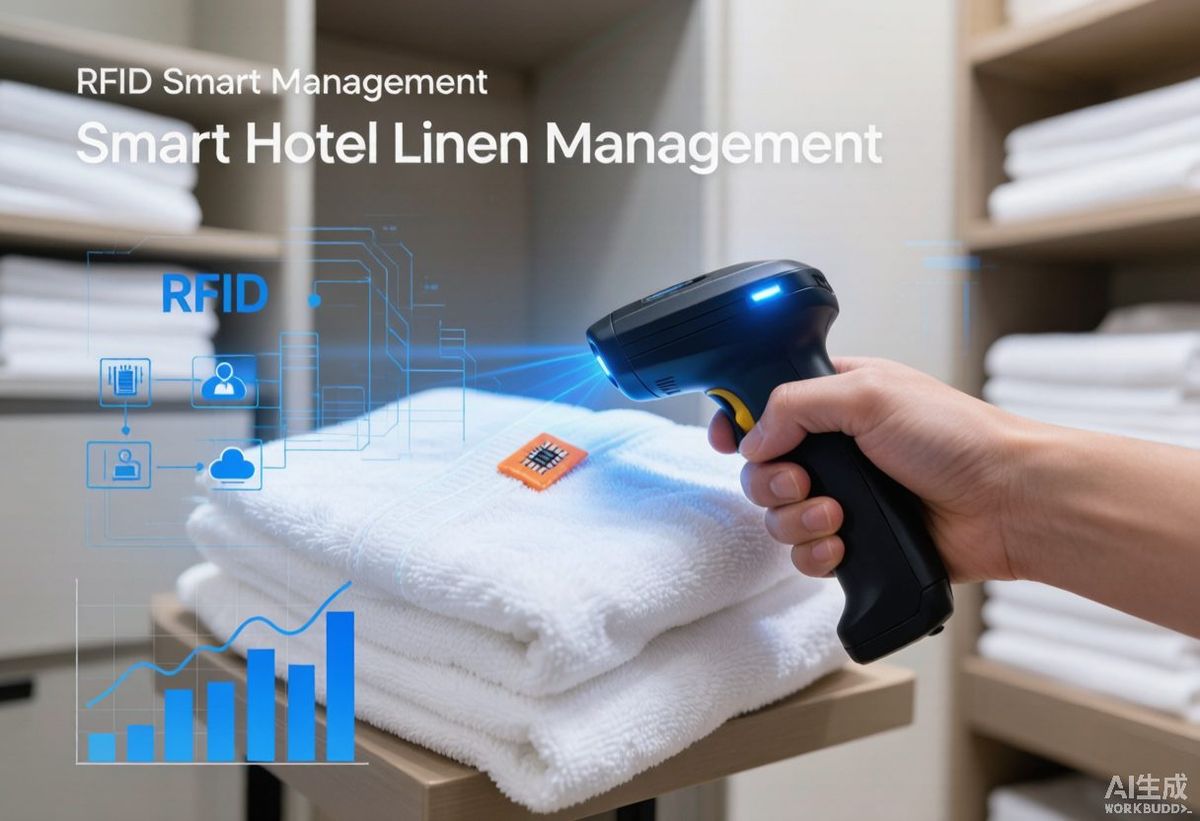
RFID Hotel Linen Management: ROI Analysis and Implementation
RFID (Radio Frequency Identification) technology has crossed the cost-effectiveness threshold for hotel linen management. What was a premium technology deployed only by large luxury chains five years ago is now entering mainstream adoption across upscale and upper-midscale properties. For properties with 200+ rooms, the ROI is typically 12-18 months.
How RFID Linen Tracking Works
Each textile item (sheet, towel, bathrobe, pillowcase) is embedded with a washable RFID chip — a small, flexible tag sewn into a seam or hem. These tags can withstand 200+ industrial laundry cycles and operate at UHF frequencies (860-960 MHz).
The system works through three components:
1. Tags: Embedded in each linen item. Cost: $0.50-1.50 per tag depending on volume and form factor. Each tag contains a unique ID number linked to a database record.
2. Readers: Fixed readers installed at key choke points (laundry entry/exit, linen closet doors, room corridors) and handheld readers for manual scanning. Fixed reader cost: $2,000-5,000 each. Handheld reader: $500-1,500.
3. Software Platform: Cloud-based or on-premises system that tracks each item's location, wash count, and lifecycle status. Software cost: $200-800/month for cloud-based SaaS, or $15,000-50,000 for on-premises license.
What RFID Tracking Delivers
Loss Prevention
Annual linen loss in hotels averages 15-20% of inventory without tracking
RFID reduces this to 3-5% by providing real-time visibility
A 200-room hotel with ¥500,000 in linen inventory saves ¥75,000-100,000 annually
Inventory Time Reduction
Manual linen counts: 4-8 hours per month per floor
RFID counts: 15-30 minutes per floor (90% reduction)
Staff time reallocated to guest service and quality improvement
Wash Cycle Optimization
Each item's wash count is tracked precisely
Items approaching end-of-life are flagged for proactive replacement
Prevents premature disposal of serviceable linens
Extends average linen lifespan by 10-15%
PAR Level Management
Automated alerts when inventory falls below PAR (Per Available Room) levels
Automated reorder triggers to maintain optimal stock
Prevents overstocking (tying up capital) and understocking (guest complaints)
Quality Control
Tracking which items have been through how many washes
Identifying patterns of premature wear (potential supplier quality issues)
Documenting linen lifecycle for warranty claims
ROI Calculation: 200-Room Hotel
Investment:
RFID tags (2,000 items @ $1.00): $2,000
Fixed readers (4 @ $3,000): $12,000
Handheld readers (2 @ $800): $1,600
Software setup and first year: $6,000
Total initial investment: $21,600
Annual Savings:
Reduced linen loss (from 18% to 4%): ¥63,000 ($8,700)
Staff time savings (30 hours/month @ $15/hr): $5,400
Extended linen lifespan (12.5%): ¥15,000 ($2,100)
Total annual savings: $16,200
ROI: 16 months payback period. Year 2+ net savings: $16,200 annually.
Need these specs quoted for your property?
Tell us your hotel tier, quantities and timeline — get a free, no-obligation quote within 24 hours.
Implementation Roadmap
Phase 1: Assessment (Month 1)
Audit current linen inventory and PAR levels
Document loss rates and replacement patterns
Calculate potential ROI for your property
Select RFID system vendor (get 3 quotes)
Phase 2: Pilot (Month 2-3)
Tag one floor or one linen category (e.g., bath towels)
Install one fixed reader at laundry exit
Train housekeeping and laundry staff
Collect baseline data for 4-6 weeks
Phase 3: Full Rollout (Month 4-6)
Tag all linen items
Install all fixed readers
Integrate with property management system
Establish automated alerts and reorder triggers
Full staff training
Phase 4: Optimization (Month 7+)
Analyze wash cycle data to optimize laundry operations
Adjust PAR levels based on actual usage patterns
Use lifecycle data to negotiate better supplier terms
Review and refine alert thresholds
Vendor Selection Criteria
When evaluating RFID linen management vendors, consider:
1. Tag durability: Request wash-test data (minimum 200 cycles)
2. Reader range: Ensure coverage for your laundry and corridor layout
3. Software integration: Compatibility with your PMS and procurement systems
4. Reporting capabilities: Customizable dashboards and exportable reports
5. Support and training: On-site installation and staff training included
6. Scalability: System should accommodate future property expansion
7. Tag form factor: Tags must be invisible to guests and not affect linen comfort
Common Pitfalls to Avoid
Metal Interference: Metal laundry carts and shelving can block RFID signals. Ensure your vendor accounts for metal in the environment.
Tag Placement: Poorly placed tags can be felt by guests or damaged in laundry. Follow vendor recommendations for tag placement on each item type.
Staff Adoption: RFID systems only work if staff use them correctly. Invest in thorough training and make the system easy to use.
Data Quality: The system is only as good as the data entered. Ensure initial inventory data is accurate and ongoing data entry is disciplined.
2026 Market Context
The RFID linen management market is maturing rapidly in 2026:
Tag costs have fallen 30-40% from 2023 levels
Software-as-a-Service models eliminate large upfront software costs
Integration with major PMS platforms (Opera, Mews, Cloudbeds) is now standard
Several Chinese textile manufacturers offer pre-tagged linens at minimal cost premium
For hotel linen buyers sourcing from China, ask your supplier about pre-tagged options. Many Nantong and Jiangsu factories now offer RFID tag embedding as a value-added service at ¥2-5 per item — a small cost that dramatically improves linen management efficiency.
Shop Related Products
Free PDF: Complete Hotel Linen Buying Guide
Step-by-step procurement guide covering specs, MOQ, pricing, QC, and shipping — based on real Dieshiqiao experience.
Need help sourcing hotel linens?
Get a free quote within 24 hours. No commitment required.
Request a QuoteRelated Articles
Nantong Soft-Cloud Yarn: A Durability Breakthrough for Hotel Linens
Soft-cloud yarn technology from Nantong solves the softness-durability dilemma in hotel towels and bedding. What procurement managers should know.
September 2026 Textile Market: Peak Season Stalls, Raw Materials Diverge
China's 132nd cotton textile survey shows September peak season underperforming; cotton falls while polyester and viscose surge, creating cost divergence.
September 2026 Hotel Linen: Fabric Market Divergence and Peak Season
August 2026 fabric prices show upstream-downstream divergence as September peak season and ASEAN supply chain shifts reshape hotel linen sourcing.