China Textile Belts 2026: Value-Driven Hotel Linen Sourcing Shift
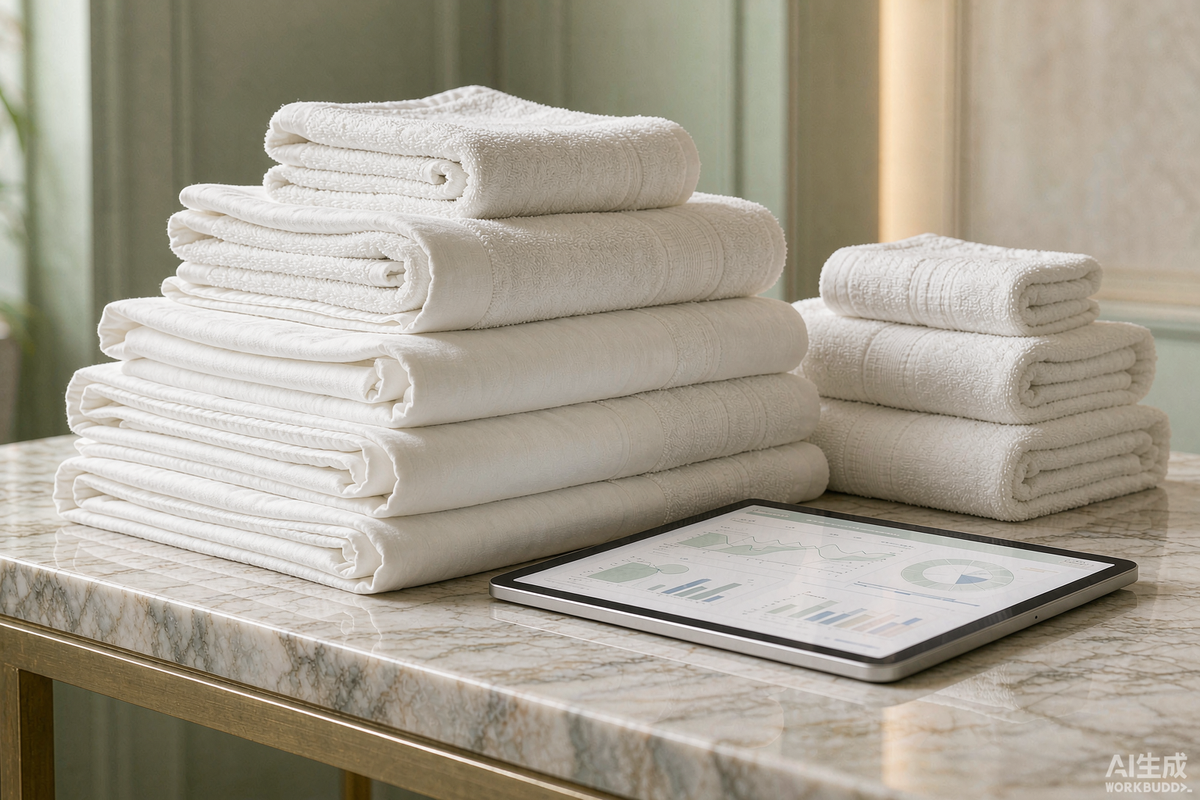
The competitive logic of China's textile supply chain has fundamentally changed. In August 2026, industry research from multiple sources reveals that the nation's manufacturing clusters are moving decisively from a cost-first to a value-first sourcing model. For hotel procurement managers, the era of simply finding the cheapest supplier is over, and a new framework built on innovation, certification, and digital transparency is taking its place.
The End of Price-First Sourcing
China's home textile industry has entered a structural inflection point. Through the first half of 2026, total sector revenue grew modestly, but profitability diverged sharply across manufacturers. The market is now characterized by stable volume, rising quality, and consolidation toward industry leaders. The real-estate-driven growth that once fueled the entire sector has faded. Today, replacement demand and functional upgrades are the primary market engines. For hotel buyers, the lowest-price supplier is increasingly the riskiest choice, as small manufacturers without product differentiation face mounting survival pressure and may not survive the current consolidation wave.
Three Industrial Belts Leading the Charge
Three regional clusters are spearheading this transformation. Keqiao, the world's largest chemical-fabric trading hub, is building a digital textile city ecosystem focused on functional textiles such as smart temperature-regulating and antimicrobial fibers, while pioneering small-order rapid-response supply chains. Shengze is investing in premium faux-silk and recycled fabrics, partnering with universities on new-material laboratories to shift from basic weaving to intelligent manufacturing. Nantong's home-textile cluster is consolidating design, furnishing, and soft-decoration resources into integrated product ecosystems. For hotel linen buyers, sourcing from these upgraded industrial belts now offers integrated services including design support, prototyping, and production that go far beyond simple fabric supply.
Functional Fabrics Redefine Hotel Linen
Autumn 2026 has brought a clear signal that functional fabrics are no longer a niche category. Phase-change temperature-regulating materials, graphene-based thermal insulation, and recycled eco-friendly fillings have seen order volumes grow significantly year-on-year. Antimicrobial, anti-mite, and temperature-control textiles are expanding their market share rapidly across all segments. Industry data shows that mid-range hotels are adopting antimicrobial functional linens at a 76.5% penetration rate, while eco-friendly materials account for 34.7% of total hotel linen applications. For procurement managers, this means specifying functional requirements alongside thread count and GSM is now essential when issuing RFQs, as functional differentiation directly impacts guest satisfaction and repeat-booking rates.
Green Certifications Become Hard Requirements
Need these specs quoted for your property?
Tell us your hotel tier, quantities and timeline — get a free, no-obligation quote within 24 hours.
Digital Supply Chains Cut Lead Times
Leading manufacturers are compressing supply-chain response times dramatically. Average material preparation cycles have been reduced by over 30% through digital supply-chain management systems. Flexible production strategies employing small batches and high frequency have improved raw material turnover by 40% while cutting warehousing costs by 25%. ERP systems, AI quality inspection, and IoT equipment are no longer optional but foundational elements of manufacturing competitiveness. Third-quarter data shows average production costs dropping 5 to 8 percentage points through lean manufacturing improvements. For hotel buyers, suppliers with digital capabilities can deliver faster, more transparent, and more consistently quality-controlled orders, reducing the risk of last-minute supply disruptions during peak seasons.
What Buyers Should Do Now
Procurement teams should take three concrete actions this quarter. First, build a supplier innovation scoring system that evaluates research and development investment ratios, patent counts, and rapid-sampling turnaround times. Second, prioritize suppliers within upgraded industrial belts who hold green certifications and carbon-footprint tracking capabilities, as these credentials will increasingly determine market access in regulated regions. Third, explore partnerships with industrial-belt service platforms that offer digitalized collective procurement for flexible, small-batch, multi-variety ordering. These three steps will position buyers to capture the value premium that the new supply landscape offers, while hedging against the consolidation risk that threatens unverified suppliers.
Outlook for Autumn and Winter 2026
The autumn and winter seasons are the traditional peak for home-textile consumption, and current market indicators suggest a measured recovery. Mid-to-high-end functional fabric orders have been recovering since mid-September, with protective workwear fabric inquiries and high-end home-textile orders both showing year-on-year growth. While total order volume has not fully recovered, the structure has clearly optimized. High-value products account for a growing share, and profit margins are holding firm. The cotton-textile climate index has returned above the 50 threshold for the first time in six months, signaling renewed market confidence. For hotel linen buyers, this means planning ahead for peak-season demand while the supply side is still adjusting capacity, locking in favorable terms before the year-end rush.
China's textile industry is undergoing a quiet but profound transformation. The regional industrial belts that produce the world's hotel linens are no longer competing on price alone. They are investing in functional innovation, green certification, and digital transparency. For hotel procurement managers, the old playbook of lowest-bid sourcing is becoming obsolete. The new approach requires evaluating supplier innovation, verifying environmental credentials, and leveraging digital supply-chain capabilities. As the autumn 2026 procurement season unfolds, buyers who adapt to this value-driven landscape will secure both better quality and more resilient supply.
This article was adapted from Chinese textile industry sources. For custom hotel linen inquiries, visit nantonglinens.com.
Shop Related Products
Free PDF: Complete Hotel Linen Buying Guide
Step-by-step procurement guide covering specs, MOQ, pricing, QC, and shipping — based on real Dieshiqiao experience.
Need help sourcing hotel linens?
Get a free quote within 24 hours. No commitment required.
Request a QuoteRelated Articles
Nantong Soft-Cloud Yarn: A Durability Breakthrough for Hotel Linens
Soft-cloud yarn technology from Nantong solves the softness-durability dilemma in hotel towels and bedding. What procurement managers should know.
September 2026 Textile Market: Peak Season Stalls, Raw Materials Diverge
China's 132nd cotton textile survey shows September peak season underperforming; cotton falls while polyester and viscose surge, creating cost divergence.
September 2026 Hotel Linen: Fabric Market Divergence and Peak Season
August 2026 fabric prices show upstream-downstream divergence as September peak season and ASEAN supply chain shifts reshape hotel linen sourcing.