Intertextile Shanghai 2026: Key Trends for Hotel Linen Buyers
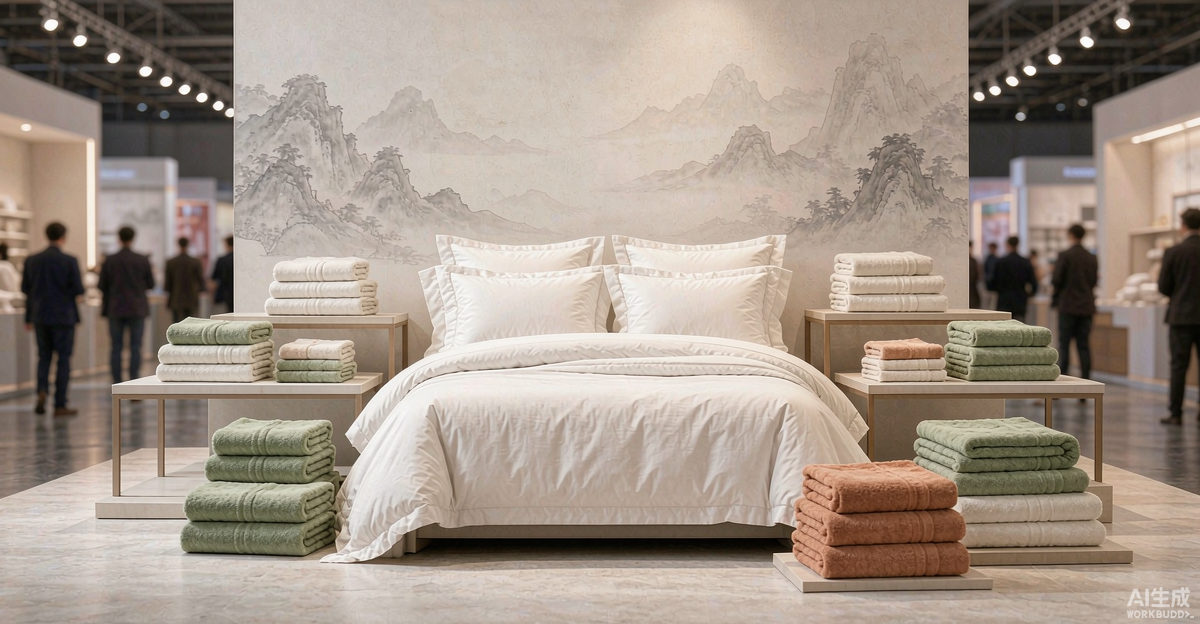
The 2026 China International Home Textiles and Accessories Expo (Intertextile) wrapped up its autumn edition in Shanghai on August 20, and the three-day event sent a clear signal to every hotel linen buyer watching Asia's largest textile sourcing hub. With more than 1,200 exhibitors from 19 countries and regions, buyers from 171 countries, and a calendar stacked with AI, sustainability, and fire-safety launches, the show set the agenda for the rest of 2026 and well into 2027. For procurement managers who cannot attend every regional fair, distilling its themes into an action plan is one of the highest-leverage moves you can make this quarter.
Why Intertextile Shanghai Matters to Hotel Linen Buyers
Held at the National Exhibition and Convention Center in Shanghai from August 18 to 20, the autumn edition of Intertextile is the largest dedicated home-textile sourcing event in China. The 2026 show occupied more than 110,000 square meters across four halls and twelve themed zones. Unlike regional fabric fairs that focus on a single segment, Intertextile links upstream yarn and greige mills, midstream finishing houses, and downstream brand buyers under one roof, which is why international groups such as IKEA, H&M, Walmart, and Inditex continue to send buying teams year after year.
For hotel chains, the practical value is even higher. A single walk through the show covers bedding fabrics, terry products, decorative textiles, blackout systems, and the new category of flame-retardant-compliant contract fabrics that meet both Chinese and overseas codes. With eight dedicated B2B matchmaking sessions and hundreds of pre-scheduled one-to-one meetings running throughout the show, procurement managers can compress a quarter of sourcing into a 72-hour window.
The Strategic Shift: From Scale Expansion to Value Growth
Industry leaders at the opening ceremony framed 2026 as the opening year of China's 15th Five-Year Plan for the textile sector, and used a consistent phrase to describe the moment: a key inflection point from scale expansion to value growth. Translated into procurement language, that means Chinese mills are no longer competing on the lowest per-piece price; they are competing on certification depth, design originality, and supply-chain transparency.
For buyers this is mostly good news. As suppliers raise their internal quality bar to chase higher-margin export orders, hotel procurement teams can access better-tested goods at the same landed cost as last year, provided they update their specifications. Buyers who still rely on 2018-style spec sheets are likely to under-buy the new generation of compliance-ready fabrics and over-buy the older SKUs that mills are quietly de-prioritizing.
A Four-Hall Map of the Full Supply Chain
Hall 5.1 housed premium soft furnishings: imported decorative fabrics, designer textiles, curtain and blind systems, and an embedded Fiber Art Exhibition curated with textile universities. Hall 6.1 was the international brand zone, where the headline launch of the 2027 International Home Trend Forecast (this year's theme: Breathe Up) gave designers a year-ahead reference for color, material, and silhouette choices that trickle into hotel suites.
Hall 5.2 focused on decorative cloth and curtain fabrics, with mills showcasing eco-friendly dyeing, low-water finishing, and recycled polyester. Hall 6.2 was built around furniture upholstery and contract-grade textiles, the closest analog to hospitality bedding. The takeaway for buyers is structural: a single hotel linen category rarely lives in a single hall anymore. Greige procurement, finishing, and assembly conversations now happen at neighboring booths, which shortens sample iteration cycles dramatically.
Cross-Industry Buyers Reshape the Sourcing Map
Perhaps the most striking change at this year's show was the buyer profile. Beyond traditional home-textile purchasing teams, the floor welcomed representatives from new energy vehicle brands, smart-home electronics makers, real-estate developers, and hotel groups exploring non-room applications such as in-vehicle linens, smart-bedroom textile integrations, and serviced-apartment fit-outs.
This convergence has two practical effects for hotel procurement. First, capacity is being reallocated: greige mills that used to dedicate a single shift to hotel bedding now split capacity between auto interiors and hospitality, which tightens lead times for late orders. Second, design trends are crossing over faster. The same brushed, matte-finish cotton that anchors 2026 EV interiors is showing up in upscale resort bedding, and the brown-and-clay palettes visible in soft-furnishing displays are now fair game for property-wide color stories.
Need these specs quoted for your property?
Tell us your hotel tier, quantities and timeline — get a free, no-obligation quote within 24 hours.
Sustainability was the dominant theme across all four halls, reinforced by three dedicated launch events. A new low-carbon fiber combination program for bedding fabrics highlighted closed-loop dyeing and reduced water consumption. An outdoor performance fabrics launch covered solution-dyed acrylic for patio, pool deck, and balcony use, a category growing more than 15 percent year on year in hospitality fit-outs. Most relevant for hotel buyers, a dedicated seminar titled One Fabric's Safe Journey presented a global map of flame-retardant standards covering the US, EU, UK, Gulf, and Australian markets.
The compliance map matters because hotels increasingly deliver to multi-jurisdiction brand standards. A linen program designed to satisfy BS 7175 plus Cal TB 117 plus the UAE fire code now requires a mill partner with documented proof across all three, not just one. The sourcing teams that win the next two years of RFPs will be the ones who can show buyers not just a price, but a complete compliance dossier attached to each SKU.
AI Tools Move From Pilot to Production
Two technical sessions addressed AI adoption in home textiles: one on manufacturing-side implementation and one on content-driven marketing. The shift from 2025 is real. A year ago, AI on the show floor meant demo videos; in 2026, mills are reporting measurable throughput and color-consistency gains from computer-vision inspection and AI-based dye-recipe optimization.
What this means for hotel procurement is straightforward: ask every shortlisted supplier for an AI-integrated QC report on their most recent hotel shipment. Mills running vision-inspection lines can demonstrably lower piece-by-piece shade variation and surface defects, which directly reduces the inbound inspection cost on your side. Treat AI capability as a scoring line item, not a buzzword, in your next supplier audit.
Breathe Up and the 2027 Trend Forecast
The headline trend launch for 2027, curated by an international forecasting committee, was framed around the word Breathe Up, a call for textiles that feel airy, organic, and restorative. The forecast palette draws from clay, sage, raw linen, and bleached whites, the exact range that aligns with the post-pandemic recovery aesthetic now dominant in upscale hospitality.
For procurement teams planning 2027 product refreshes, three texture directions stand out: soft-touch brushed cotton for bedding face fabrics, looser-woven linen blends for decorative throws, and matte recycled polyester for blackout linings. Locking in these directions in the Q4 2026 buying window gives mills time to develop greige and finish matches before the high season stocking deadline.
Five Takeaways for Your 2026 Procurement Plan
1. Re-bid your bedding RFP around compliance depth, not lowest price. Use this season's global fire-retardant map as your opening brief. 2. Add AI-assisted QC reporting to every supplier scorecard. It is the single most direct way to lower inbound inspection cost. 3. Reserve 15 to 20 percent of each category for the 2027 Breathe Up palette and texture family to stay ahead of competitor properties. 4. Build a dual-source relationship across at least one Hall 6.2 contract-grade mill and one premium soft-furnishing mill from Hall 5.1, so you can swap fast when capacity tightens. 5. Place outdoor and pool-adjacent orders now, since the solution-dyed acrylic launches showed 18-month capacity backlogs in the most popular specifications.
Intertextile Shanghai's 2026 autumn edition was less about new products and more about new expectations. The mills, brands, and regulatory frameworks on display were converging on a single message: the next phase of hotel linen procurement will reward depth over breadth, and the buyers who update their playbooks this quarter will own the next two seasons.
This article was adapted from Chinese textile industry sources. For custom hotel linen inquiries, visit nantonglinens.com.
Shop Related Products
Free PDF: Complete Hotel Linen Buying Guide
Step-by-step procurement guide covering specs, MOQ, pricing, QC, and shipping — based on real Dieshiqiao experience.
Need help sourcing hotel linens?
Get a free quote within 24 hours. No commitment required.
Request a QuoteRelated Articles
Nantong Soft-Cloud Yarn: A Durability Breakthrough for Hotel Linens
Soft-cloud yarn technology from Nantong solves the softness-durability dilemma in hotel towels and bedding. What procurement managers should know.
September 2026 Textile Market: Peak Season Stalls, Raw Materials Diverge
China's 132nd cotton textile survey shows September peak season underperforming; cotton falls while polyester and viscose surge, creating cost divergence.
September 2026 Hotel Linen: Fabric Market Divergence and Peak Season
August 2026 fabric prices show upstream-downstream divergence as September peak season and ASEAN supply chain shifts reshape hotel linen sourcing.