Polyester-Cotton Blends for Hotel Linens: T/C Ratios Guide
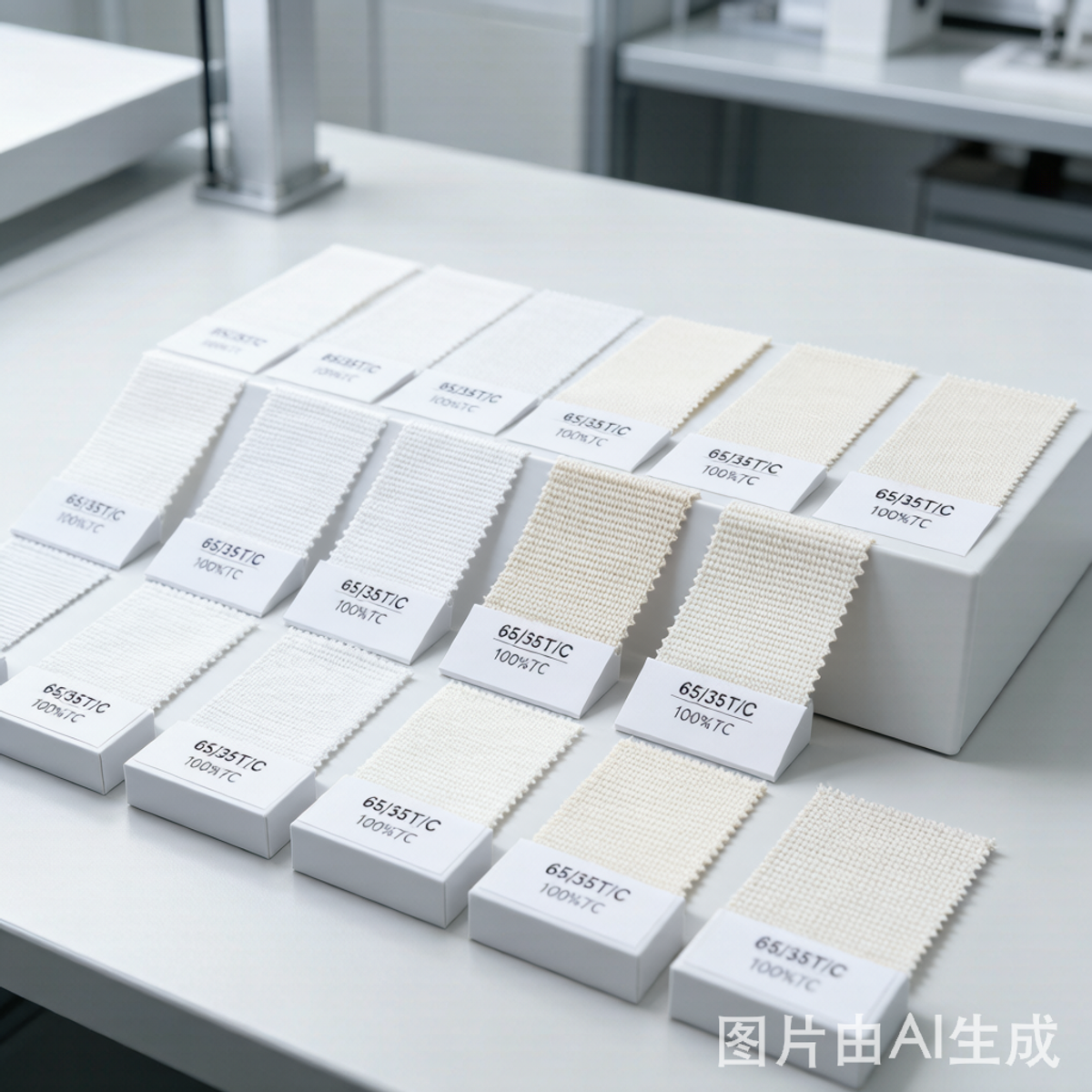
Polyester-cotton blends — commonly abbreviated as T/C (short for Terylene/Cotton) in Chinese textile industry terminology — are the most widely used fabrics in the global hotel linen market. They dominate the economy and midscale segments because they solve a fundamental procurement challenge: how to deliver acceptable guest comfort at a price point that works for high-volume, margin-sensitive operations. Understanding blend ratios is essential for making specifications that balance cost, durability, and guest experience.
How T/C Ratios Work: The Percentage Rule
T/C ratios are typically expressed as polyester/cotton percentages. T/C 80/20 means 80% polyester, 20% cotton. T/C 65/35 means 65% polyester, 35% cotton. CVC (Chief Value Cotton) reverses the ratio — typically CVC 60/40 means 60% cotton, 40% polyester. The first number is always polyester in standard T/C notation. The ratio directly determines the fabric's balance of properties: higher polyester = more durability, less cost, but reduced breathability and a more synthetic hand feel. Higher cotton = better comfort, more natural feel, but higher cost and more wrinkling. There is no "best" ratio — only the right ratio for your specific property tier and operational priorities.
T/C 80/20: Maximum Durability, Minimum Cost
T/C 80/20 is the economy hotel standard. It offers exceptional durability — 300+ industrial wash cycles with minimal degradation — and the lowest per-unit cost in the market (typically $8-12 per sheet set FOB Nantong for 200 TC). The trade-off is noticeable: 80/20 sheets feel distinctly synthetic, sleep warm (poor moisture wicking), and can develop an electrostatic charge in dry climates. These fabrics are widely used in budget hotel chains, motels, hostels, and institutional settings where cost per occupied room is the primary procurement driver. For properties with nightly rates under $80, T/C 80/20 is the pragmatic choice. Key specification: look for 200-250 thread count — going higher on high-polyester blends yields diminishing comfort returns.
T/C 65/35: The Industry Standard for Midscale
Need these specs quoted for your property?
Tell us your hotel tier, quantities and timeline — get a free, no-obligation quote within 24 hours.
T/C 65/35 is the most common specification in the global hotel industry, found in countless midscale and select-service properties. It represents the "good enough" equilibrium: the 65% polyester provides wrinkle resistance and durability (250-280 wash cycles), while 35% cotton delivers enough natural fiber for acceptable comfort and breathability. These sheets require minimal ironing — a significant operational advantage — and maintain a crisp white appearance through extended use. Typical pricing is $12-18 per sheet set (250-300 TC, FOB Nantong). For properties in the $80-150 nightly rate range, T/C 65/35 with a minimum 250 thread count is the recommended baseline specification.
T/C 50/50 and CVC: Upscale Poly-Cotton
T/C 50/50 and CVC 60/40 (cotton-dominant) blends bridge the gap between poly-cotton economics and all-cotton comfort. At 50% or higher cotton content, the fabric begins to feel genuinely natural — guests may not distinguish it from all-cotton without close inspection. These blends offer approximately 70-80% of the comfort of all-cotton at 50-60% of the price. CVC fabrics are particularly popular in the Asian and Middle Eastern markets where high humidity makes polyester's poor breathability a genuine comfort issue. For properties in the $120-200 rate range, CVC 60/40 with 300+ thread count provides an excellent balance of guest experience and procurement economics. Pricing: $18-25 per sheet set (FOB Nantong).
Beyond the Ratio: Fabric Construction Matters
The T/C ratio is not the only variable. Fabric weight (GSM), yarn count, and finishing treatments all interact with the blend ratio to determine real-world performance. A well-constructed T/C 65/35 at 130 GSM with anti-pill finishing will outperform a poorly made T/C 50/50 at 110 GSM. When specifying T/C linens, always include: blend ratio, thread count, fabric weight in GSM, yarn count (e.g., 40S, 60S), and finishing requirements. A complete specification prevents supplier substitution and ensures you receive what you intended. Our procurement service includes spec sheet preparation with all critical parameters documented for your order.
Environmental Considerations
Polyester is petroleum-based and non-biodegradable, raising legitimate environmental concerns. For properties with sustainability commitments, recycled polyester (rPET) T/C blends are an emerging alternative. rPET T/C 65/35 fabrics perform identically to virgin polyester blends but carry a significantly lower carbon footprint — approximately 50-60% less CO2 emissions in fiber production. Several Nantong mills now offer rPET blend options at a modest 8-12% price premium over virgin polyester equivalents. If your property markets sustainability credentials, rPET T/C blends allow you to maintain the cost advantages of poly-cotton while communicating a genuine environmental commitment to guests.
Shop Related Products
Free PDF: Complete Hotel Linen Buying Guide
Step-by-step procurement guide covering specs, MOQ, pricing, QC, and shipping — based on real Dieshiqiao experience.
Need help sourcing hotel linens?
Get a free quote within 24 hours. No commitment required.
Request a QuoteRelated Articles
Linen (Flax) Fabric for Hotels: Properties, GSM Guide & Procurement Tips
Linen made from flax is the oldest textile fiber and one of the most luxurious options for hotel bedding. Learn GSM ranges, finishing types, and sourcing tips.
Bamboo & Alternative Fibers for Hotel Bedding: A Procurement Guide
Bamboo, modal, hemp, and linen for hotel bedding — explore alternative natural fibers, their performance characteristics, cost profiles, and procurement considerations.
Cotton Types for Hotel Linens: Egyptian, Pima & Long-Staple Explained
Compare Egyptian, Pima, and long-staple cotton for hotel bedding. Learn which fiber delivers the best durability, softness, and ROI for your property.