Tencel & Lyocell for Hotel Linens: The Sustainable Luxury Fiber Guide
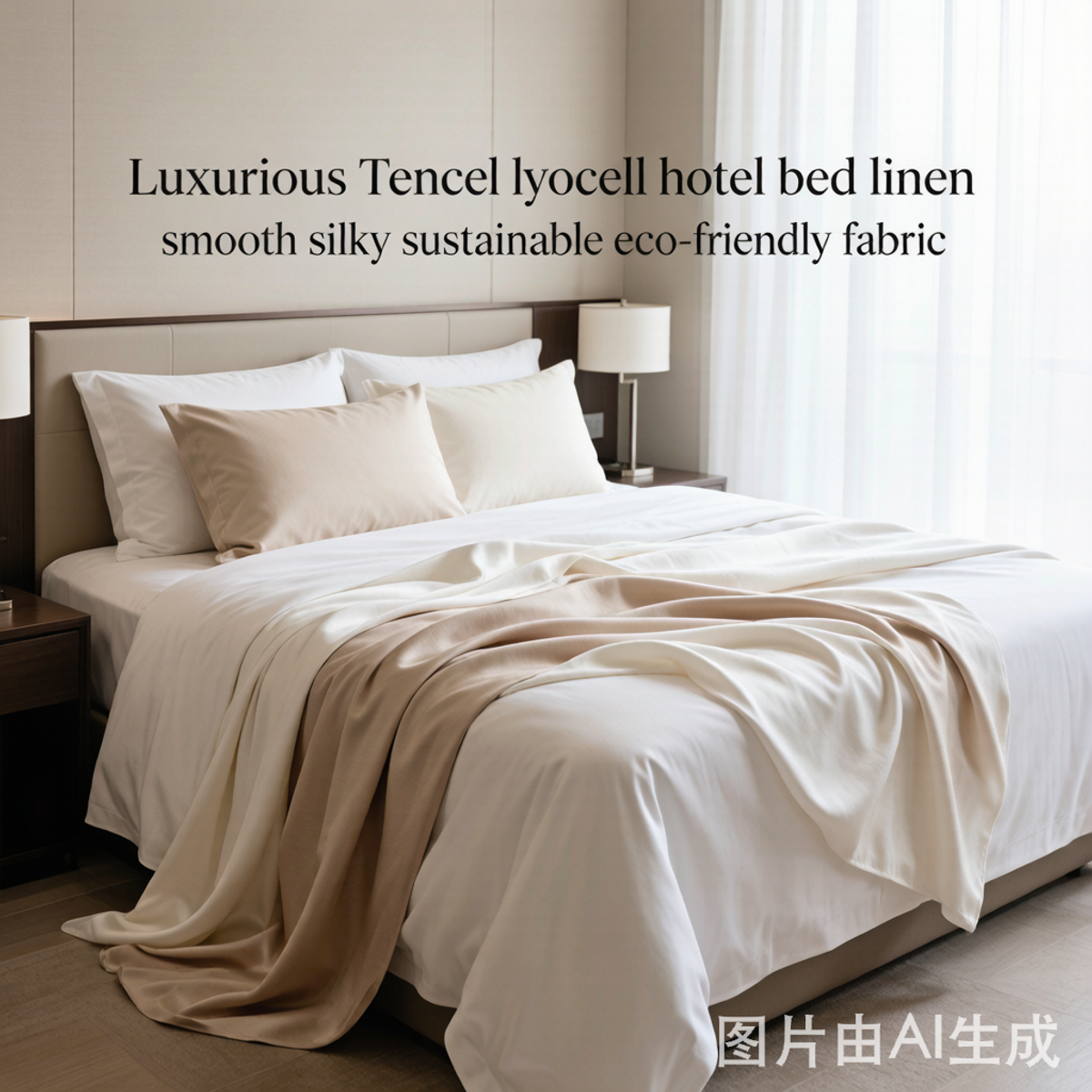
The hospitality industry is under increasing pressure to demonstrate environmental responsibility — and guest expectations are rising in parallel. A 2025 Booking.com survey found that 76% of travelers prefer eco-certified accommodations. Tencel and Lyocell fibers have emerged as the leading sustainable alternative to conventional cotton in hotel bedding, offering a unique combination of environmental credentials and luxury performance that appeals to both procurement managers and eco-conscious guests.
Tencel vs. Lyocell: Understanding the Terminology
Lyocell is the generic fiber name — a regenerated cellulose fiber made from wood pulp through a closed-loop solvent spinning process. Tencel is the branded Lyocell produced exclusively by Austria's Lenzing AG, the industry leader. The difference matters: Tencel carries Lenzing's full chain-of-custody certification guaranteeing sustainably harvested wood (primarily eucalyptus) and the closed-loop production process that recovers and reuses 99.8% of the solvent. Generic Lyocell from other manufacturers may not meet the same environmental standards. For hotel procurement, specifying "Lenzing Tencel" ensures you receive the genuine article with verifiable sustainability credentials that you can communicate to guests.
Performance Characteristics: Why Hotels Choose Tencel
Tencel outperforms cotton in several dimensions critical to hotel applications. Moisture management: Tencel absorbs 50% more moisture than cotton and releases it faster — guests sleep cooler and drier, and sheets dry faster in laundry cycles (energy savings). Smoothness: Under electron microscopy, Tencel fibers show an exceptionally smooth surface without the natural irregularities of cotton, producing fabric that feels consistently silkier against skin. This smoothness also inhibits bacterial growth — Tencel naturally resists bacterial colonization without chemical treatments, a hygiene advantage in hospitality settings. Strength: Wet Tencel retains approximately 85% of its dry strength, compared to cotton's 70%, translating to better durability through repeated commercial washing.
Sustainability Credentials that Matter to Guests
Need these specs quoted for your property?
Tell us your hotel tier, quantities and timeline — get a free, no-obligation quote within 24 hours.
Tencel's environmental story is genuinely compelling and guest-communicable. The raw material — eucalyptus wood — grows on marginal land unsuitable for food crops, requires no irrigation (rain-fed), and needs no pesticides. The closed-loop production process recovers 99.8% of the amine oxide solvent, making it one of the most water-efficient textile fibers in existence — Tencel production uses approximately 10-20% of the water required for conventional cotton. Lenzing's fibers are certified biodegradable and compostable under industrial, soil, freshwater, and marine conditions. Many properties feature these facts on room cards or website sustainability pages, directly connecting the linen choice to their environmental commitments.
Blending Tencel with Cotton: The Best of Both Worlds
Pure Tencel fabrics can be expensive and may feel too slick for some guests accustomed to cotton's familiar texture. The practical sweet spot for hotel applications is the Tencel-cotton blend, typically 30% Tencel / 70% long-staple cotton or 50/50. These blends deliver most of Tencel's moisture-wicking and smoothness benefits while maintaining the crisp structure and lower cost of cotton. 30/70 blends add approximately 15-20% to the fabric cost versus pure cotton but extend linen service life through better wet strength and reduced pilling. 50/50 blends are positioned for luxury eco-tier rooms, offering a distinctive hand feel that differentiates premium accommodations. Our Nantong mills produce Tencel-cotton blend sheets with both percale and sateen weaves, providing flexibility across property tiers.
Care and Laundering Considerations
Tencel and Tencel-blend linens require slightly adjusted laundry protocols. Wash temperature should not exceed 40°C (104°F) — higher temperatures can cause fibrillation (surface fuzzing) on pure Tencel fabrics. Avoid chlorine bleach; oxygen-based bleaches are compatible. Tumble dry on low to medium heat; high heat can set wrinkles permanently. The good news: Tencel blends dry faster than pure cotton, reducing dryer energy consumption by roughly 15-20%. With proper care, Tencel-blend hotel linens deliver 200-250 commercial wash cycles before showing noticeable wear, comparable to or exceeding high-quality all-cotton alternatives.
Sourcing Tencel Hotel Linens from China
When sourcing Tencel-blend hotel linens from Chinese manufacturers, request Lenzing certification documentation for every order. Legitimate Tencel users receive a Lenzing Certificate that traces the fiber from Austrian production to the Chinese weaving mill. Without this certificate, you may be receiving generic Lyocell of unknown provenance. Our partner mills in Nantong are authorized Lenzing Tencel fabric producers with documented supply chain traceability. We provide the Lenzing certification with every Tencel-containing order as standard documentation. Typical lead time for custom Tencel-blend orders is 25-30 days, with MOQ of 200 sets per specification.
Shop Related Products
Free PDF: Complete Hotel Linen Buying Guide
Step-by-step procurement guide covering specs, MOQ, pricing, QC, and shipping — based on real Dieshiqiao experience.
Need help sourcing hotel linens?
Get a free quote within 24 hours. No commitment required.
Request a QuoteRelated Articles
Linen (Flax) Fabric for Hotels: Properties, GSM Guide & Procurement Tips
Linen made from flax is the oldest textile fiber and one of the most luxurious options for hotel bedding. Learn GSM ranges, finishing types, and sourcing tips.
Bamboo & Alternative Fibers for Hotel Bedding: A Procurement Guide
Bamboo, modal, hemp, and linen for hotel bedding — explore alternative natural fibers, their performance characteristics, cost profiles, and procurement considerations.
Cotton Types for Hotel Linens: Egyptian, Pima & Long-Staple Explained
Compare Egyptian, Pima, and long-staple cotton for hotel bedding. Learn which fiber delivers the best durability, softness, and ROI for your property.